A major restructuring is underway in the Nigeria Police Force, with no fewer than 29 senior officers, including Deputy Inspectors-General (DIGs) and Assistant Inspectors-General (AIGs), reportedly set to be retired or removed from service.
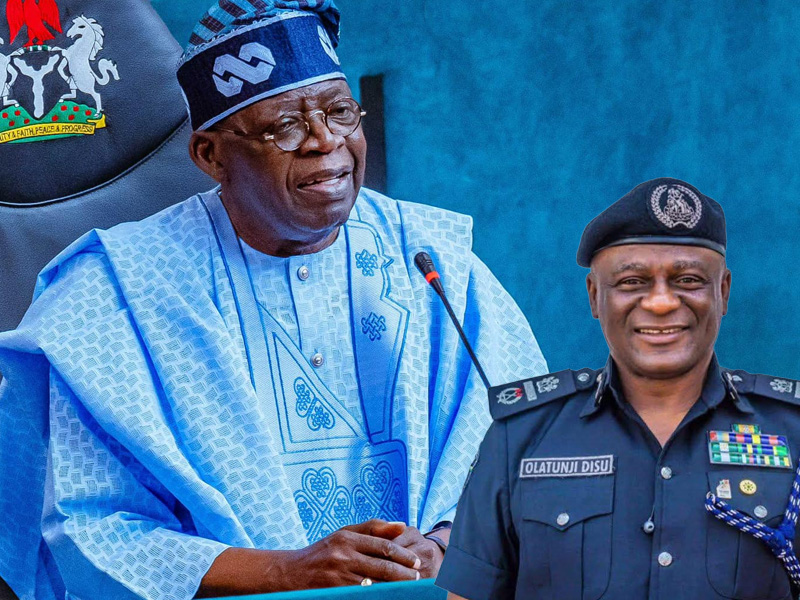
The development follows the reported removal of Kayode Egbetokun as Inspector-General of Police (IGP), paving the way for Tunji Disu, an Assistant Inspector-General of Police in charge of the Force Criminal Investigation Department (FCID) Annex, Alagbon, Lagos, to assume leadership of the force.
Sources familiar with the decision cited alleged incompetence, mounting scandals, and what was described as a “power-drunk” disposition as reasons for Egbetokun’s removal.
“He is incompetent and the scandals are just too many. He is power-drunk,” a source said, adding that Egbetokun was reportedly summoned to the Presidential Villa and instructed to prepare his handover notes.
“Egbetokun was at the (Presidential) Villa yesterday and was told to go and prepare his handover notes,” the source disclosed.
His tenure had been dogged by controversy, particularly his extended stay in office beyond the mandatory retirement age of 60 years or 35 years of service.
Civil society organisations and critics argued that the extension violated police service regulations and undermined institutional discipline, fueling debates about favoritism within the system.
During his time in office, Egbetokun faced allegations widely reported by SaharaReporters, including claims of questionable rapid promotions granted to a senior officer, Bukola Yemisi Kuti, who served as his Principal Staff Officer. Critics alleged that her closeness to the former IGP conferred undue advantages, raising concerns about nepotism.
Additional reports alleged that ₦100 million from Anambra State’s security vote was traced to the account of Victor, said to be Egbetokun’s son, sparking public controversy over possible diversion of security funds. The allegations were not judicially established, but they intensified scrutiny of the police leadership.
Rather than allowing independent investigations to proceed, police authorities were reported to have initiated legal actions against activist Omoyele Sowore and SaharaReporters over publications concerning the allegations. The legal confrontations escalated, with court injunctions reportedly restricting further reporting on Egbetokun and members of his family.
READ ALSO: Tinubu appoints Tunji Disu as new IGP, replaces Egbetokun in Police leadership overhaul
Observers argued that the succession of lawsuits created the impression of an embattled police chief relying on legal measures to counter critics instead of addressing the substance of the allegations through transparent inquiry.
With Egbetokun’s exit, attention has shifted to his successor, Tunji Disu, a seasoned officer with over three decades of experience in law enforcement.
Disu is widely regarded for his operational leadership, particularly during his tenure with the Rapid Response Squad (RRS) and the Intelligence Response Team (IRT). His appointment signals what insiders describe as a renewed emphasis on reform and modernization within the force.
Disu’s academic background in English Education, Public Administration, and Criminology is expected to influence his administrative and operational approach as he takes charge of the country’s top law enforcement agency.
The reported exit of 29 senior officers suggests a sweeping restructuring aimed at resetting the leadership structure of the Nigeria Police Force. Analysts say the move could mark one of the most significant overhauls of the force’s hierarchy in recent years.
While official confirmation of the broader retirements is still awaited, the unfolding changes underscore a critical transition period for the police institution, amid heightened public expectations for accountability, discipline, and improved security delivery nationwide.


 Latest1 week ago
 Football7 days ago
 Business6 days ago
 Latest7 days ago
 Health1 week ago
 Latest6 days ago
 Latest6 days ago
 Latest1 week ago