With the March 31, 2026 recapitalisation deadline set by the Central Bank of Nigeria (CBN) fast approaching, no fewer than 11 banks are yet to finalise their capital-raising processes, raising fresh concerns over the fate of weaker institutions in the country’s banking system.
Findings as of January 6, 2026, indicate that Polaris Bank, Keystone Bank, Unity Bank and eight others are still awaiting certification of their new capital base by the apex bank, despite being at various stages of compliance.
According to information obtained by nationaldailyng.com, other banks yet to complete the process include Alpha Morgan Bank, , Signature Bank, Standard Chartered Bank, SunTrust Bank, Titan Trust Bank, Union Bank and First City Monument Bank (FCMB).
Although most of the affected banks have unveiled recapitalisation plans—ranging from fresh equity injections to mergers and licence downgrades—industry watchers say uncertainty remains over whether all will meet the CBN’s stringent requirements within the remaining two-month window.
So far, the CBN has confirmed that 19 banks have successfully crossed the recapitalisation threshold. These include Access Holdings, Zenith Bank, Guaranty Trust Bank, Ecobank, Stanbic IBTC, United Bank for Africa, First Bank, Fidelity Bank, Sterling Bank, Wema Bank, Jaiz Bank, Lotus Bank, Providus Bank, Greenwich Merchant Bank, PremiumTrust Bank, Globus Bank, Citibank Nigeria, Nova Bank and FSDH Merchant Bank.
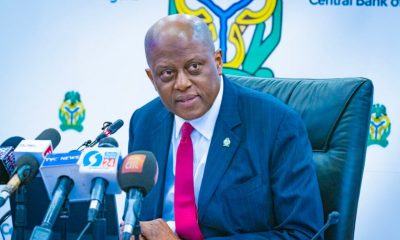
CBN Governor, Mr. Olayemi Cardoso, had earlier expressed confidence in the process, stating that “several banks have already met the new capital thresholds, while others are advancing steadily and are well positioned to comfortably meet the March 31, 2026 deadline.”
READ ALSO: 19 Nigerian Banks meet CBN’s recapitalization ahead of March deadline
However, analysts say the margin for error is narrowing for smaller and mid-tier lenders, some of which may be forced to explore consolidation or licence downgrades to survive.
There are growing indications that a handful of banks may opt for mergers, while others could step down from international or national banking licences to regional status, which comes with significantly lower capital requirements.
In line with this trend, Union Bank has completed a merger with Titan Trust Bank, while Providus Bank is set to merge with Unity Bank in a strategic move aimed at meeting the recapitalisation benchmark. Similarly, Nova Bank has chosen to downgrade its licence to a regional banking status, reducing its capital requirement to N50 billion.
FCMB Group Plc has also taken decisive steps, announcing that it is in advanced stages of capital raising and regulatory verification. The group recently secured shareholders’ approval at an Extraordinary General Meeting to raise up to N400 billion, a move designed to enable it retain its international banking licence ahead of the deadline.
Commenting on the situation, Head of Financial Institutions Ratings at Agusto & Co, Ayokunle Olubunmi, said only a limited number of banks remain under intense pressure, but warned that the final stretch would be critical.
“The reality is that most of the systemically important banks are already compliant. The pressure is now concentrated among smaller banks that either lack strong investor backing or have weak earnings capacity,” Olubunmi said.
He explained that mergers and licence downgrades are rational outcomes of the recapitalisation exercise. “For banks that cannot realistically raise fresh equity in this environment, consolidation or stepping down their licence is a sensible way to remain in business without threatening financial stability,” he added.
Another banking analyst noted that the CBN’s refusal to grant extensions signals a tougher regulatory stance. “The CBN wants a stronger, more resilient banking sector. Banks that fail to meet the deadline should not expect regulatory forbearance this time,” the analyst said.
While the apex bank has maintained that the recapitalisation exercise is not designed to force banks out of business, the coming weeks are expected to determine which institutions emerge stronger, which consolidate, and which fundamentally alter their operating models.




 Energy7 days ago
 Crime6 days ago
 Football7 days ago
 Business7 days ago
 Business7 days ago
 Crime6 days ago
 Business7 days ago