Nigeria’s House of Representatives has amended the country’s electoral law to criminalise dual membership of political parties, introducing stiff penalties aimed at strengthening party discipline and safeguarding the integrity of the political system.
The amendment to the Electoral Act 2026 was passed during Wednesday’s plenary session of the House of Representatives.
Under the new provision, any individual found guilty of belonging to more than one political party simultaneously will face a fine of N10 million, a maximum prison term of two years, or both.
Lawmakers said the amendment is intended to curb political opportunism and ensure greater accountability among politicians who often switch allegiances or secretly maintain affiliations with multiple parties.
Sponsors of the amendment argued that dual party membership undermines democratic institutions and fuels political instability, especially during election cycles.
According to members of the Green Chamber, the new legal provision will promote transparency, party loyalty, and clearer political alignments ahead of future elections.
The lawmakers noted that the move would also help electoral authorities more effectively monitor political actors and reduce disputes arising from conflicting party affiliations.
READ ALSO: Protecting the true vote: Three priority reforms to strengthen Nigeria’s electoral act
Political analysts say the amendment could significantly reshape party politics in Nigeria by forcing politicians to make clearer ideological and strategic choices.
A constitutional lawyer, Dr. Wahab Shittu, said the measure reinforces constitutional provisions that discourage political double-dealing.
“Dual party membership has long been a grey area in Nigerian politics. By attaching clear criminal penalties, the National Assembly is sending a message that party affiliation must be transparent and singular,” he explained.
However, he noted that enforcement would be key to the effectiveness of the law.
“The real challenge will be monitoring compliance and proving dual membership, especially when political alliances are often informal or strategic,” he added.
Similarly, political scientist Prof. Jideofor Adibe said the amendment could reduce political instability but must be backed by strong enforcement mechanisms.
“Many politicians move between parties or maintain covert loyalties. Criminalising dual membership could discourage that behaviour, but institutions like the electoral commission must have the capacity to verify party registers and membership databases,” he said.
Some analysts have also raised concerns about potential misuse of the law in political disputes.
According to governance expert Dr. Amina Salihu, the new provision should be implemented carefully to avoid weaponisation during intense political rivalries.
“While the intention is to strengthen party discipline, there must be safeguards to ensure that accusations of dual membership are not used as political tools to silence opponents,” she said.
The amendment forms part of broader efforts by the National Assembly to refine Nigeria’s electoral framework and close legal loopholes that have historically generated disputes during elections.
Observers say that if effectively enforced, the new provision could improve party organisation, reduce opportunistic defections, and promote greater ideological clarity in Nigeria’s multi-party system.




 Crime1 week ago
 Health1 week ago
 Politics1 week ago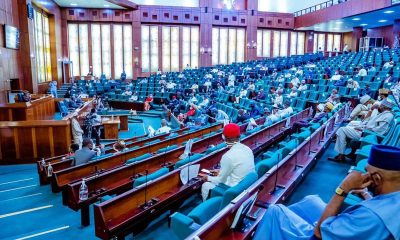
 Aviation1 week ago
 Crime5 days ago
 Trending Stories1 week ago
 Football4 days ago
 Football7 days ago