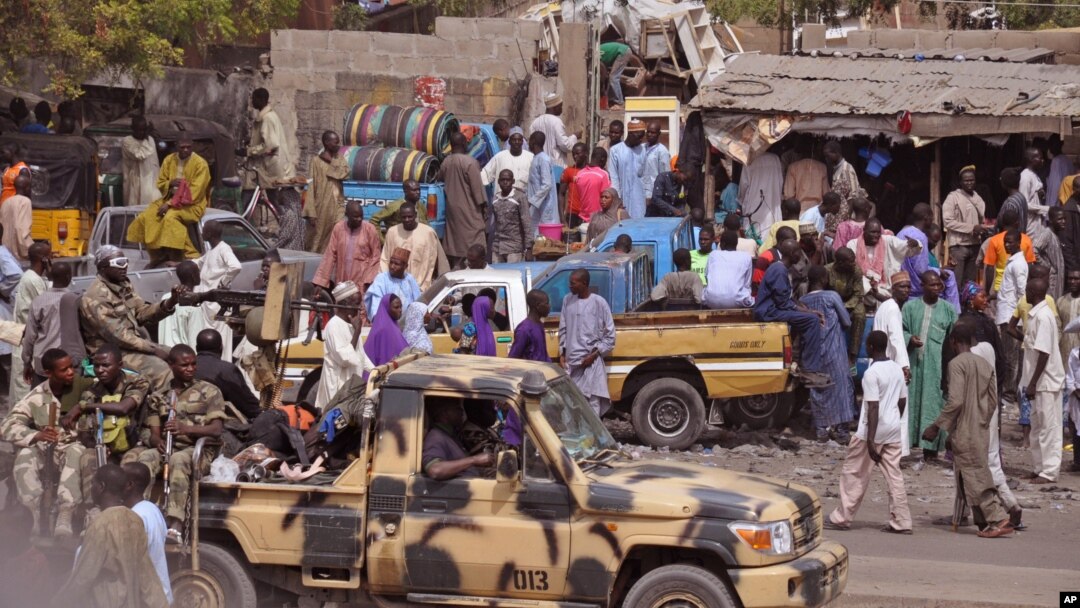
Steven Kefas, founder of the Community Development and Rights Advocacy Foundation, has alleged that about three trailer-loads of Lakurawa fighters entered Sokoto State from the Sahel region through Niger in August last year without any intervention by Nigerian authorities.
Kefas made the claim on Thursday while responding to questions on Channels Television, where he raised alarm over what he described as a deepening security crisis sustained largely by kidnapping and ransom payments.
According to him, the influx of foreign fighters is closely linked to an organised system of arms acquisition funded through ransom proceeds. Kefas said a close associate who spent nearly four months in captivity before being released in October last year disclosed that arms suppliers often arrive at terrorist camps on the same day ransom payments are made.
He explained that the ransom money is immediately used to pay for weapons, a practice he said confirms that kidnapping has become a deliberate strategy for financing terrorism.
“In July, a very close friend of mine spent about four months in captivity. He was released around early October last year, and when he came out, he told me many things,” Kefas said. “One of them was that on the very day ransom is paid, arms suppliers come into the camp, and the ransom money is used straight away to pay for those arms.”
Kefas warned that the pattern suggests there may be no quick end to the insecurity if the funding sources are not urgently disrupted.
He noted that while terrorists do not appear to invest ransom proceeds in visible personal assets, such as houses or vehicles, the money is instead channelled directly into strengthening their armed capacity.
“It means the kidnapping going on is to raise funds to acquire more arms. It means there is no end in sight. This criminality and terrorism may not end anytime soon,” he said.
The rights advocate further alleged that fighters continue to cross into Nigeria from neighbouring countries, including Mali and Niger, while the steady flow of ransom payments enables terrorist groups to expand their operations and networks.
READ ALSO: Pregnant woman abducted in Plateau gives birth in captivity after bandits murdered husband
Kefas said this expansion is evident in the spread of insecurity to states previously considered less affected, such as Kwara and Kogi, which he noted are now witnessing similar criminal activities.
He also raised serious concerns over what he described as targeted attacks and alleged land occupation in parts of Kaduna State, particularly in Kajuru Local Government Area. Kefas cited incidents in which about 177 worshippers were reportedly abducted from churches on a Sunday, as well as previous attacks in which people were killed during church services.
According to him, nearly 40 communities in Kajuru Local Government Area have been displaced, with some allegedly occupied by terrorists. He described the situation as complex and criticised the government’s response as inadequate.
“In August last year, I reported that about three trailer-loads of Lakurawa fighters came in from the Sahel, from Niger to Sokoto State, and nobody did anything about it,” Kefas said. “These fighters keep coming in, and you already have a system where funds are raised through ransom and used to buy arms.”
He added that the combination of cross-border infiltration, ransom-funded weapons procurement and displacement of communities suggests that terrorist groups are building a stronger and more organised network.
“We don’t know what the future holds, because they believe they are building a stronger network, and that is why the insecurity is spreading,” Kefas said, calling for more decisive and coordinated action by the government to address the crisis.



 Football1 week ago
 Football1 week ago
 Football1 week ago
 Football1 week ago
 Comments and Issues6 days ago
 Business1 week ago
 Comments and Issues6 days ago
 Business1 week ago