Russia and Vietnam have signed a landmark inter-governmental agreement to construct Vietnam’s first nuclear power plant, sealing a partnership that Hanoi is accelerating with unusual urgency as the Middle East war drives fuel costs to historic highs across the country.
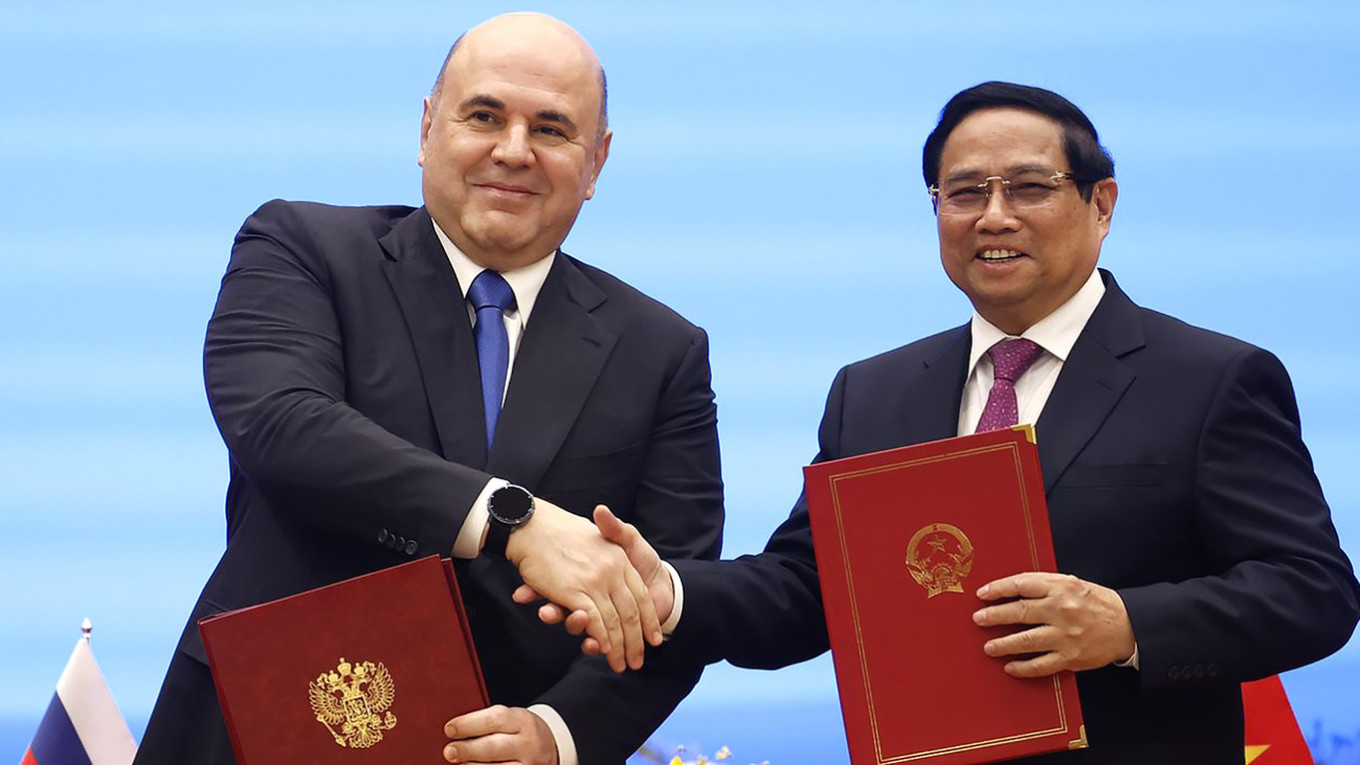
Russia and Vietnam signed an inter-governmental agreement on cooperation in the construction of the Ninh Thuan 1 nuclear power plant in Vietnam, Russia’s state nuclear energy corporation Rosatom confirmed on Monday.  The signing took place during a visit to Moscow by Vietnamese Prime Minister Pham Minh Chinh, who travelled to the energy-rich country as Vietnam seeks to shore up its fuel reserves at a time of severe disruption to global energy supplies caused by the ongoing Middle East war.
The agreement lays out the legal framework for the construction of two reactors with a total output of 2,400 megawatts at the proposed Ninh Thuan nuclear power plant.  Rosatom said the agreement outlines the terms and main areas of cooperation between the two parties in implementing the construction project, though no details on overall cost were specified. 
The timing reflects a deepening sense of urgency in Hanoi. Since the US-Israeli war against Iran began in late February, the cost of 95-octane petrol and diesel in Vietnam, a major manufacturing hub has soared by 50 per cent and 70 per cent respectively, rattling an economy heavily dependent on imported energy.  Vietnam has long faced power blackouts as demand from its huge industrial sector and expanding middle class routinely outpaces supply, a challenge compounded by more frequent extreme weather events including droughts and typhoons that undermine hydropower generation.
Rosatom head Alexey Likhachev framed the deal in terms of long-term strategic partnership. “It will certainly be a great honour and responsibility for us to build a flagship power reactor in Southeast Asia,” he said, adding that the agreement would serve as “the foundation for a long-term industrial partnership, which will strengthen Vietnam’s energy independence and open up new opportunities for economic growth.”
The deal is the culmination of decades of cooperation between the two countries. Russia’s Ministry of Finance previously agreed to finance at least 85 per cent of the plant, supply the fuel, and take back used fuel for the life of the plant — standard Russian policy for non-nuclear-weapons states. An agreement for up to $9 billion in financing had been signed as far back as November 2011.  The project was, however, shelved in 2016 amid budget constraints and revived in 2025. Vietnam’s Politburo has requested early implementation of both the Ninh Thuan 1 and Ninh Thuan 2 nuclear power projects, with a target of putting them into operation between 2030 and 2035.
Vietnam Electricity has been appointed as the investor for Ninh Thuan 1, while Petrovietnam will manage Ninh Thuan 2, with each plant consisting of two reactor units and a combined capacity of 4,000 megawatts.
The nuclear programme forms a central pillar of Vietnam’s 8th Energy Plan, which aims to diversify energy sources, reduce dependence on fossil fuels, and support the country’s ambitious targets for carbon neutrality and double-digit economic growth.
Beyond electricity generation, Rosatom has committed to transferring technology, localising nuclear components in Vietnam, and supporting the country in building its nuclear science and industry for peaceful and socio-economic development, including cooperation in nuclear medicine and irradiation technology.



 Health1 week ago
 Latest1 week ago
 Latest6 days ago
 Energy1 week ago
 Trending Stories1 week ago
 Latest1 week ago
 Football5 days ago
 Football5 days ago