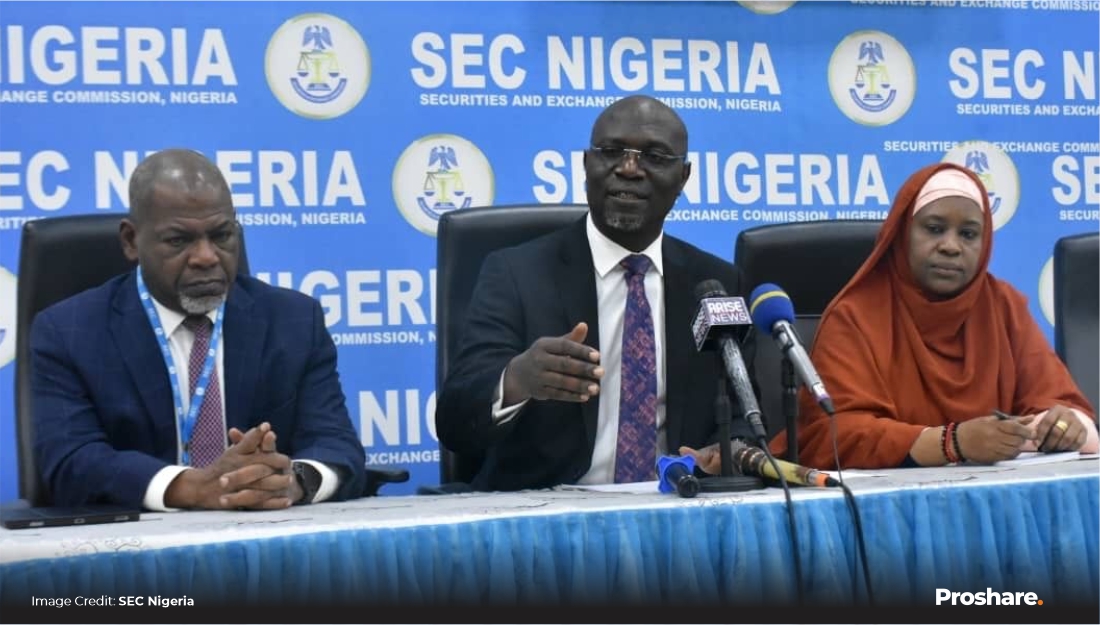
A new directive issued by the Securities and Exchange Commission (SEC) has sent ripples through Nigeria’s financial markets, triggering concern and confusion among capital market operators over newly imposed tenure limits for directors of companies considered to be of significant public interest.
In a circular released last Friday, the SEC announced sweeping corporate governance reforms mandating that directors of Capital Market Operators (CMOs) classified as “significant public interest entities” may now serve a maximum of 10 consecutive years in a single company, and no more than 12 years across companies within the same group.
Further tightening the rules, the SEC introduced a mandatory three-year “cool-off period” for Chief Executive Officers (CEOs) and Executive Directors who complete their tenure, before they can be appointed as Chairman. Even then, such chairmanship positions are capped at four years. The directive, which took immediate effect, has prompted calls for clarification, especially regarding the definition of “significant public interest entities.”
According to industry insiders, the new rules could signal the forced exit of long-standing executives from major investment banks, stockbroking firms, fund managers, and financial market infrastructure (FMI) entities.
“This could mark the end for several top executives in Nigeria’s capital market space. There’s anxiety because no one knows exactly who qualifies under this new rule,” one operator remarked.
READ ALSO: SEC warns Nigerians against CBEX’s return, labels crypto platform “illegal, banned”
Although the SEC has not published a list of affected institutions, sources say the rule excludes publicly quoted banks and private companies, focusing instead on FMI institutions such as the FMDQ Group, NGX Group, Central Securities Clearing System (CSCS), and NG Clearing.
Adding another layer to the reform, the SEC also prohibited the increasingly common practice of converting Independent Non-Executive Directors (INEDs) into Executive Directors within the same organization or its affiliates.
The Commission warned that such transitions “erode the neutrality” of INEDs and compromise their ability to provide objective oversight. This move aligns with the National Code of Corporate Governance (NCCG), which restricts INEDs from holding significant shares, having family ties to management, or staying too long on the board to maintain independence.
READ ALSO: NCC unveils robust Cybersecurity framework to shield Nigeria’s telecom sector from digital threats
While the Code already sets a 9-year maximum term for INEDs and prohibits reclassification of board roles to maintain independence, its legal application to private companies remains contested—highlighted by a Federal High Court ruling in Eko Hotels v. FRCN that questioned its applicability to unregulated private entities.
Amid the confusion, the Association of Securities Dealing Houses of Nigeria (ASHON) sought to calm nerves. In a statement, it revealed that consultations with the SEC clarified that its members are not among those affected by the new rule.
“We have sought clarification from SEC and have received assurances that our members are not within the category referred to in the said circular,” ASHON stated, urging members to continue their operations professionally.
Despite ASHON’s reassurances, the directive underscores a broader shift by the SEC to strengthen governance, transparency, and accountability within Nigeria’s capital market ecosystem.
Market stakeholders now await further guidance from the Commission as they assess the full implications of the policy on corporate leadership structures.




 Business1 week ago
 Latest6 days ago
 Business1 week ago
 Football1 week ago
 Business1 week ago
 Business1 week ago
 Football5 days ago
 Business4 days ago