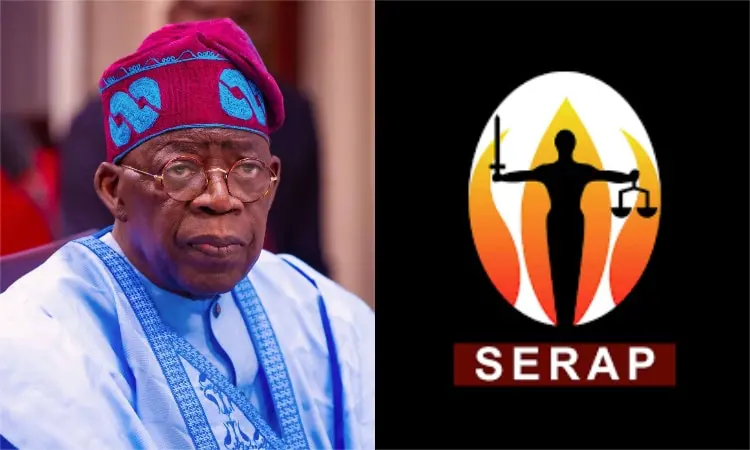
The Socio-Economic Rights and Accountability Project (SERAP) has called on President Bola Tinubu to reconsider the appointment of at least three individuals allegedly affiliated with the All Progressives Congress (APC) as Resident Electoral Commissioners (RECs) of the Independent National Electoral Commission (INEC), warning that such partisan nominations could compromise the integrity of Nigeria’s 2027 general elections.
In an open letter dated June 7, 2025, and signed by the group’s Deputy Director, Kolawole Oluwadare, SERAP expressed concern that the continued presence of politically aligned individuals in key electoral roles risks undermining public trust and the credibility of the electoral process.
“Holding the 2027 general elections amid the appointment of partisan RECs will make a mockery of Nigerians’ right to participate in free and fair elections and weaken public confidence in the process,” the letter stated.
SERAP urged President Tinubu to urgently nominate qualified Nigerians of “unquestionable integrity and non-partisan affiliation” to replace the named RECs—Etekamba Umoren (Akwa Ibom), Isah Shaka Ehimeakne (Edo), and Bunmi Omoseyindemi (Lagos)—who were confirmed by the Senate in October 2023. The group also questioned the neutrality of Anugbum Onuoha, REC nominee for Rivers State.
Beyond seeking replacements, SERAP called on the president to direct the Attorney General of the Federation and Minister of Justice, Lateef Fagbemi, SAN, to draft and forward a bill to the National Assembly to strengthen the institutional independence of INEC.
The group said such reforms were necessary to prevent the recurrence of the challenges that plagued the 2023 elections and to safeguard the democratic process.
READ ALSO: SERAP drags NNPCL to court over alleged N500bn missing oil revenue
“The credibility and legitimacy of elections depend significantly on the independence and impartiality of those appointed to oversee them. Without this, the democratic rights of Nigerians will remain illusory,” the letter read.
Citing the Nigerian Constitution, the Electoral Act, and international electoral standards, SERAP emphasized that electoral commissions must not only be independent in structure but also perceived as impartial by the electorate.
It warned that continued public perception of INEC as a politically compromised body would erode confidence and democratic participation.
“Your government has a constitutional responsibility to ensure both the appearance and the reality of impartiality in the appointment of INEC officials,” SERAP reminded President Tinubu.
The organization further cautioned against treating INEC as a line department answerable to political leaders, arguing that doing so contravenes democratic norms and undermines the rule of law.
In its conclusion, SERAP stressed that the long-term legitimacy of Nigeria’s elections hinges on urgent actions that depoliticize the electoral body and reinforce institutional trust.
Replacing the alleged partisan appointees with neutral and credible individuals, the group said, would be a critical step toward that goal.



 Football5 days ago
 Crime1 week ago
 Crime6 days ago
 News1 week ago
 Business4 days ago
 Business6 days ago
 Business1 week ago
 Football6 days ago