South Africa’s foreign direct investment (FDI) inflows are experiencing a notable upswing, yet this momentum faces a substantial threat from impending U.S. tariffs and entrenched domestic issues, experts cautioned today.
According to data from the South African Reserve Bank, FDI inflows surged by 56 percent to $661 million in the first quarter of 2025.
This impressive performance has seen South Africa climb from 11th to 7th place in the prestigious 2025 Global FDI Confidence Ranking, signaling renewed international investor interest.
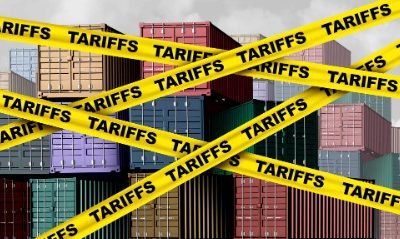
However, a proposed 30 percent tariff hike on South African exports to the U.S., slated to take effect in August 2025, casts a long shadow over these gains.
Andrew Bahlmann, CEO of Deal Leaders International, warned that these tariffs would initially impact U.S. businesses considering investments in South Africa, as well as local manufacturers reliant on exports to the American market.
While efficient businesses might identify arbitrage opportunities to mitigate costs, the tariffs are expected to add significant complexity to an already challenging investment landscape.
Bahlmann clarified that South Africa is not uniquely targeted, noting that U.S. President Donald Trump has proposed similar tariff hikes on numerous nations, including 30 percent on the European Union, 35 percent on Canada, 50 percent on Brazil, and 25 percent on Japan and South Korea.
ALSO READ : Fidelity Bank launches free digital tools for 100 SMEs
Despite the rising FDI, primarily originating from the U.S. and Europe, with the Netherlands and the UK being top contributors, South Africa’s overall investment levels remain low compared to its potential.
A growing area of optimism, however, is inter-African FDI. World Bank data from 2023 shows that intra-African investments accounted for 21 percent of sub-Saharan Africa’s inward FDI stock, indicating a promising avenue for further growth and regional economic integration.
Despite these positive signals, formidable domestic challenges continue to threaten to undermine South Africa’s appeal to investors.
Experts, including Jammine, highlighted persistent issues such as high crime rates, severe logistical bottlenecks, a declining rail network, inefficient ports, the prevalence of criminal syndicates, incompetent municipalities, and over-regulation, including the impact of Black Economic Empowerment policies.
While the country has seen some easing of electricity supply issues, these structural problems remain significant deterrents for both foreign and domestic investors.
Recent mergers and acquisitions involving U.S. companies have contributed to South Africa’s FDI growth.
Nevertheless, analysts are urging the South African government to prioritize and address internal inefficiencies rigorously to sustain and expand these crucial investment inflows.
The consensus among experts is that by focusing on comprehensive domestic reforms and actively leveraging intra-African trade opportunities, South Africa can better navigate the complexities posed by the looming U.S. tariffs and maintain its upward trajectory in global investment rankings.










 Football6 days ago
 Business5 days ago
 Business5 days ago
 Latest4 days ago
 Crime1 week ago
 Business6 days ago
 Football1 week ago
 Business1 week ago