In a striking display of governmental austerity, Tanzanian President Samia Suluhu Hassan has ordered a drastic reduction in the size of her official convoy and directed government officials to travel together by bus, as the country grapples with a severe fuel crisis driven by the ongoing conflict in the Middle East.
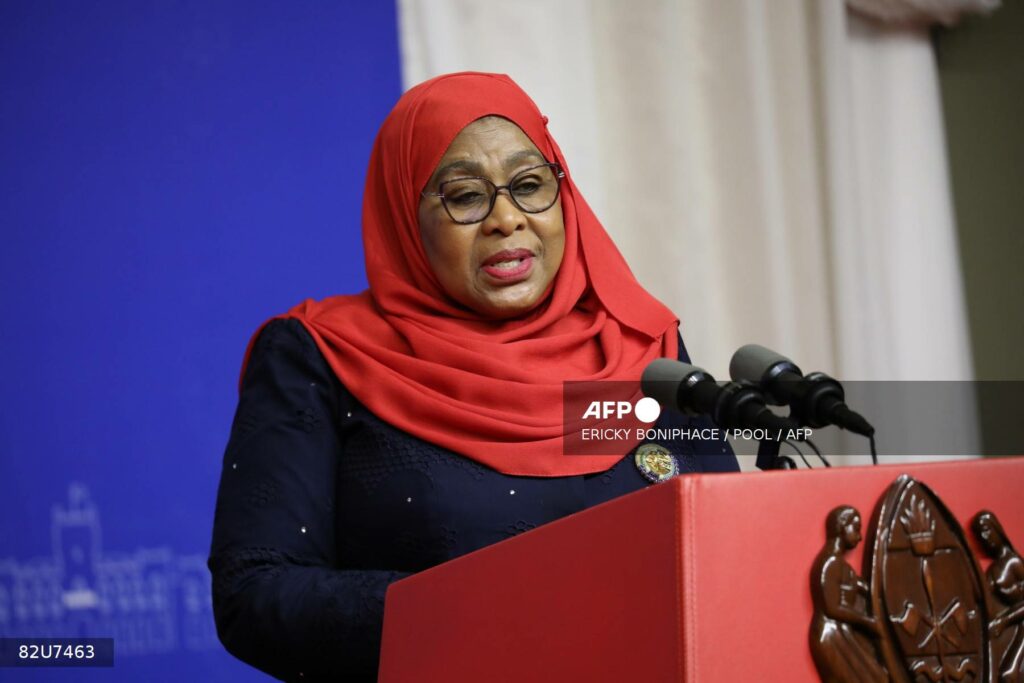
Speaking during a swearing-in ceremony at State House on Wednesday, April 8, 2026, President Samia said she had personally decided to lead by example. “My convoy will consist of my vehicle, the police escort and a backup vehicle; all other officials will travel together in a bus so that we reduce fuel consumption,” she said, urging all public institutions to adopt similar energy-saving measures.
The announcement carries particular symbolic weight. In previous years, the President had faced public criticism over the size of her motorcade. Social media posts had documented her convoy consisting of more than 100 vehicles, a level of excess that drew widespread condemnation from Tanzanian citizens and commentators across the continent.
President Samia cited ongoing global shocks that continue to disrupt energy markets and drive up prices, noting that tensions affecting key oil supply routes had forced countries worldwide to adopt strict energy-saving measures. “There are countries that have allowed people to work from home to reduce travel. Others have significantly cut fuel consumption and are experiencing shortages,” she said.
The crisis is a direct consequence of the 2026 Iran war. The ongoing conflict involving the US and Israel against Iran, which began on February 28, 2026, has disrupted global crude oil production and transport. Iran’s closure of the Strait of Hormuz, a critical route handling about 20 percent of global oil shipments, has significantly disrupted supply from the Middle East, where Tanzania sources much of its fuel.
The impact on Tanzanian consumers has been immediate and severe. A litre of petrol now retails at Sh3,820 in April 2026, up from Sh2,864 in March, an increase of 33.4 percent in a single month. Diesel has risen to Sh3,806 per litre from Sh2,858, while kerosene now costs Sh3,684, up from Sh2,932. These represent price levels unseen in Tanzania in more than two decades.
The President acknowledged some cautious optimism regarding the global supply outlook, noting that “we woke up today to some encouraging news… vessels are beginning to pass through, giving us hope that shipments will continue.” However, she stressed that uncertainty remained and that conservation measures must continue regardless.
She also cautioned traders against exploiting the situation by raising prices of goods already in stock. “This situation should not be used as an opportunity to raise prices beyond what is justified,” she said, while acknowledging that some price increases would be unavoidable for imported goods affected by the global disruptions. “Citizens should remain calm and patient; as leaders, we continue to engage others so that these conflicts come to an end,” she said.
Tanzania’s Permanent Secretary of the Ministry of Energy had earlier assured the public that the country had enough fuel to last two to three months, with over 563 million litres of petrol sufficient for 91 days and 530 million litres of diesel sufficient for 64 days, including stocks in tanks, in transit, and under contract.
While the President’s gesture has been noted, Tanzania’s opposition is pressing for more structural intervention. CHADEMA’s deputy chairperson for Tanzania Mainland, John Heche, outlined a four-point emergency plan in a national address on April 6, calling for immediate tax relief, temporary subsidies, emergency planning to prevent food shortages, and price controls. “Today I am not speaking to you about the price of fuel,” Heche said. “I am speaking to you about the lives of people. I am speaking to you about daily transport fares. I am speaking about flour, rice, fish, vegetables, milk, eggs and essential commodities on the table of every citizen.”
The opposition’s analysis revealed that for every Sh100 spent on fuel in Tanzania, approximately Sh31 goes to government taxes, levies, and duties, a figure that opposition figures argue leaves significant room for the government to provide fiscal relief to struggling households and businesses.
Tanzania is not alone in its response. Australia’s prime minister urged citizens to take public transportation to keep fuel for farmers, miners, and other workers in critical industries, while Bangladesh cut office hours and required markets and shopping centres to shut by 6 p.m. to reduce electricity use. Tanzania’s decision to reduce official vehicle use mirrors a growing global trend of governments leading by example in the face of an energy crisis widely described as the most severe since the 1970s.



 Football1 week ago
 Business6 days ago
 Latest5 days ago
 Business6 days ago
 Business1 week ago
 Football1 week ago
 Business1 week ago
 Business1 week ago