
Agribusiness
The Day the River Came: Nigeria’s Hidden Climate Exodus

The Day the River Came: Nigeria’s Hidden Climate Exodus
At dawn, the river whispered. By midday, it roared. By evening, it had devoured everything.
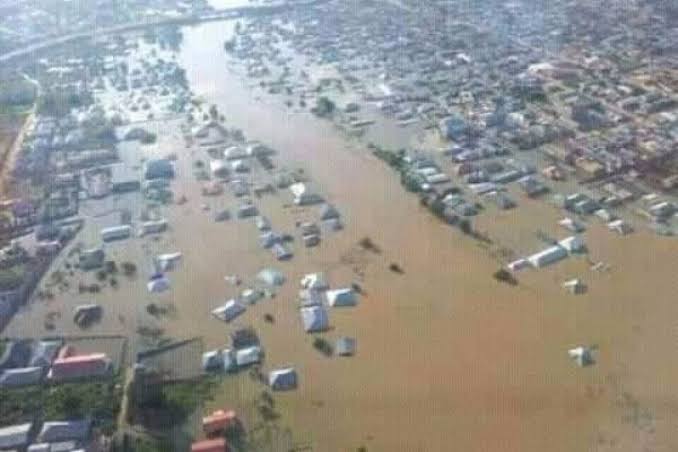
In May 2024, the Benue River rose like a thief in the night, sweeping through Makurdi’s farmlands, toppling mud-brick homes, and swallowing entire streets. Among those who watched helplessly was 42-year-old Mama Ireti (as she is fondly called by her neighbours), a cassava farmer who had tilled her inherited land since she was a teenager. “I went to the farm that morning and the earth was soft, as if it was warning me,” she recalls, her voice cracking. “By the next day, all I had planted for the season was gone. Water everywhere. No cassava, no maize, nothing.”
For Ireti and millions like her, climate change is no longer an abstract headline. It is a trespasser in their kitchens, their classrooms, their gravesites. The National Emergency Management Agency (NEMA) reported that over 4.2 million Nigerians were affected by the 2022 floods displaced, hungry, grieving. Yet, unlike the floodwaters that recede, the losses remain. Children dropped out of school. Entire harvests vanished. Families who had never begged before lined up for food relief. “Flood is not just water,” says local activist Aondo, who has been documenting displaced families. “It is hunger, it is disease, it is memory. It is a wound that does not heal quickly.”
READ ALSO: Beyond the Classroom: How Nigeria’s Teachers Are Defending Children’s Rights
Hundreds of kilometers away in Lagos, climate change wears another mask: coastal erosion. In the fishing village of Okun Alfa, waves pound the shoreline, swallowing homes one by one. Residents measure their losses not in meters, but in memories where a family’s courtyard once stood, where a grandfather once sat under the iroko tree. “We used to play football here,” says 16-year-old Samuel, pointing toward the Atlantic waves. “Now, the sea has taken it.” According to UNEP (2023), Lagos loses 30 meters of coastline annually, displacing families long before official resettlement plans can catch up.
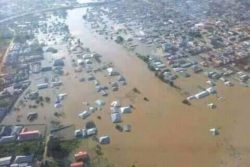
Submerged Benue city by flood
Ironically, Nigeria contributes less than one percent to global carbon emissions, yet bears one of the heaviest burdens. Experts call it a matter of climate injustice. Wealthy nations emit, poor nations drown. “It is like watching your neighbour burn down his house and then his fire consumes yours,” says Bassey, an environmental activist. “Nigeria is paying for a crisis it did not cause.”
Yet, amidst despair, resilience blooms. In Makoko, Lagos’s floating slum, children now attend floating schools built to withstand rising waters. In Kano, farmers experiment with solar-powered irrigation to survive erratic rainfall. And in Makurdi, Mama Ireti is planting again this time with maize donated by a local Philanthropist “The river may come again,” she says, standing in her replanted field. “But so will I.”
Climate change in Nigeria is not merely a chart of rising temperatures. It is the look in Mama Ireti’s eyes when she recalls her submerged cassava farm. It is Samuel’s outstretched arm toward a sea that has eaten his playground. It is the stubborn refusal of communities to give up, even when the odds drown them daily. The world often speaks of climate change in degrees and percentages. But here in Nigeria, it is measured in homes lost, children displaced, meals skipped, and lives forever altered. And as the waters rise, one truth becomes impossible to ignore: the poorest may drown first, but in the end, no one escapes the tide.








 Entertainment4 days ago
Omoni Oboli applauds Nollywood filmmakers for their resilience

 Comments and Issues1 week ago
Tunji Disu: A different kind of Cop
 Comments and Issues1 week ago
Let’s cut Tinubu some slack
 Comments and Issues1 week ago
ADC’s problem is ADC, not APC
 Health1 week ago
NAFDAC raises alarm over circulation of fake cancer drugs in Nigeria

 Latest6 days ago
Ozoro community refutes rape allegations at Alue-Do festival, confirm cases of harassment

 Business7 days ago
UBA UK, British International Investment eye trade finance deal to support African SMEs

 Health1 week ago
CDC accused of downplaying vaccine-linked death data