
Latest
The many controversies of Yahaya Bello: A deep dive into Kogi ex-governor’s tenure

Published
3 months agoon
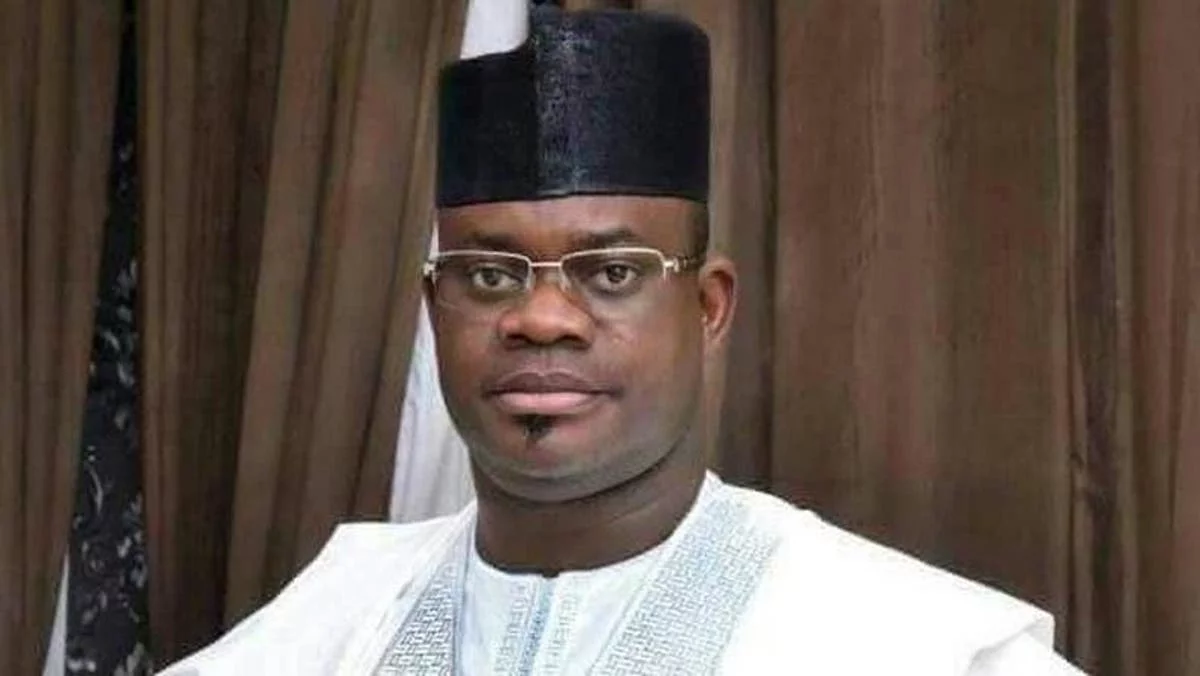
Yahaya Bello, the former governor of Kogi State, has long been a polarising figure in Nigerian politics. Rising to the governorship at the age of 36, he became one of the youngest state executives in the country.
While his youthful image and energetic campaigns earned him popularity in some quarters, his tenure was marked by a string of controversies, governance challenges, and allegations that continue to shape public discourse about his legacy.
Bello’s tenure has been shadowed by repeated allegations of electoral malpractice and corruption.
The Economic and Financial Crimes Commission (EFCC) on Thursday tendered fresh bank records in the ongoing trial of Yahaya Bello, former governor of Kogi state, before a federal high court in Abuja.
Bello is standing trial alongside Umar Shuaibu Oricha and Abdulsalami Hudu on a 16-count charge bordering on criminal breach of trust and money laundering involving about N110.4 billion.
At the resumed hearing before Maryanne Anineh, the presiding judge, the prosecution team, led by Kemi Pinheiro, a senior advocate of Nigeria (SAN), presented prosecution witness six (PW6), Mashelia Arhyel Bata, a compliance officer with Zenith Bank, for further cross-examination.
During cross-examination, Joseph Daudu, counsel to the first and second defendants, questioned the witness on exhibit S1—a statement of account earlier tendered by the prosecution.
Daudu asked the witness to clarify his earlier testimony that the statement of account contained eight columns, particularly the meaning of the “description” column.
Bata explained that the column reflected the narration of transactions.
He drew the court’s attention to an entry dated January 20, 2016, which reads: “Cq 158 Abdulsalami Hudu for N10,000,000.”
Bata also pointed out another entry stating, “ZB chq 155 paid Halims Hotels and Tours, Lokoja, N2,454,400.”
When asked whether he knew the purpose for which the N10 million paid to Hudu or the sum paid to Halims Hotels and Tours was used, the witness said he could not determine how the funds were spent or their intended purpose.
Daudu further referred the witness to exhibit X1 and asked him to identify it.
Responding, Bata said it was the account-opening package for a company with account number 1014878995, domiciled at Zenith Bank’s Lokoja branch.
READ ALSO: Yahaya Bello declares 2027 bid to unseat Senator Natasha in Kogi Central
The defence counsel then asked the witness about the number of transactions recorded within specific dates.
While Daudu suggested there were 21 transactions between March 10 and March 12, 2016, the witness said the entries he was working with began from November 14, 2016.
Directing the witness to entries dated December 6, 2016, Daudu asked him to read them out.
Bata told the court that the first entry was a transfer from the Kogi State Internal Revenue Service, credited with N74,378,483.20, adding that another entry on the same day showed a cheque payment of N10 million to Mohammed Jami’u Sallau.
Asked whether the statement indicated the purpose of the payment, the witness said the narration did not indicate the reason for the transaction, adding that the same applied to another N10 million credit in favour of Sallau.
The witness was also cross-examined by Z.B. Abbas, counsel to the third defendant, Abdulsalami Hudu, who asked whether all withdrawals made by the third defendant were by cheque, to which the witness replied in the affirmative, adding that authorised signatories duly signed the cheques.
Abbas also confirmed from the witness that exhibit X1 was the statement of account of the government house account.
On exhibit X2, the witness said the third defendant was introduced to the bank as a civil servant and accountant.
Critics have accused him of using state machinery to influence election outcomes, including claims of intimidation of opposition candidates and manipulation of electoral processes.
His ability to secure consecutive terms in a state often described as a politically competitive battleground has been questioned by both domestic observers and international watchdogs.
The 2019 gubernatorial election, in particular, drew sharp criticism. Opposition parties alleged irregularities, claiming that voter suppression and manipulation of results undermined the democratic process.
While Bello has consistently denied any wrongdoing, these allegations have contributed to a perception of governance that prioritises political expediency over democratic fairness.
Bello’s administration has also faced scrutiny over public spending and management of state resources. Reports suggest that large portions of Kogi’s budget were directed towards politically sensitive projects, often leaving key sectors such as healthcare, education, and infrastructure underfunded.
Allegations of misappropriation and opaque procurement processes have dogged his government, sparking calls for audits and accountability.
While supporters credit him with initiating certain development projects, critics argue that many initiatives lacked sustainability and were politically motivated.
Projects aimed at boosting his public image, such as urban beautification and road constructions in select constituencies, were often contrasted with chronic underdevelopment in rural areas.
Bello’s time in office also drew attention for alleged restrictions on civil liberties. Reports of harassment and intimidation of journalists, civil society actors, and opposition politicians were frequently cited by human rights organisations.
Critics argue that dissent was often stifled, and media coverage perceived as unfavourable was met with legal threats or administrative pressure.
Several high-profile arrests and detentions of political opponents and activists sparked debates about the balance between governance and civil rights. While his administration framed such actions as efforts to maintain law and order, human rights advocates contended that these moves undermined democratic principles and freedom of expression in the state.
Security has been another point of contention. Kogi State, like many parts of Nigeria, faced rising challenges from banditry, kidnappings, and communal clashes during Bello’s tenure.
Critics argue that government responses were often reactive rather than proactive, with security agencies accused of inefficiency and lack of coordination. High-profile incidents of violence and the slow resolution of crises fueled public perception that the state’s leadership was either complicit or inattentive.
Supporters, however, point to certain initiatives aimed at strengthening the state’s security architecture, including investment in surveillance and community policing. Yet, these efforts were frequently overshadowed by ongoing incidents that attracted national attention.
Bello’s administration has also been accused of cronyism. Observers note that key appointments often went to loyalists or individuals with close personal ties, raising questions about meritocracy in governance. Critics argue that this approach weakened institutional capacity and reinforced patronage networks within the state.
Economic development and employment creation initiatives, while often publicised, were also scrutinised for favouring individuals or groups aligned with the governor politically, leaving many residents feeling excluded from opportunities.
The record of Yahaya Bello’s tenure is complex. Supporters highlight his youth-driven energy, visibility on the national stage, and certain development projects as positives. However, critics point to governance controversies, allegations of human rights abuses, security mismanagement, and electoral irregularities as enduring blemishes on his legacy.
As Kogi State continues to navigate political transitions and governance challenges post-Bello, his tenure remains a cautionary tale about the interplay of youth, ambition, and accountability in Nigerian politics. While some praise his political resilience and personal charisma, others see a legacy overshadowed by controversies that raise fundamental questions about leadership, transparency, and the rule of law in the state.

You may like
Trending

 Football1 week ago
Manchester City storm into FA cup semi-finals with 4-0 rout of Liverpool
 Business1 week ago
Soaring fuel prices worsen economic hardship for Nigerians

 Latest1 week ago
Inside the daring U.S. mission to rescue stranded airman in Iran
 Latest1 week ago
2027: Fresh details emerge on Peter Obi’s political strategy amid ADC crisis

 Latest1 week ago
Breaking: Internal pressure mounts as ADC considers leadership shift to Ralph Nwosu
 Crime1 week ago
Fear grips Zamfara villages as bandits demand N16m or face attacks
 Latest6 days ago
APC plotting to frustrate Peter Obi’s 2027 ambition — Obidient Movement
 Latest1 week ago
Senator Abbo blames betrayal, internal disputes, external interference for ADC crisis