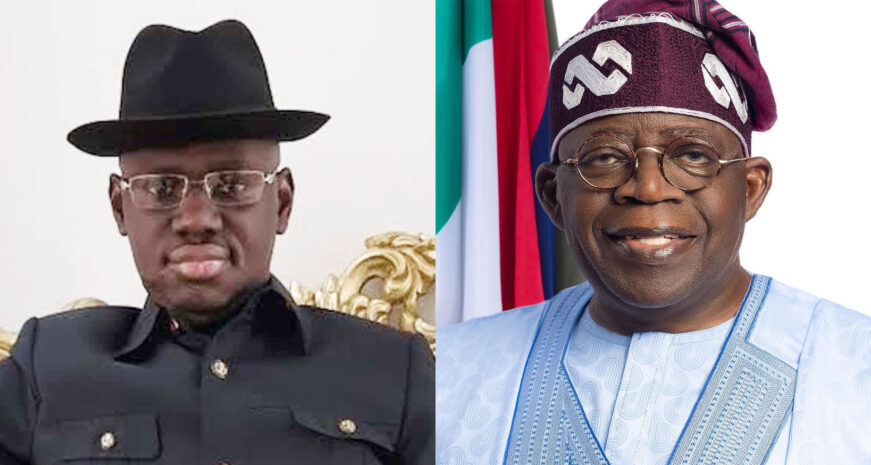
A former Deputy National Publicity Secretary of the All Progressives Congress (APC), Timi Frank, has called on the United States and the wider international community to impose sanctions on key officials of Nigeria’s Federal Government, alleging actions that threaten the country’s democratic foundations.
In a strongly worded statement released on Tuesday, Frank appealed to the U.S. government to introduce visa bans, asset freezes and other economic sanctions against senior officials in the administration of President Bola Ahmed Tinubu. He accused the government of deploying state institutions to weaken opposition parties ahead of future elections.
According to Frank, the alleged objective of such moves is to prevent the emergence of any formidable challenger capable of contesting the President in subsequent polls. He warned that suppressing opposition voices could destabilise the nation if left unchecked.
“The aim and goal is to ensure that no political party fields a candidate strong enough to contest with the President,” he said, adding that democracy must remain a contest of ideas rather than what he described as a “monarchical system.”
Frank further alleged that critical democratic institutions, including the judiciary and the legislature, were being used to frustrate opposition forces. He urged the international community — particularly the United States and the United Nations — to intervene proactively.
READ ALSO:Before Tinubu’s second term bid crashes Nigeria’s democracy
“The international community must not wait until Nigeria descends into crisis or conflict before taking action,” he stated, cautioning that instability in a country of over 200 million people could trigger significant regional and global consequences.
The former APC spokesman also levelled accusations against the Governor of the Central Bank of Nigeria (CBN), Mr. Yemi Cardoso, alleging involvement in activities that could undermine democratic processes. He called for sanctions against the apex bank’s leadership if such allegations are substantiated.
On electoral matters, Frank criticised the leadership of the Independent National Electoral Commission (INEC), describing its chairman as biased and unfit, and alleging that the commission was being positioned to favour certain political interests.
He insisted that electoral officials and other key actors within the administration should be held accountable for any breakdown of law and order arising from what he termed the current political climate.
Frank also claimed he was prepared to provide foreign governments with detailed information regarding assets allegedly owned by Nigerian public officials in jurisdictions including the United States, the United Kingdom and the United Arab Emirates, to facilitate targeted sanctions.
Describing his statement as a “crisis warning,” Frank said urgent steps were necessary to safeguard Nigeria’s democracy and prevent what he characterised as a drift toward authoritarian rule.
He added that he would submit to U.S. authorities and other international actors a list of officials he believes are colluding to undermine democratic governance in Nigeria, urging the U.S. Embassy to permanently deny visas to individuals he described as anti-democratic forces within the current administration.
As of the time of filing this report, there has been no official response from the Presidency, the CBN, or INEC regarding the allegations.


 Latest7 days ago
 Football6 days ago
 Business5 days ago
 Football1 week ago
 Football1 week ago
 Football1 week ago
 Latest6 days ago
 Health6 days ago