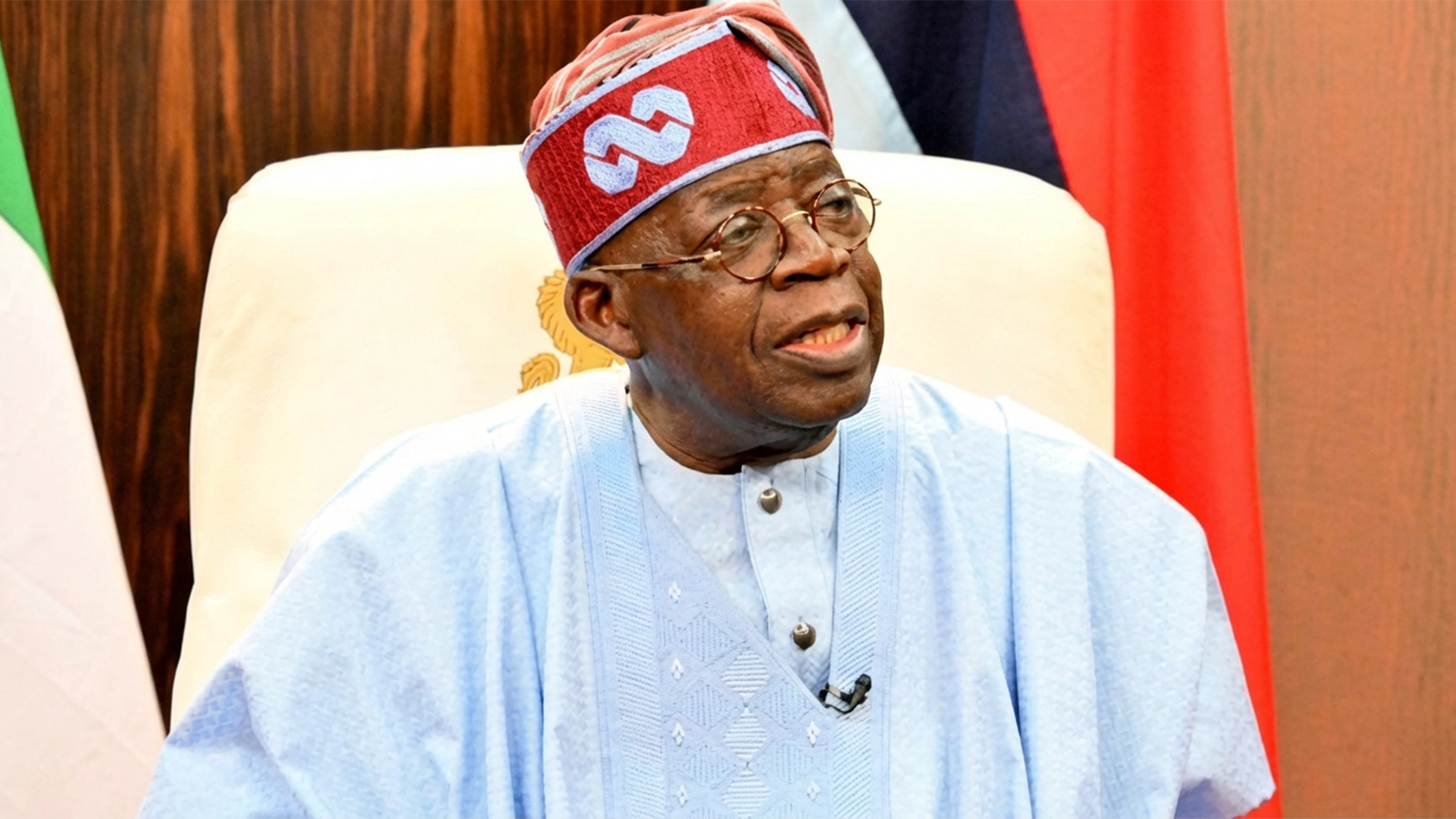
President Bola Tinubu has defended his decision to sign the Electoral Act 2026 (Amendment) into law, insisting that the credibility of elections depends more on effective human management than on compulsory real-time electronic transmission of results.
The President spoke on Wednesday at the Presidential Villa in Abuja shortly after assenting to the bill, addressing weeks of intense public debate over whether polling unit results must be uploaded live to the central server of the Independent National Electoral Commission (INEC).
Tinubu argued that no technological system can function independently of the people who operate it, stressing that elections remain fundamentally human-driven processes.
“It’s not as important as the historic aspects of this. What is crucial is that you manage the process to the extent there will be no confusion, no disenfranchisement of Nigerians, and that we are all going to see democracy flourish,” he said.
He added that final election outcomes would always be announced by accredited officials, not by computer systems.
“No matter how good the system is, it’s managed by the people, promoted by the people, and the result is finalised by the people. In fact, for final results, you are not going to be talking to the computer; you are going to be talking to human beings who will announce the final results,” the President stated.
On the contentious issue of mandatory real-time transmission, Tinubu questioned Nigeria’s broadband capacity and technological readiness.
READ ALSO: Presiding officers exposed to risk’ – Igini warns on impact of controversial Electoral Act Bill
“Maybe Nigerians should question our broadband capability. How technically are we today? How technically will we be tomorrow to answer the call of either real-time or not?” he asked.
He also highlighted cybersecurity concerns, warning against potential glitches and hacking in what he described as an era of “computer inquisitiveness.”
According to him, Nigeria’s voting procedures remain largely manual — from accreditation to ballot casting and counting — with electronic transmission serving mainly to convey figures already recorded on physical result sheets.
“It’s just the arithmetic accuracy that is to enter into Form EC8A. It’s manual, essentially. The transmission of that manual result is what we’re looking at,” Tinubu said.
The amendment had generated sharp divisions within the National Assembly. While the House of Representatives initially backed compulsory real-time electronic transmission, the Senate adopted a version that retained electronic transmission but allowed manual collation where technical failures occur.
The disagreement centered particularly on the wording of Clause 60(3) of the Electoral Act.
Under the final version signed into law, results must be electronically transmitted after Form EC8A is completed, signed, and stamped at polling units. However, where network disruptions or technological failures arise, the manually endorsed result sheet will form the basis for collation and declaration.
Electoral law experts say the amendment attempts to strike a balance between technological innovation and operational realities.
A constitutional lawyer based in Abuja noted that “the law recognizes Nigeria’s infrastructural limitations while still preserving the option of electronic transmission. The key question will be implementation.”
Another election monitoring specialist argued that while human oversight is essential, clear legal safeguards must prevent manual collation from becoming a loophole for manipulation.
“Technology is not a substitute for integrity, but it can enhance transparency. The effectiveness of this amendment will depend on strict enforcement, training of officials, and credible oversight,” the analyst said.
Digital governance advocates, however, caution that allowing manual fallback options without strict verification protocols could fuel post-election disputes, particularly in closely contested races.
As Nigeria prepares for the 2027 general elections, the focus is likely to shift toward how INEC operationalises the amended provisions and whether broadband expansion and cybersecurity safeguards can strengthen public trust in the electoral process.
While President Tinubu maintains that democracy will “flourish” under the new framework, analysts agree that the ultimate test will lie not in the wording of the law, but in the transparency, competence, and integrity with which it is implemented.



 Energy6 days ago
 Crime6 days ago
 Football6 days ago
 Business6 days ago

 Business6 days ago
 Crime6 days ago
 Business6 days ago