President Bola Tinubu has committed to resolving the colossal ₦4 trillion debt owed to Nigeria’s power generation companies (GENCOs), pledging to restore financial stability to the nation’s beleaguered electricity sector.
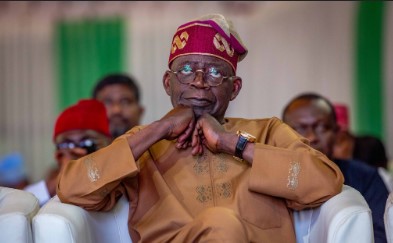
The President made this declaration on Friday during a high-level meeting at the Presidential Villa with GENCO representatives, led by retired Colonel Sani Bello.
President Tinubu acknowledged the inherited liabilities dating back to 2015, stating, I accept the assets and liabilities of my predecessors.
But that acceptance must be based on credible grounds. I need to wear the audit cap of verifiability and authenticity.
He appealed to the GENCOs for more time to conduct a thorough verification and validation process of the legacy debts, emphasizing that only genuinely confirmed debts would be settled.
In a significant move, the President gave anticipatory approval for a ₦4 trillion bond programme specifically designed to settle validated debt claims.
However, he reiterated the crucial condition: “Only amounts that the federal government validly owes will be included in the Debt Management Office’s bond issuance.”
Mrs. Olu Verheijen, Special Adviser to the President on Energy, clarified that the ₦4 trillion debt exposure encompasses unfunded tariff shortfalls and market shortfalls accumulated over the past decade.
While ₦1.8 trillion of GENCO claims had been validated by the Nigerian Bulk Electricity Trading Company (NBET) as of April 2025, the full ₦4 trillion figure remains under review and could be revised downwards.
She affirmed the government’s commitment to a fair and transparent resolution of the financial overhang that has crippled GENCO operations and strained relationships with gas suppliers and creditors.
Minister of Power, Chief Adebayo Adelabu, commended the President’s dedication to electricity reforms, highlighting notable progress since 2023.
He reported a 70% increase in sector revenue, rising from ₦1 trillion in 2023 to ₦1.7 trillion in 2024, and a reduction of government subsidy obligations by over ₦700 billion.
Furthermore, installed generation capacity has increased to 14,000MW, with an all-time peak generation of 5,801MW recorded on March 4, 2025.
Adelabu also proudly noted no grid collapses in 2025, attributing this to upgrades under the Presidential Power Initiative.
Despite these strides, he warned that a severe liquidity crisis could derail ongoing reforms without immediate intervention.
Prominent business leaders, Tony Elumelu and Kola Adesina, made urgent appeals to the President, underscoring the existential threat the debt burden poses to GENCO viability and future investments.
ALSO READ :VON apologizes for erroneous WAFCON 2025 report, unveils sweeping editorial reforms
Elumelu stated, “We’ve come to you as a last hope. The GENCOs are heavily indebted to banks, and the foreclosure threats are real not because we failed, but because the system owes us trillions.”
Adesina stressed the critical need to unlock 800 million standard cubic feet of gas through NLNG to bolster underperforming plants.
“Liquidity is the oxygen of our business,” he asserted, cautioning that without urgent support, generation capacity would stall, jeopardizing Nigeria’s industrial and economic ambitions.
President Tinubu reaffirmed his commitment to a market-driven power sector and appealed to banks to exercise patience, urging them to sharpen your pencils, but keep an eraser handy.
Let’s persevere together. He underscored the critical importance of electricity for economic growth, industrial development, and human dignity, describing it as “the most important discovery of humanity in the last 1,000 years.”
The meeting saw the attendance of top government officials, regulators, and energy stakeholders, including Chief of Staff Femi Gbajabiamila and Coordinating Minister of the Economy Wale Edun.












 Energy1 week ago
 Crime7 days ago
 Football2 days ago
 Football1 week ago
 Business1 week ago
 Crime7 days ago
 Business1 week ago