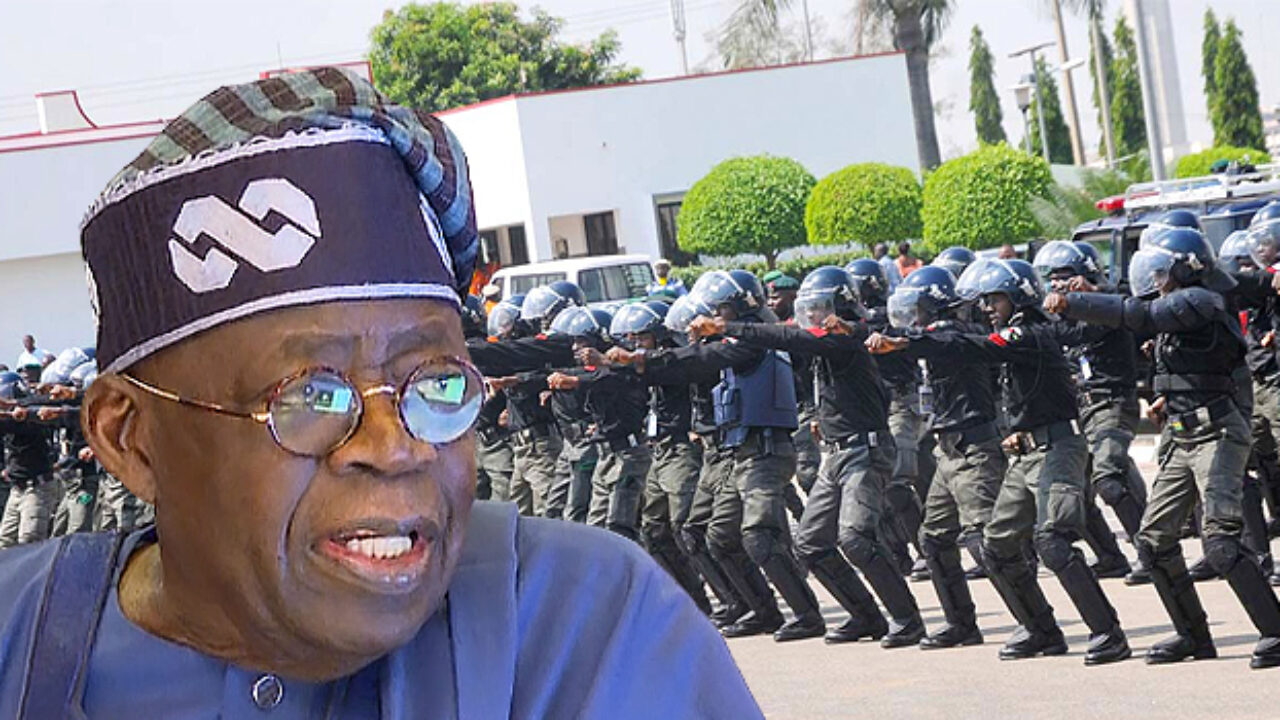
In a decisive move aligned with the resolve of President Bola Tinubu that there is no turning back on the establishment of State Police, the Inspector-General of Police, Tunji Disu, has inaugurated an eight-member committee to drive the implementation process.
The committee, which is expected to lay the groundwork for the operationalisation of State Police structures across the federation, will be chaired by Professor Olu Ogunsakin, the pioneer Director-General of the National Institute of Police Studies, Kano.
The panel has been tasked with developing a practical framework to guide the decentralisation of policing responsibilities in line with ongoing security reforms.
The inauguration followed Disu’s formal engagement with senior officers of the Nigeria Police Force on Wednesday, where he also unveiled his broad policing vision anchored on professionalism, accountability, and human rights compliance.
The development comes a day after the Nigeria Police Council unanimously ratified Disu’s appointment as the 23rd Inspector-General of Police, formally confirming his leadership of the Force.
Addressing the top hierarchy of the Force, the new police chief emphasised that leadership transcends titles and positions, describing it instead as a call to responsibility and service.
He stressed that professionalism and accountability must cease to be rhetorical slogans and instead become guiding principles shaping conduct and operations across all commands nationwide.
READ ALSO: Disu describes appointment as IGP as unexpected, deeply humbling
Disu underscored that authority is most effective when exercised with restraint, reiterating that respect for human rights remains fundamental to modern policing.
According to him, every Nigerian—regardless of status, ethnicity, or background—deserves to be treated with dignity, fairness, and justice.
As part of immediate reforms, the Inspector-General announced plans to strengthen internal oversight mechanisms within the Force.
He directed that the Public Complaint Unit and the X-Squad be empowered to operate independently to ensure transparency, discipline, and improved public trust.
Speaking further on the proposed State Police structure, Disu noted that decentralisation would enable different tiers of government to participate more actively in maintaining security.
He expressed confidence that the reform, once fully implemented, would improve response times, enhance intelligence gathering at the grassroots, and foster stronger collaboration between communities and law enforcement authorities.
The inauguration of the implementation committee signals what observers describe as a major step toward restructuring Nigeria’s policing architecture in line with the President’s security reform agenda.



 Football1 week ago
 Football1 week ago
 Comments and Issues7 days ago
 Business1 week ago
 Football1 week ago
 Football1 week ago
 Comments and Issues7 days ago
 Comments and Issues7 days ago