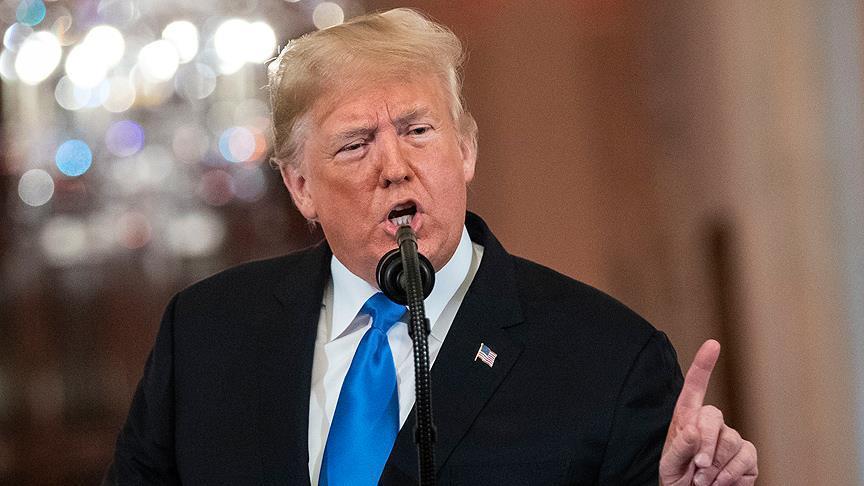
In a bold and contentious address to the World Economic Forum in Davos, Switzerland, U.S. President Donald Trump urged global leaders and business executives to take immediate actions to lower oil prices and slash interest rates worldwide.
Speaking via video from Washington, Trump issued stark warnings to America’s trading partners while outlining his vision for economic growth during his nascent second term.
“I’ll demand that interest rates drop immediately. And likewise, they should be dropping all over the world,” Trump stated emphatically on Thursday. “I’m also going to ask Saudi Arabia and OPEC to bring down the cost of oil.”
The speech, delivered to a packed audience of approximately 3,000 attendees, marked Trump’s first formal address to the global elite since his inauguration just four days prior.
While pledging to combat inflation with a mix of deregulation, tax cuts, and increased domestic energy production, Trump also reiterated his commitment to an “America-first” agenda, sparking applause from some but deep concern among others.
Trump’s remarks had immediate repercussions on global markets. Oil prices dipped into the negative as he spoke, while the euro weakened, and the U.S. dollar exhibited fluctuations against a basket of foreign currencies. The S&P 500 index, however, rose to near-record highs, reflecting investor optimism about Trump’s domestic growth policies.
Economists were divided on Trump’s calls for interest rate cuts and his criticisms of OPEC. Dr. Maria Hendricks, an economist at the Brookings Institution, said, “While lower oil prices can reduce consumer costs in the short term, Trump’s approach undermines the autonomy of central banks and could lead to instability in the global economy.”
READ ALSO: List of Executive Orders Trump signed at inauguration
Espen Barth Eide, Norway’s Minister of Foreign Affairs, also weighed in: “It’s not unusual for a leader to prioritize domestic growth, but advocating for tariffs and abandoning free trade principles is concerning. It undermines multilateral cooperation, which has been the bedrock of global economic stability.”
Trump directed some of his harshest rhetoric toward longstanding U.S. allies, including Canada and the European Union, accusing them of taking advantage of America through trade surpluses. “We have a tremendous deficit with Canada. We’re not going to have that anymore,” he asserted.
His remarks also drew criticism from within the Davos forum. Former U.S. Secretary of State John Kerry, visibly uncomfortable during the address, later told reporters, “This is not the direction the world needs to move in. Isolationism and divisiveness won’t solve the challenges we face.”
Trump used the platform to criticize major U.S. banks, including Bank of America and JPMorgan Chase, accusing them of discriminating against conservatives. Bank of America CEO Brian Moynihan deflected the accusation, choosing instead to praise Trump’s administration for successfully bidding to host the 2026 FIFA World Cup.
READ ALSO: Your victory is testament to resilience of democracy – Obi to Trump
The president reiterated his commitment to making the U.S. a global leader in fossil fuels and energy production. “The United States has the largest amount of oil and gas of any country on Earth, and we’re going to use it,” Trump said. He argued that this strategy would bolster U.S. manufacturing, reduce inflation, and support energy independence.
However, Trump also issued veiled threats of steep tariffs against the European Union, Mexico, Canada, and China, raising concerns about potential trade wars. Some business leaders at Davos welcomed Trump’s focus on energy, while others worried that his protectionist policies could destabilize global supply chains.
In addition to his economic proposals, Trump’s recent actions have sparked outrage domestically and internationally.
Since taking office, he has withdrawn the U.S. from the World Health Organization and the Paris climate agreement, pardoned over 1,500 supporters involved in the January 6 Capitol attack, and begun dismantling diversity programs within the U.S. government.
Trump has also proposed renaming the Gulf of Mexico as the “Gulf of America” and suggested taking back the Panama Canal from Panama—proposals viewed as provocative by international observers.
Critics argue that Trump’s policies risk isolating the U.S. from its allies and undermining efforts to address global challenges like climate change and inequality.
As Trump’s presidency gains momentum, his unapologetically combative stance on trade and economic policy promises to reshape U.S. relations with the world.
With plans to hold talks with Russian President Vladimir Putin on nuclear arms reductions and ongoing efforts to bolster U.S. dominance in artificial intelligence and cryptocurrency, Trump’s second term is poised to bring sweeping changes—both domestically and globally.



 Football4 days ago

 Crime5 days ago
 News7 days ago
 Business6 days ago
 Crime6 days ago
 Business5 days ago
 Business6 days ago