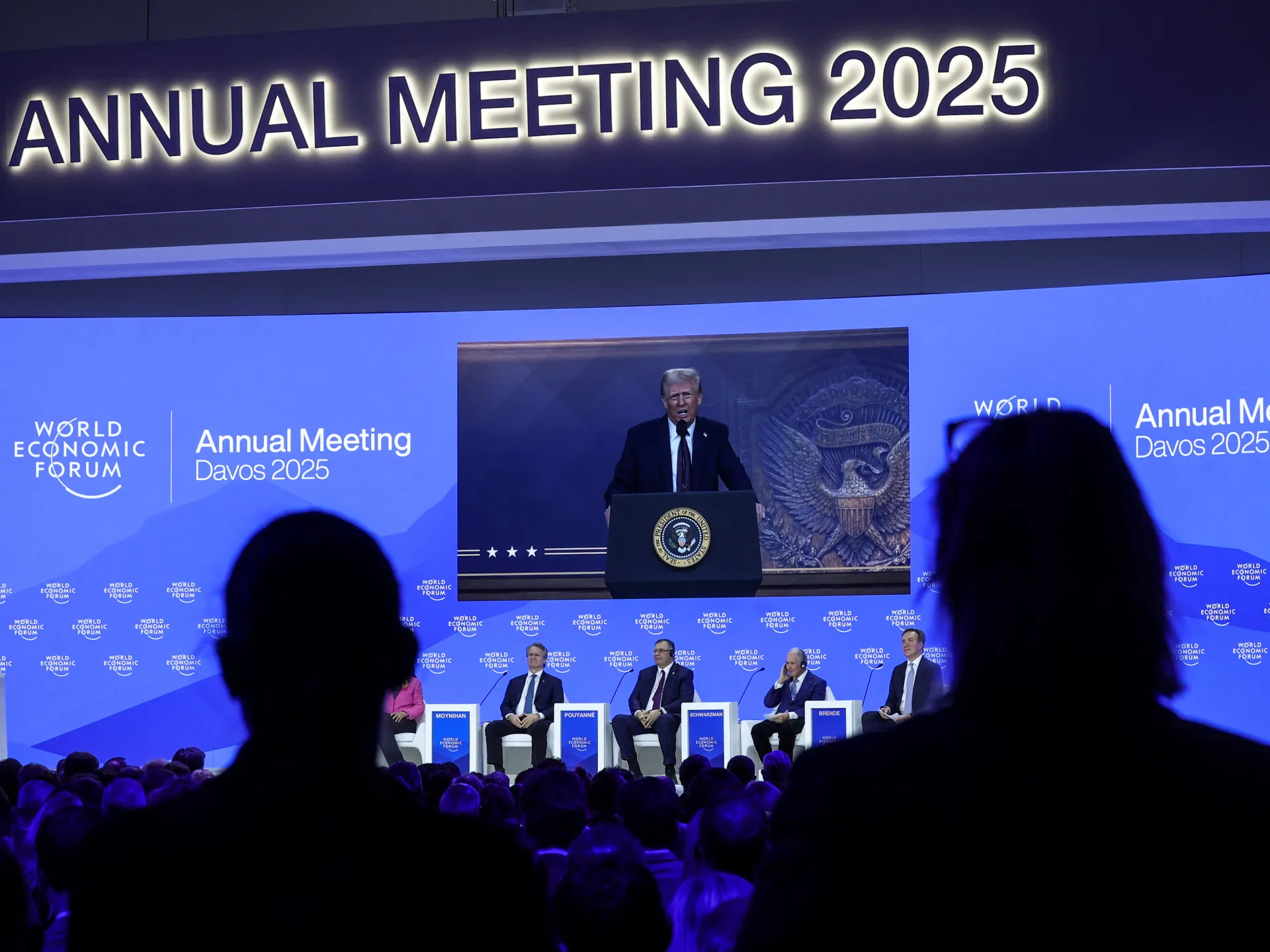
In a fiery address to the World Economic Forum (WEF), President Donald Trump criticized global climate agreements, notably labeling the Paris Climate Accord a “Green New Scam,” and announced sweeping measures to prioritize U.S. energy independence and deregulation.
Trump’s remarks, delivered remotely due to his recent inauguration, signaled a sharp departure from the environmental policies of his predecessor, reigniting debates over climate change and energy strategy on a global scale.
Trump dismissed the Paris Climate Accord as a “one-sided agreement” that unfairly burdens the United States while allowing major polluters like China and India to thrive. “It’s a scam,” he declared, accusing global leaders of imposing restrictions on American industries while failing to hold other nations accountable for their emissions.
“The United States is not a piggy bank for global climate dreams,” Trump stated. He argued that adhering to the Paris Accord stifled American innovation, drove up energy costs, and handed economic advantages to competitors. “We’re not going to participate in an agreement where other nations cheat, lie, and gain at our expense,” he added.
Critics of Trump’s stance, including environmental groups and international leaders, quickly countered his claims. Christiana Figueres, a key architect of the Paris Agreement, remarked, “The accord is a cooperative effort that benefits all nations, including the United States. To call it a scam is to misunderstand its purpose and potential.”
READ ALSO: Trump demands OPEC cut oil prices, warns allies of tariffs, urges global interest rate cuts at Davos
Trump’s speech was not merely critical—it was a declaration of an aggressive new energy agenda. Declaring a “national energy emergency,” the president unveiled plans to expand oil and gas drilling, streamline infrastructure approvals, and roll back environmental regulations. He vowed to unlock “the liquid gold under our feet,” referring to America’s vast reserves of fossil fuels.
“The United States has the largest amount of oil and gas of any country on Earth, and we’re going to use it,” Trump proclaimed. He argued that increasing domestic energy production would not only drive down prices but also establish the U.S. as a global energy leader. According to Trump, these moves would reduce the cost of goods, revitalize American manufacturing, and restore the country’s economic dominance.
The president also criticized renewable energy initiatives like the Green New Deal, calling it a “disastrous and wasteful experiment.” He took aim at mandates promoting electric vehicles, which he argued were costly and restrictive for consumers. “We’re going to let people buy the car they want to buy,” he said, reaffirming his support for free market principles.
Trump’s announcement has already sparked debates about the potential economic and environmental fallout. Proponents of his policies, including leaders in the oil and gas industry, welcomed the changes.
Harold Hamm, a billionaire oil magnate and Trump ally, praised the move, stating, “This is exactly what America needs to reclaim its position as an energy superpower.”
However, environmentalists warn of dire consequences. Dr. Maureen Crossley, a climate scientist at Stanford University, cautioned, “Expanding fossil fuel extraction while rolling back clean energy initiatives is a step backward.
READ ALSO: List of Executive Orders Trump signed at inauguration
The U.S. risks exacerbating climate change, undermining international cooperation, and missing out on the economic benefits of the green energy transition.”
Trump’s decision to withdraw from the Paris Accord and promote fossil fuels has added new tension to U.S. relations with key allies. European leaders expressed concern that the U.S. was abandoning its leadership role on climate action.
French President Emmanuel Macron, a vocal proponent of the Paris Accord, criticized Trump’s remarks, stating, “The fight against climate change is not optional—it is essential for the survival of our planet.”
Domestically, Trump’s policies are likely to face legal challenges and pushback from environmental advocacy groups and Democratic lawmakers. Senate Majority Leader Chuck Schumer, in a press briefing, called Trump’s actions “short-sighted and reckless,” vowing to fight them in Congress and the courts.
Despite the backlash, Trump remained resolute in his belief that his policies would usher in a new era of American prosperity. He touted significant corporate investments in the U.S., including a $500 billion pledge from Oracle, SoftBank, and OpenAI for artificial intelligence infrastructure, and a reported $600 billion commitment from Saudi Arabia.
Trump also hinted at further negotiations with OPEC to lower oil prices, which he claimed would not only benefit the U.S. but also bring stability to global markets.



 Football4 days ago

 Crime5 days ago
 News7 days ago
 Business6 days ago
 Crime6 days ago
 Business5 days ago
 Business6 days ago