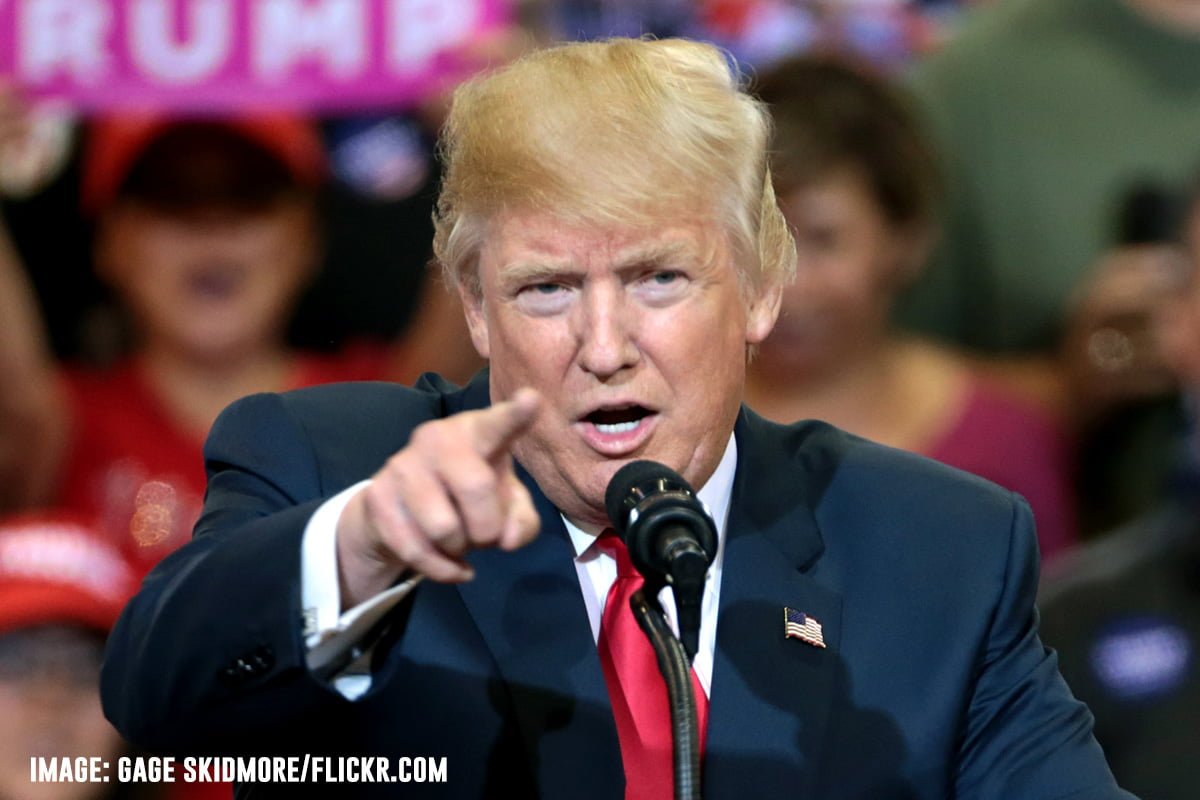
US President Donald Trump has declared that relations between the United States and United Kingdom have changed, expressing strong disappointment with Prime Minister Keir Starmer over the delayed approval to use British military bases for operations against Iran.
“We were very disappointed in Keir,” Trump said in an interview with The Daily Telegraph published on Monday. “That’s probably never happened between our countries before,” he said, adding: “It sounds like he was worried about the legality”.
The rift emerged when Starmer initially blocked Trump’s request to use British bases including RAF Fairford in Gloucestershire and the strategically crucial Diego Garcia in the Indian Ocean for strikes against Iran. When Washington requested the use of bases, Starmer is understood to have consulted government lawyers, who advised against participation.
After the US launched Operation Epic Fury against Iran on Saturday without British support, Starmer eventually relented nearly 48 hours later. In a televised address, he confirmed that Westminster approved a US request to use British bases for the “defensive purpose” of destroying Iranian missiles “at source in their storage depots, or the launches which are used to fire the missiles”.
However, the concession came too late to satisfy Trump. The change is “useful”, Trump told The Telegraph, but Starmer “took far too much time” to get there, he said.
Starmer broke with Trump on Monday, telling Parliament: “This government does not believe in regime change from the skies.” He said the UK would not join offensive operations alongside the US and Israel unless there’s a “viable thought-through plan” with an achievable objective.
Starmer announced on Monday that British military bases in Cyprus would not be used by the United States in its war with Iran, despite the broader agreement allowing limited defensive use of other British facilities.
The decision triggered immediate consequences. A suspected Iranian drone crashed into the runway at the UK’s RAF Akrotiri base in Cyprus, with limited damage and no casualties. Two drones headed for the base were intercepted by Cypriot authorities.
A Cypriot government source told AFP the attack had been launched from nearby Lebanon, probably by the Iran-backed militant group Hezbollah.
The dispute has exposed deep tensions between the longtime allies. A YouGov poll conducted on February 20 found that 58 percent of Britons oppose allowing the US to launch air strikes on Iran from UK bases, including 38 percent who strongly oppose.
Starmer attempted to make clear his rationale, saying the government had concluded that President Trump’s strikes were not legal and not “thought-through.” He stated: “We all remember the mistakes of Iraq and we have learned those lessons. Any UK actions must always have a lawful basis and a viable, thought-through plan”.
The fractured relationship comes as Trump also criticized Starmer’s plan to hand over sovereignty of the Chagos Islands (including Diego Garcia) to Mauritius under a 99-year leaseback arrangement, calling it a “big mistake” and suggesting it undermines Western security interests at a critical moment.
The public rift represents one of the most significant strains in the US-UK “special relationship” in decades, with both leaders now navigating a diplomatic crisis while Iran’s retaliatory capabilities continue to threaten regional stability and British interests in the Middle East.



 Football1 week ago
 Football1 week ago
 Comments and Issues7 days ago
 Business1 week ago
 Football1 week ago
 Football1 week ago
 Comments and Issues7 days ago
 Health6 days ago