President Donald Trump’s latest restrictions on student visas have intensified financial fears for 16 U.S. private colleges that are already on shaky ground.
According to a recent Forbes report, these institutions face an existential threat as their primary revenue source—tuition from international students—is now under pressure from tightening immigration policies.
The targeted schools rely on foreign students for at least one-third of their total enrollment and earn over half of their revenue from tuition and fees.
Many of these colleges already received a financial health grade of C+ or lower in Forbes’ 2025 college rankings, indicating weak long-term financial sustainability even before the new visa policy changes.
Among the most vulnerable are Harrisburg University of Science and Technology and Hult International Business School, where international students make up more than 75% of the student body.
St. Francis College in New York, which has tripled its foreign student population in the past year, has also made desperate financial moves, including the $160 million sale of its campus. Despite those efforts, auditors still questioned its viability in a June 2024 report.
The full list of at-risk institutions includes:
Harrisburg University (PA)
Hult International Business School (MA)
Maharishi International University (IA)
New England College (NH)
Manhattan School of Music (NY)
Campbellsville University (KY)
Stevens Institute of Technology (NJ)
Illinois Institute of Technology (IL)
California College of the Arts (CA)
The New School (NY)
University of New Haven (CT)
University of Bridgeport (CT)
Saint Peter’s University (NJ)
Lindsey Wilson College (KY)
Missouri Valley College (MO)
St. Francis College (NY)
READ ALSO: Trump confirms U.S. airstrikes on Iran’s nuclear sites
These colleges, many of which have built graduate-level programs catering heavily to international students, now face a bleak outlook. Without a steady flow of full-paying foreign enrollees—who typically do not qualify for U.S. federal aid—many may be pushed to the brink of closure.
The Trump administration’s recent actions have only added fuel to the fire. In April 2025, the U.S. government revoked visas for over 1,400 students across 240 universities, citing concerns linked to pro-Palestine protests on campuses.
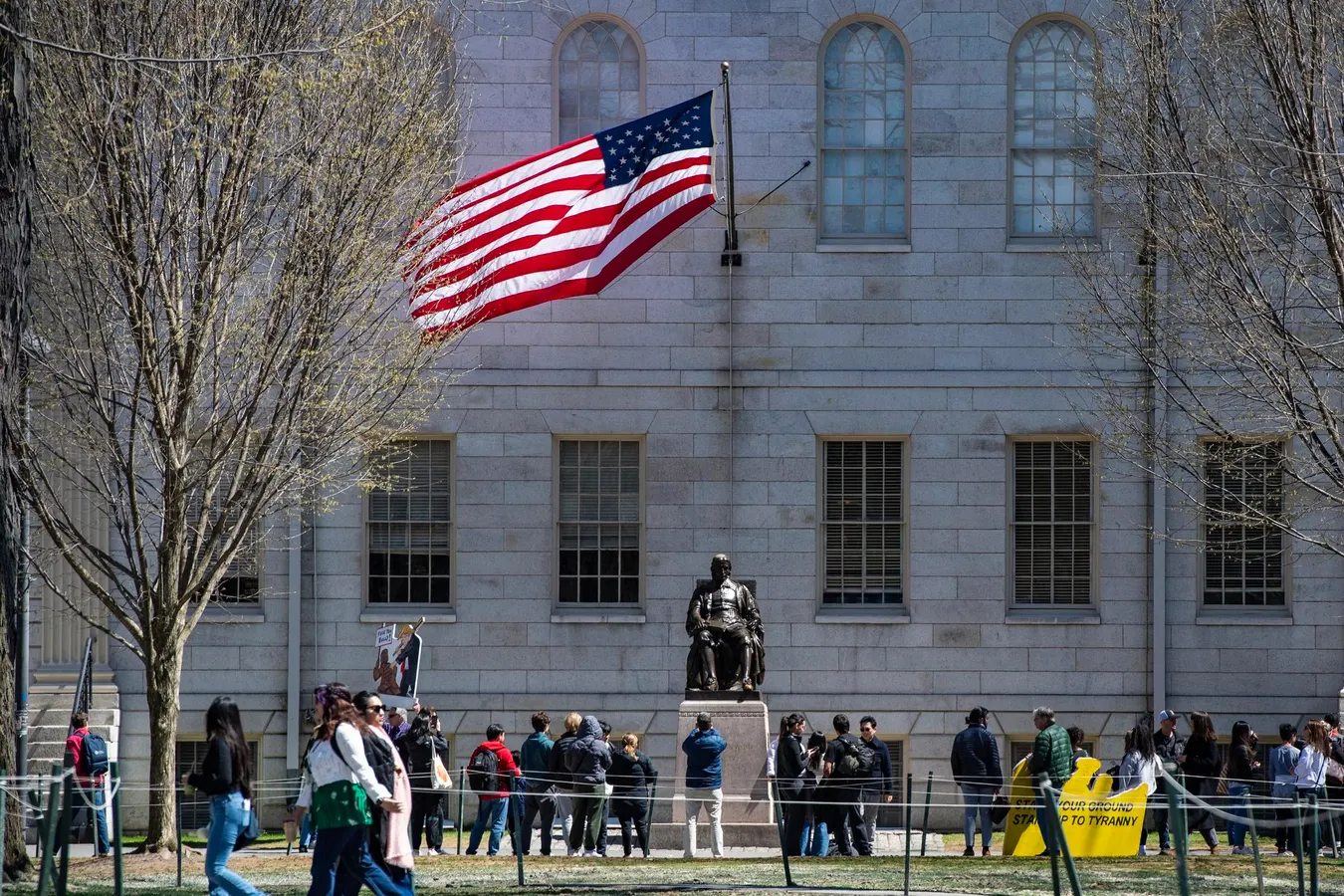
Even Harvard University briefly lost its certification to enroll foreign students until a federal court intervened.
In a particularly high-profile incident, the Department of Homeland Security, led by Secretary Kristi Noem, cancelled $2.7 million in grants to Harvard and warned the school it could permanently lose the right to host international students if it failed to cooperate with federal investigations into “illegal and violent activities” linked to certain visa holders.
Although student visa processing resumed in June 2025 following a temporary freeze, applicants are now subject to stricter screening—including mandatory submission of social media handles for expanded vetting.
These developments have sent shockwaves through the U.S. higher education sector, where international students have long served as a financial lifeline, particularly for smaller private colleges grappling with declining domestic enrollment.
Industry experts warn that without urgent policy changes or targeted financial support, some of these institutions may not survive the coming academic year.




 Football1 week ago
 Business1 week ago
 Latest6 days ago
 Business7 days ago
 Football1 week ago
 Business1 week ago
 Business1 week ago
 Business4 days ago