
Health & Fitness
Twin deaths after immunisation raise questions for Lagos health authorities

Published
3 months agoon
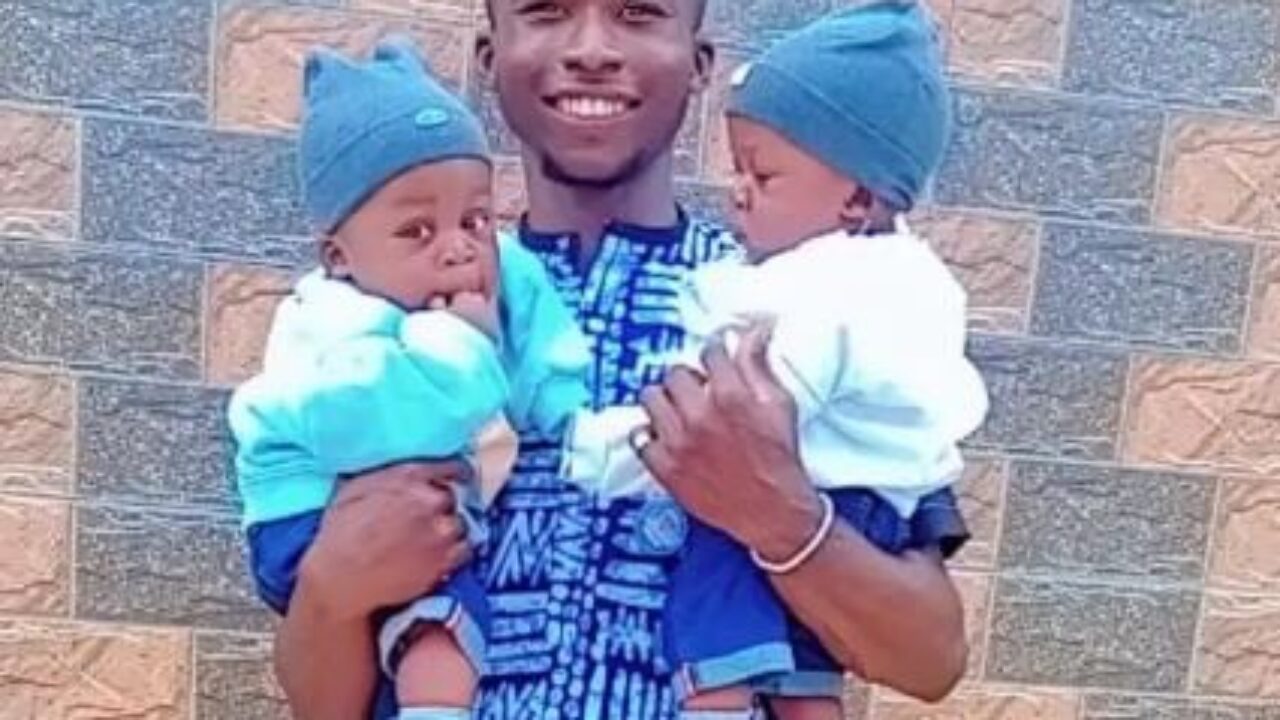
By the morning of Christmas Day 2025, Samuel Alozie says his home had turned from a place of routine celebration into one of sudden grief.
Less than 24 hours after taking his nine-month-old identical twin sons for routine immunisation at a public health facility in Lagos, both children were dead.
The twins, Testimony and Timothy, had been taken to the Ajangbadi Primary Health Centre in Ojo Local Government Area on the morning of December 24, a visit Alozie said followed the regular vaccination schedule recommended for infants.
What happened next has since ignited widespread public debate, scrutiny of immunisation practices, and renewed questions about consent, transparency and accountability in Nigeria’s primary healthcare system.
“They Became Weak Almost Immediately”
Speaking in videos shared on social media, Alozie—popularly known as Promise Samuel on TikTok—recounted that the twins became visibly weak shortly after receiving their injections.
“After the injection, they were very weak,” he said. “The nurse told me that if the temperature continued, I should give them paracetamol.”
According to him, the medication failed to stabilise the babies. Instead, their condition worsened overnight.
“The drug weakened the two of them to the extent they couldn’t eat, they couldn’t play as usual,” he said. By the morning of December 25, both children were dead.
The incident drew national attention after Alozie posted a video showing the bodies of the twins laid in separate body bags, followed by emotional explanations of what he believes went wrong.
Alozie has accused health workers at the Ajangbadi facility of negligence and possible malpractice. Among his allegations are claims that expired, fake or excessive doses of vaccines may have been administered.
“Before you go for immunisation, try to know what they are giving to your child,” he warned other parents. “I guess maybe it was an overdose, or fake drugs.”
He also alleged that deworming tablets were given to the infants without his consent—an action he said was neither explained nor discussed beforehand.
Another concern raised by the father was the identity of the health worker who administered the vaccines.
“The woman that has been giving us injections is not the woman who gave us the injection that day,” he said. “Another face.”
The health centre, he claimed, later suggested that the twins may have died from food-related bacteria—an explanation he flatly rejected.
“She said it is food bacteria that killed my children. How can food bacteria kill a child?” he asked.
As of the time of reporting, neither the Lagos State Ministry of Health nor the Lagos State Primary Health Care Board had released an official public statement addressing the incident.
Alozie confirmed that an autopsy had been conducted but expressed deep scepticism about the credibility of the outcome.
“I’m scared,” he said. “I don’t know if this government will give me actual justice. This is government-to-government. I know they will manipulate the result.”
Unable to afford legal representation, the grieving father has appealed for help from lawyers, civil society organisations and the wider public.
“If you’re a human rights lawyer, please help me. I don’t have a lawyer,” he pleaded. “I need justice for these children.”
Public health experts caution against drawing conclusions before a thorough, independent investigation is completed, while also acknowledging that the allegations raise serious concerns that must not be ignored.
A consultant paediatrician in Lagos, who asked not to be named, said severe reactions to routine childhood vaccines are “extremely rare,” especially to the point of causing death within hours.
According to the expert, potential causes of sudden infant deaths after vaccination could include coincidental underlying infections, improper vaccine storage, incorrect dosing, or administration errors.
Another public health specialist noted that consent and communication are critical parts of immunisation.
“Parents must be informed about what vaccines or medications are being given, possible side effects, and what warning signs to look out for,” she said. “Any deviation from standard protocol—such as giving additional medication without consent—raises red flags.”
The deaths have sparked intense debate online and offline, with some Nigerians expressing fear over vaccine safety, while others warn against misinformation that could undermine public health campaigns.
Civil society groups and health advocates are calling for an independent investigation into the incident, including a transparent review of vaccine batches used at the Ajangbadi health centre, staff conduct, cold-chain storage conditions, and the autopsy findings.
“Public confidence in immunisation depends on accountability,” said a health policy analyst. “If mistakes were made, they must be acknowledged. If not, the public deserves clear, evidence-based explanations.”
For Alozie, beyond policy debates and expert analysis, the issue remains deeply personal.
“These children were my life,” he said in one video. “I took them for immunisation because I wanted them to be healthy.”
As investigations continue—or await official confirmation—his demand remains simple: clarity, accountability, and justice.
“I don’t want this to happen to another family,” he said.

You may like
Trending
 Business1 week ago
Nigeria braces for cost surge amid 2026 inflation projections
 Latest6 days ago
ADC accuses INEC of misinterpreting court order, demands chairman’s removal amidst growing leadership crisis

 Business1 week ago
Naira slips to N1,387/$ in March amid persistent FX market turmoil

 Football6 days ago
Manchester City storm into FA cup semi-finals with 4-0 rout of Liverpool
 Health1 week ago
Emails expose concerns within CDC, FDA over COVID-19 vaccine data mining system
 Business5 days ago
Soaring fuel prices worsen economic hardship for Nigerians

 Football1 week ago
Super Eagles to Face Poland, Portugal in June Friendlies
 Football1 week ago
Gravina Resigns as Italy FA President After World Cup Failure