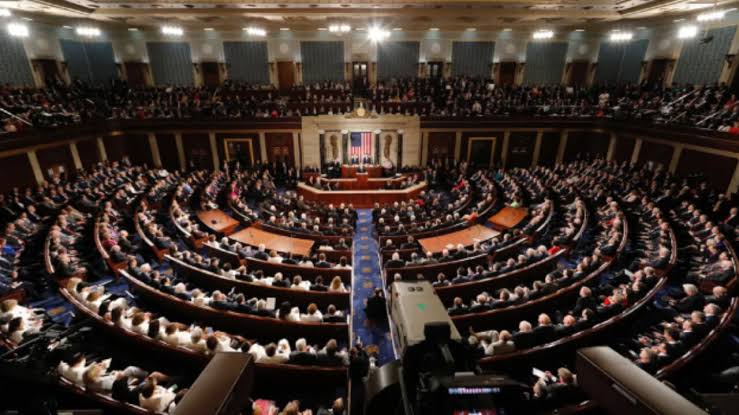
Nigerian activist, Frank Utoo, has testified before the United States Congress, alleging that the Nigerian government has consistently downplayed the scale and gravity of attacks against Christian communities in different parts of the country, while also raising concerns over the alleged spending of $9 million in unbudgeted public funds on national security.
Appearing before U.S. lawmakers, Utoo told the congressional panel that repeated attacks and mass killings of Christians, particularly in parts of northern and central Nigeria, have not received adequate acknowledgement or decisive response from Nigerian authorities.
He claimed that despite reports by local communities and international human rights organisations, government reactions have often been muted, slow, or dismissive.
According to him, the failure to properly recognise and confront the violence has contributed to a climate of impunity, leaving affected communities vulnerable and deepening fears over religious persecution.
Utoo urged U.S. lawmakers to take a closer interest in Nigeria’s internal security challenges, stressing that the situation requires sustained international attention.
READ ALSO: Plateau killings: Fulani terrorists once threatened Christians’ll run with Christmas meat in their hands
Beyond the security situation, the activist also questioned the alleged use of $9 million by the Office of the National Security Adviser (ONSA), headed by Nuhu Ribadu.
He claimed that the funds were reportedly expended outside approved budgetary frameworks, raising serious concerns about transparency, due process, and accountability in the management of public resources.
Utoo told the lawmakers that the alleged expenditure, said to have been drawn from taxpayers’ money, undermines public confidence in government institutions, especially at a time when insecurity remains widespread across the country.
He argued that opaque financial practices weaken efforts to effectively combat terrorism, banditry, and other violent crimes.
He called on the U.S. Congress to engage the Nigerian government on the matter and press for clearer explanations, stronger oversight mechanisms, and greater accountability in the handling of security funds.
According to him, transparency in defence and security spending is essential to restoring public trust and ensuring that resources meant to protect citizens are properly utilised.
The testimony adds to growing international scrutiny of Nigeria’s security challenges and governance practices, as concerns persist over rising violence, human rights issues, and the effective use of public funds to address the country’s complex security landscape.



 Business1 week ago
 Latest6 days ago
 Business1 week ago
 Football6 days ago
 Health1 week ago
 Business5 days ago
 Football1 week ago
 Football1 week ago