A short-lived Orthodox Easter ceasefire between Russia and Ukraine collapsed almost immediately after it came into force, with both sides exchanging drone strikes and accusing each other of violations underscoring the fragility of any temporary pause in a war now entering its fifth year.
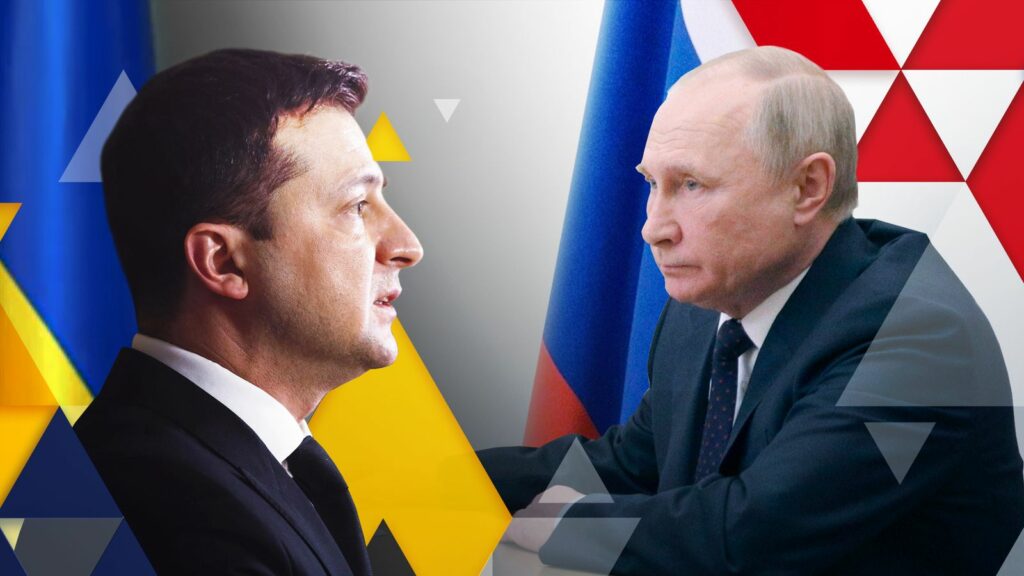
Russian President Vladimir Putin on Thursday declared a 32-hour ceasefire over the Orthodox Easter weekend, ordering Russian forces to halt hostilities from 4 p.m. on Saturday until the end of Sunday. Ukrainian President Volodymyr Zelenskyy promised to abide by the ceasefire, describing it as an opportunity to build on peace initiatives, but warned there would be a swift military response to any violations.
“Easter should be a time of silence and safety. A ceasefire at Easter could also become the beginning of real movement toward peace,” Zelenskyy wrote online. But he added: “We all understand who we are dealing with.”
The ceasefire began under a cloud of violence. Hours before the truce was due to come into force, Russian drone strikes overnight killed at least two people in the Ukrainian city of Odesa. A further two people were wounded when drones hit a residential area, damaging apartment buildings, homes and a kindergarten in the Black Sea port city.
The driver of a public trolley bus was also killed when his vehicle was struck by a drone in the southern Ukrainian city of Kherson, less than an hour before the ceasefire was due to begin.
According to the Ukrainian Air Force, Russia targeted Ukraine with 160 drones overnight, of which 133 were shot down or intercepted. Russia’s Defence Ministry separately said that 99 Ukrainian drones were shot down overnight across Russia and occupied Crimea.
Even after the truce technically took effect, the guns and drones did not fall silent. Serhii Kolesnychenko, a communications officer for Ukraine’s 148th Separate Artillery Brigade, told The Associated Press that “the ceasefire is not being observed by the Russian side.” He said that while artillery fire had paused in his sector at the junction of the Donetsk, Dnipropetrovsk, and Zaporizhzhia regions, Russian forces continued to use drones to strike Ukrainian positions.
Ukrainian forces were responding with what Kolesnychenko described as “silence to silence and fire to fire.”
The Easter weekend nonetheless witnessed one humanitarian bright spot. A prisoner of war exchange took place in the Chernihiv region on Saturday, with Ukrainian families gathering to await the return of loved ones from Russian captivity. Svitlana Pohosyan, who was waiting for her son, said: “I want to believe it. God willing, may it be so. My celebration will come when my son returns. I will hold him in my arms — and that will be the greatest celebration for me.”
Periodic prisoner exchanges have been one of the few positive outcomes of otherwise fruitless months-long U.S.-brokered negotiations between Moscow and Kyiv, which have delivered no progress on the key issues preventing an end to the conflict.
The collapse of the Easter 2026 truce echoes near-identical events from the previous year. In April 2025, Putin had similarly declared a ceasefire for Orthodox Easter, but just hours after the truce ended, Ukrainian officials reported renewed strikes in multiple regions including Chernihiv, Sumy, Kharkiv, Zaporizhzhia, and Dnipropetrovsk.
The ongoing violations of the Easter ceasefire reinforce a harsh reality: temporary truces have done little to alter the trajectory of the war. Both Moscow and Kyiv continue to accuse each other of bad faith, and key disagreements remain unresolved.
The failure of the 2026 Easter truce like its 2025 predecessor is expected to deepen scepticism in both Kyiv and Western capitals about the viability of short-term unilateral ceasefires as a pathway to meaningful negotiations, with pressure growing on all parties to move toward a more durable framework for ending a conflict that has now devastated Ukraine for more than four years.



 Latest1 week ago
 Latest1 week ago
 Crime1 week ago
 Latest6 days ago
 Business1 week ago
 Latest6 days ago
 Crime7 days ago
 Football6 days ago