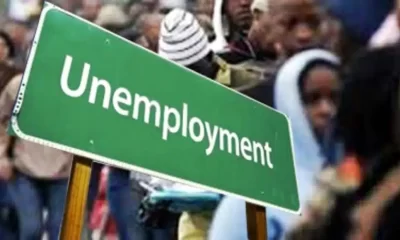
ACCORDING to the 5th edition of the Oxford Advanced Learners’ Dictionary, unemployment is the state of being without a job. The International Labour Organisation (ILO), the global body that takes statistics of both the employed and unemployed in the world, states that unemployment occurs when people are without work and are actively seeking jobs.
This phenomenon is not peculiar to developing, undeveloped or underdeveloped nations alone; it is a global issue which the developed economies experience as well. Whereas the ILO put global unemployment rate at 6% of the world’s population in 2012, it put the unemployment rate in the United States of America at 6.7% as at December 2013.
Here in Nigeria the National Bureau of Statistics said unemployment rate upped to 7.50% in the first quarter of 2015 from 6.40% as at the fourth quarter of last year. Between 2006 and 2015, according to the agency, unemployment rate averaged 11.93%, pointing out that it climbed to an all-time high of 23.90% in the last quarter of 2011 and a record low of 5.30% in the same period in 2006.
The unemployment situation in the country has been aggravated by the folding up of the textile factories which, hitherto, were the highest employers of labour. Until the closure of the textile industry in Nigeria, the industry controlled a workforce that was more than the Federal public service. Regrettably today, this industry has been killed by a combination of inadequate power supply and the corruptive tendencies of our Immigration Services Department, Customs, and Federal Ministry of Finance officials. A major consequence of this was that imported textiles from India and China now flood our markets, signalling the collapse of the local textile industry.
In the oil boom days we didn’t do anything significant towards expanding the country’s economic base with the windfall, unlike in the Maghreb countries of North Africa that invested in industries. Despite intra-religious conflicts in those countries and in the Middle East, they are doing well; their economy is buoyant; in fact, they are among the world’s richest countries with the least unemployment challenges.
Throughout the world, unemployment has become a phenomenon that on one can sleep with, with the two eyes shut in comfort.
For instance, in Nigeria, the ILO says not less than 73.4 million youths are outside the economic system while the World Bank puts poverty rate (another index used to measure unemployment) in the country at 46%. Over 200,000 graduates are graduated from Nigerian tertiary institutions each year. But the question is: do all these graduates possess employable skills?
Another threatening dimension to the issue of unemployment is that the consequence of the reaction of the unemployed army of youths in our society is felt by everyone and manifests essentially in the escalation of criminality, kidnapping, militancy, prostitution, ritual killings and the religious and ethnic conflicts in different parts of the country. If the trend is not quickly arrested, we may all be sitting on a time bomb, according to a former head of state who had all the opportunities and resources to do something about unemployment but did nothing about it. Nigerians are waiting patiently for the APC administration at the centre to put in place its policy framework to mitigate the problem of unemployment.
Problems associated with unemployment include inadequate energy supply, housing, security, inadequate infrastructure like roads, hospitals and industries which the government must be able to tackle frontally as part of its pact with Nigerians to build a new social order. For instance, government should, through adequate policy formulation, empower the banks for them to give soft loans to those who have ideas that can bring about desirable development in the country. We can take a cue from Israel which, unlike Nigeria, lacks mineral resources and is located in the desert but has developed its agriculture such that the economy is agro-based.
Finally, if our government can revive agriculture and put in place a conducive environment to nurture the small- and medium- scale industries, it will be on the right path to accommodating a number of our youths in the economic system where they can apply their acumen in productive activities rather than channel their youthful exuberance into destructive ventures like armed banditry and other vices.










 Latest1 week ago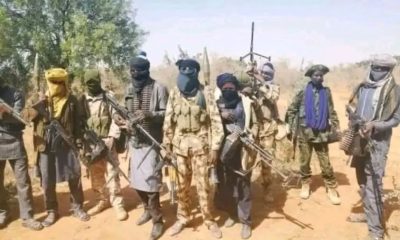
 Crime1 week ago
 Latest6 days ago
 Business1 week ago
 Latest6 days ago
 Crime7 days ago
 Football6 days ago
 Business1 week ago