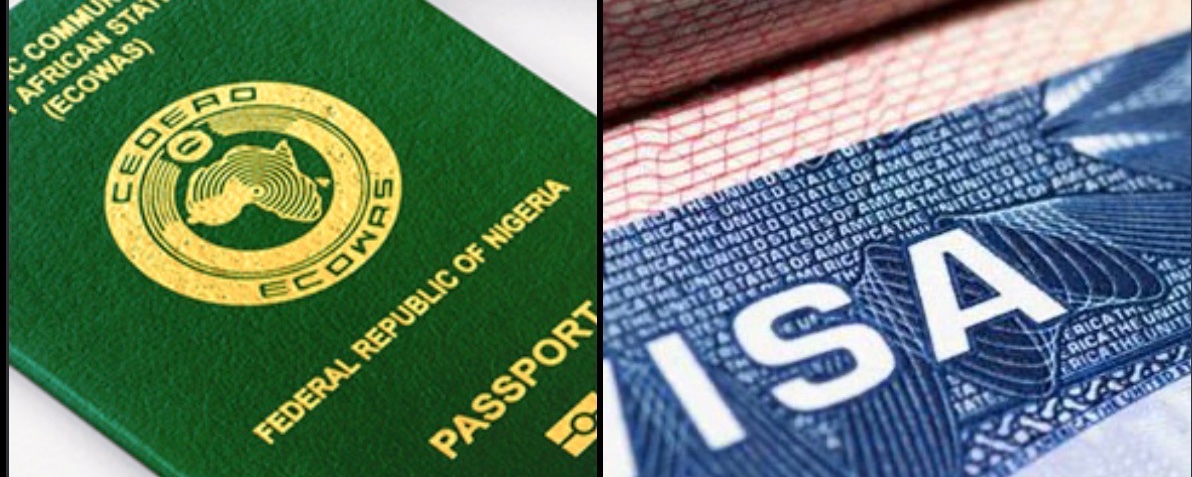
The United States has introduced a fresh layer of travel restrictions affecting Nigerian travellers, unveiling a controversial visa bond policy that could require applicants to post up to $15,000 as a financial guarantee before entry.
The new measure, announced on Tuesday, applies to certain Nigerian nationals seeking temporary entry into the US and forms part of a broader tightening of American immigration controls aimed at improving compliance with visa conditions, particularly overstays.
The policy comes barely a week after partial travel restrictions on Nigeria took effect, deepening concerns among travellers, business groups, and migration experts.
Visa bonds are refundable financial guarantees required by some countries from selected foreign nationals applying for temporary visas.
The bonds are designed to ensure that visitors comply with the terms of their visas, especially by leaving the host country before their authorised stay expires.
Under the new US policy, Nigerian applicants for B1/B2 visas — which cover business and tourism travel — may be directed by consular officers to post a bond of $5,000, $10,000, or $15,000.
The bond amount is determined during the visa interview and must be accompanied by a Department of Homeland Security (DHS) Form I-352.
Importantly, the bond requirement does not guarantee visa approval. It only applies if explicitly directed by a US consular officer.
If paid, the bond will be automatically cancelled and refunded once DHS records show that the visa holder departed the US on or before the authorised date of stay. Refunds will also apply if the visa holder never travels to the US before the visa expires or is denied entry at the port of arrival.
However, failure to comply with visa conditions could lead to a bond breach. According to DHS guidelines, a breach may be recorded if the traveller overstays, remains in the US beyond the authorised period, or applies to adjust non-immigrant status — including filing for asylum.
READ ALSO: United States Embassy resumes drop box application in Nigeria
Migration and foreign policy analysts warn that the bond requirement could significantly reduce legitimate travel from Nigeria to the US.
“This policy effectively creates a financial barrier to mobility,” said Dr. Ayo Ogunlade, a Lagos-based international relations analyst.
“For many middle-class Nigerians, a $10,000 or $15,000 bond is prohibitive, even if refundable. It discourages lawful travel and could strain people-to-people relations between both countries.”
Similarly, immigration lawyer Funke Adeyemi described the move as “a risk-based filtering mechanism rather than a blanket ban,” but noted that Nigeria’s inclusion reflects Washington’s growing concerns over visa compliance.
“The US is not saying Nigerians cannot travel,” she said. “But it is clearly signalling mistrust, particularly around overstay data and asylum claims. Unfortunately, genuine travellers may suffer the consequences.”
While the policy has generated fresh controversy, it is not entirely new. The visa bond programme was first proposed during the administration of former President Donald Trump in 2020. However, it was never fully implemented due to the sharp decline in global travel during the COVID-19 pandemic.
The initiative resurfaced in August 2025, initially applying only to Malawi and Zambia. This month’s expansion dramatically widened its scope, covering 38 countries globally — 24 of them in Africa, including Nigeria.
“This policy places a premium on compliance and documentation,” said travel consultant Ibrahim Lawal. “Any mistake — wrong airport, delayed departure, or status adjustment — could mean losing thousands of dollars.”



 Energy7 days ago
 Crime6 days ago
 Football7 days ago
 Business7 days ago
 Crime6 days ago
 Business7 days ago

 Business7 days ago