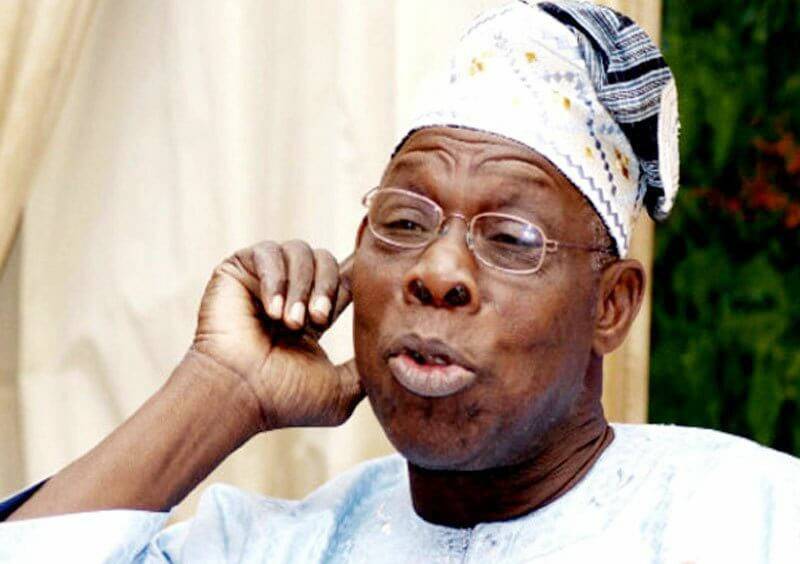
Former President Olusegun Obasanjo has called for a comprehensive overhaul of Nigeria’s security architecture, identifying four essential pillars—intelligence, training, equipment, and technology—as the foundation for restoring peace across the country.
Obasanjo made the remarks on Sunday during The Toyin Falola Interviews, held via Zoom and hosted by renowned scholar Professor Toyin Falola.
He was joined in the conversation by Bishop Matthew Hassan Kukah, founder of the Kukah Centre, and former presidential candidate, Professor Kingsley Moghalu.
The former president expressed deep concern over the spread of insecurity, saying no part of the country has been spared. He stressed that Nigeria can no longer rely on outdated methods or fragmented strategies, but must build a modern, coordinated, and technologically driven security system.
According to him, boosting intelligence gathering, enhancing the training of security personnel, adequately equipping the armed forces, and deploying advanced technology are non-negotiable.
“When I talk about intelligence, training, equipment, and technology, I know exactly what I am saying,” Obasanjo said. “And beyond all these, we must cultivate the right attitude—an honest commitment—to confront insecurity decisively.”
Obasanjo cautioned the federal government against leaving any region behind in ongoing security operations, adding that the scale of the crisis demands national unity and stronger global cooperation.
He noted that insecurity has expanded beyond regional boundaries, requiring a holistic national response.
“We have security challenges across the South-East, South-West, and North-East. This is a national issue,” he said. “If our government is overwhelmed, there is nothing wrong with turning to the international community. We are part of a global family, and the world has a vested interest in our peace and stability.”
The former president also raised serious concerns about the growing population of out-of-school children, warning that neglecting the issue could create deeper security risks in the future.
Obasanjo’s remarks add to the widening debate on how best to confront Nigeria’s multifaceted security problems, as calls for reforms continue to grow across political, academic, and civil society circles.



 Health6 days ago
 Entertainment1 week ago
 Crime6 days ago
 Education1 week ago
 Health1 week ago
 Comments and Issues1 week ago
 Latest7 days ago
 Football1 week ago