Multiple explosions and the sound of low-flying aircraft were reported in Venezuela’s capital, Caracas, in the early hours of Saturday, as the government accused the United States of carrying out coordinated attacks on civilian and military installations across several states.
Witnesses said at least seven explosions were heard around 2 a.m. local time, sending shockwaves through parts of the capital. Smoke was seen rising from the hangar of a military base in Caracas, while another military installation in the city reportedly suffered a power outage.
In response to the developments, Venezuela’s government issued a strongly worded statement accusing the United States of launching what it described as an “imperialist attack.” The statement called on supporters of the government to mobilise nationwide.
“People to the streets!” the statement read. “The Bolivarian Government calls on all social and political forces in the country to activate mobilization plans and repudiate this imperialist attack.”
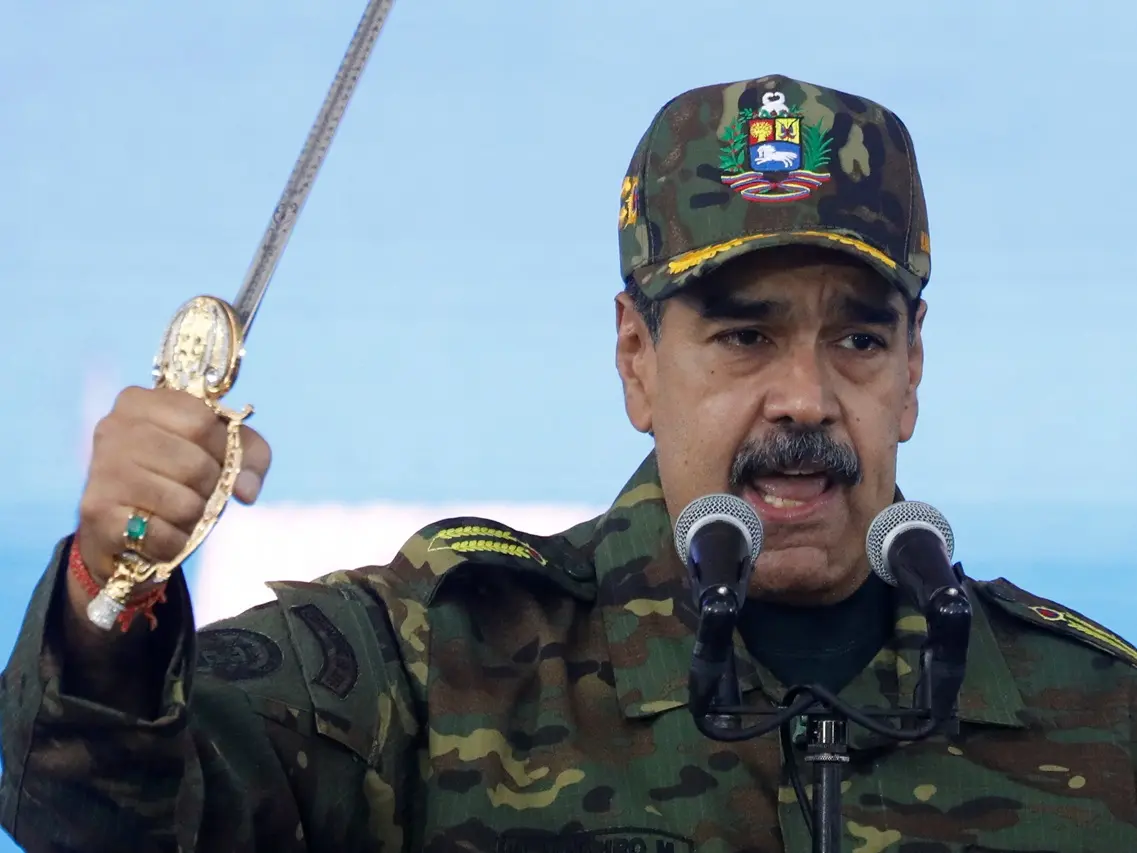
The government added that President Nicolás Maduro had ordered the immediate activation of all national defence plans and declared a “state of external disturbance.” Under the emergency declaration, the president is empowered to suspend certain civil rights and expand the role of the armed forces in maintaining security.
Residents across Caracas described scenes of panic as the explosions echoed through the city. In several neighbourhoods, people were seen rushing into the streets, trying to understand what was happening.
“The whole ground shook. This is horrible. We heard explosions and planes,” said Carmen Hidalgo, a 21-year-old office worker, who was returning from a birthday party with two relatives. “We felt like the air was hitting us,” she added, visibly shaken.
In the United States, official responses were limited. The Pentagon referred requests for comment to the White House, which did not immediately respond to an email seeking clarification. Calls to the U.S. Southern Command, which oversees American military operations in Latin America and the Caribbean, also went unanswered.
However, shortly before the explosions in Caracas, the U.S. Federal Aviation Administration (FAA) issued a Notice to Airmen, banning all U.S. commercial and private flights from operating in Venezuelan airspace and over the nearby island of Curaçao. The warning cited “safety-of-flight risks associated with ongoing military activity.” The notice was issued just after 1 a.m. on the U.S. East Coast.
READ ALSO: Unconfirmed explosions shake Caracas as US–Venezuela tensions escalate
The explosions come against the backdrop of sharply escalating tensions between Washington and Caracas.
In recent days, the U.S. military has intensified operations targeting alleged drug-smuggling boats in the Caribbean Sea and the eastern Pacific Ocean. On Friday, Venezuelan officials said the country remained open to negotiating an agreement with the United States to combat drug trafficking.
President Maduro, however, has repeatedly accused Washington of seeking regime change. In a pre-recorded interview aired on Thursday, he alleged that the U.S. aims to overthrow his government and gain access to Venezuela’s vast oil reserves through a sustained pressure campaign that began with a major U.S. military deployment to the Caribbean Sea in August.
Maduro has been charged with narco-terrorism by U.S. authorities. Last week, the CIA was reported to be behind a drone strike on a docking area believed to have been used by Venezuelan drug cartels, marking what was described as the first known direct U.S. operation on Venezuelan soil since strikes on boats began in September.
U.S. President Donald Trump has, for months, publicly warned that he could order strikes on targets inside Venezuela.
His administration has also seized sanctioned oil tankers off the Venezuelan coast and ordered the blockade of others, moves widely viewed as efforts to further tighten economic pressure on the South American nation.
Since early September, U.S. forces have carried out attacks on vessels in the Caribbean and eastern Pacific. As of Friday, the Trump administration said there had been 35 known boat strikes, with at least 115 people killed.
The strikes followed a major buildup of American military assets in the region, including the deployment in November of the United States’ most advanced aircraft carrier, adding thousands of troops to what is considered the largest U.S. military presence in the area in generations.
Trump has defended the operations as a necessary escalation to curb the flow of illegal drugs into the United States, asserting that the country is engaged in an “armed conflict” with drug cartels.
Meanwhile, Iranian state television also reported on the explosions in Caracas on Saturday, broadcasting images of the Venezuelan capital. Iran has maintained close ties with Venezuela for years, largely driven by their shared opposition to U.S. policies.
As of press time, the full scale of the damage and the exact cause of the explosions in Caracas remained unclear, with authorities expected to provide further updates as the situation develops.



 Entertainment1 week ago
 Crime1 week ago
 Football7 days ago
 Business7 days ago
 Politics7 days ago
 News7 days ago
 Latest7 days ago
 Comments and Issues1 week ago