In the wake of the recent tribunal judgment on the Edo State governorship election, a wave of debate has surged across the political and legal landscape. Many voices, even among well-meaning citizens, have argued that Asue Ighodalo should concede defeat and move on. They believe justice cannot be achieved as long as President Bola Tinubu remains at the helm, with political heavyweights like Nyesom Wike and Godswill Akpabio influencing the system.
While I share the view that this trio represents a formidable threat to Nigeria’s democratic values, I must firmly state that this legal battle is not merely about Asue Ighodalo. It is, in truth, a battle for the soul of Edo State—and by extension, for democracy in Nigeria.
Asue Ighodalo is not just a candidate who contested and lost. He represents the hopes and dreams of thousands of people who stood against a rising tide of electoral impunity. People who risked their lives, their jobs, their reputations, and their peace just to defend the truth. To allow this judgment to end at the tribunal level would be a monumental disservice to every person who believed in that cause.
Let us be clear: the integrity of our electoral system is on trial here. If we abandon this case now, what message are we sending? That truth doesn’t matter? That documented evidence, obtained legally and certified by the very institution that conducted the election, holds no weight unless a human being comes to orally revalidate it?
The tribunal’s ruling suggests that “documents don’t speak for themselves”—that even properly certified true copies (CTCs) need oral evidence to have legal weight. But this raises fundamental legal questions that only the Supreme Court can answer:
Are CTCs no longer credible proof in our legal system unless accompanied by oral testimony, even when their authenticity is not contested?
ALSO READ: Nigeria: Another Looming Hyperinflation Monster
Should the burden of proving that result sheets were not serialized fall on party agents, even though serialisation is a duty of INEC and should be completed before election day?
We want the Supreme Court to clarify whether INEC’s failure to perform its duties can be excused simply because party agents were not present to witness the breach. We want the apex court to tell us whether a system that lacks transparency can be shielded from scrutiny because the evidence provided is “just a document.”
What many fail to understand—especially those celebrating the tribunal ruling—is that if this precedent is allowed to stand, it will haunt everyone, regardless of political affiliation. Tomorrow, it could be the APC seeking justice, only to be told again that “documents don’t speak.” It could be any candidate, from any party, being denied fair hearing because the bar for proving electoral fraud has been raised to an impossible height.
This case must proceed to the Supreme Court, not because we expect them to favour Asue Ighodalo, but because we expect them to preserve the rule of law. The credibility of our electoral and judicial systems depends on it.
Even if Asue had been declared the winner at the tribunal, the opposition would still have proceeded to the Court of Appeal and the Supreme Court. The legal journey was never meant to end at the tribunal. It is part of our democratic system to exhaust all legal avenues. That is how justice is pursued—through persistence, not resignation.
This case is more than a fight for a governorship seat. It is a defining moment for the Nigerian judiciary. Will the Supreme Court allow technicalities and political interests to override justice? Or will it rise above the noise and do what is right, not just for Asue Ighodalo, but for every Nigerian who still believes in democracy?
I am confident that the Supreme Court will not allow this judgment to stand. Not because they want to favour any party, but because they understand the gravity of what is at stake. They know that to affirm such a judgment is to cripple every future election petition. It is to tell Nigerians that justice can be buried under the rubble of procedural ambiguity.



 Latest1 week ago
 Football6 days ago
 Business6 days ago
 Latest6 days ago
 Health7 days ago
 Latest1 week ago
 Latest6 days ago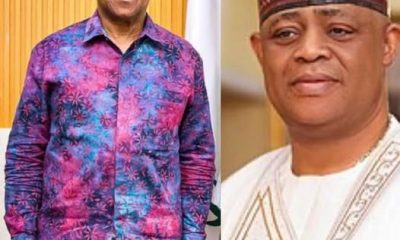
 Latest1 week ago