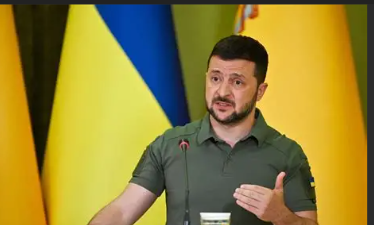
President Volodymyr Zelensky has signed into law a highly contentious bill that critics contend severely undermines the independence of Ukraine’s vital anti-corruption institutions, triggering widespread protests across the country and drawing sharp criticism from international allies. The new legislation grants significant control over the National Anti-Corruption Bureau (NABU) and the Specialized Anti-Corruption Prosecutor’s Office (SAPO) to the prosecutor general, a move that opponents fear will allow political interference in sensitive corruption probes.
“There is no rational explanation for why criminal proceedings worth billions have been ‘hanging’ for years,” Zelensky said, adding that the prosecutor general would now ensure “the inevitability of punishment” for those who broke the law.
ALSO READ: Gambia declares mpox outbreak after first case detected
However, critics argue that this contradicts over a decade of pro-democracy and anti-corruption efforts in Ukraine, aspirations that fueled the 2014 Euromaidan uprising and the subsequent push for European integration. Ukraine’s chief prosecutor, Ruslan Kravchenko, a known Zelensky loyalist, will now possess the authority to reassign investigations and even close cases.
The passing of the bill ignited significant public outcry. Hundreds of people gathered in Kyiv for the largest anti-government protest since Russia’s full-scale invasion in February 2022. Demonstrations also erupted in cities like Lviv, Dnipro, and Odesa.
“We chose Europe, not autocracy,” read one protest poster, while another poignant sign declared, “My father did not die for this.”
International partners, who were instrumental in establishing Ukraine’s independent anti-corruption system 10 years ago as a precondition for aid and closer ties, have voiced serious concerns.
European Commission spokesperson Guillaume Mercier stated, “The European Union is concerned about Ukraine’s recent actions with regard to its anti-corruption institutions.” He emphasized that “The EU provides significant financial assistance to Ukraine, conditional on progress in transparency, judicial reform, and democratic governance.”
Marta Kos, the European Commissioner for Enlargement, unequivocally criticized the bill’s adoption on social media:
“The dismantling of key safeguards protecting NABU’s independence is a serious step back,” Kos wrote, asserting that the two bodies were “essential” for Ukraine’s path towards EU membership.
While Ukraine’s deputy prime minister for European and Euro-Atlantic integration, Taras Kachka, reportedly assured Kos that “all core functions remain intact,” the sentiment among former officials and international bodies remains grim.
Dmytro Kuleba, who resigned as foreign minister last year, called it a “bad day for Ukraine” and stressed that the president faced a choice: “either to stand on the side of the people or not.”
Ambassadors from the G7 group of nations have indicated their desire to discuss the pressure on NABU and SAPO with the Ukrainian leadership. However, there’s an acknowledged reluctance among Ukraine’s allies to withdraw crucial aid at a time when its forces are actively engaged in fierce fighting on the frontline. The government’s justification for curtailing NABU’s powers includes allegations of “Russian influence,” with searches and arrests targeting alleged Russian spies at NABU having occurred the day before the law’s passage.














 Energy1 week ago
 Crime7 days ago
 Football2 days ago
 Football1 week ago
 Business1 week ago
 Crime7 days ago

 Business1 week ago