The world’s attention turns once again to the Vatican today as the Sacred Conclave to elect the 267th Pope officially begins in the historic Sistine Chapel, following the conclusion of the Novemdiales Masses—a traditional nine-day mourning period held to honor the late Pope Francis, who died last month after more than a decade on the papal throne.
The formal decision to initiate the conclave was made during the fifth General Congregation on Monday, May 5, with around 180 cardinals in attendance. Of these, just over 100 are eligible to vote, all under the age of 80, as stipulated by Church law.
The Sistine Chapel, where the secretive voting process will unfold, has been closed to tourists and sealed off for the solemn ritual that may last days—or longer—depending on how quickly consensus is reached.
This conclave is widely viewed as a pivotal moment for the Roman Catholic Church, as it prepares to select a spiritual leader who will navigate a complex landscape marked by theological divisions, calls for reform, declining church attendance in parts of the West, and growing Catholic populations in Africa, Asia, and Latin America.
Observers believe that the choice of the next pope will signal either continuity with the legacy of Pope Francis, who championed inclusivity, environmental justice, and outreach to the peripheries—or a shift toward a more conservative or doctrinally rigid direction.
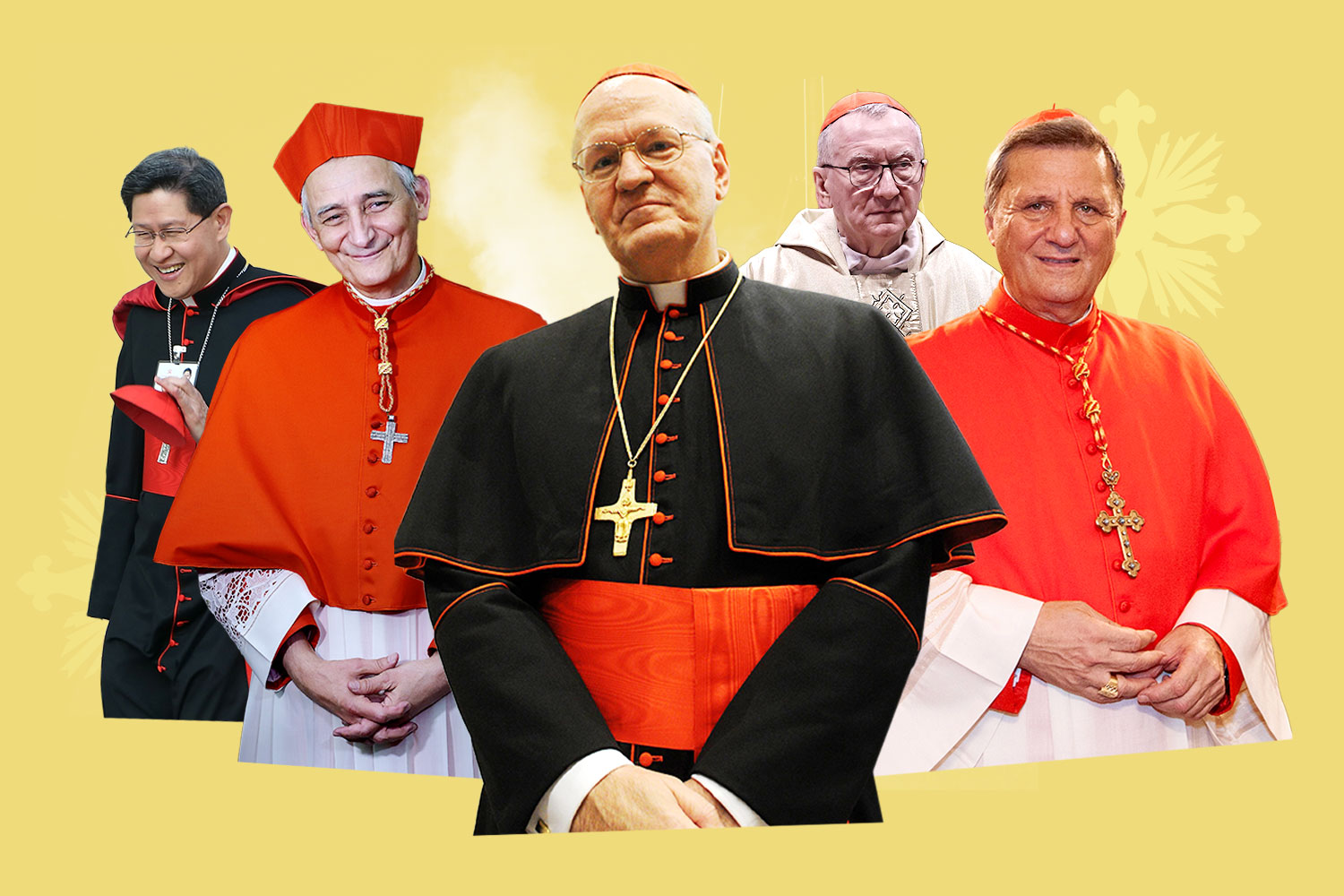
Among the approximately 15 cardinals seen as serious contenders, several names have emerged as frontrunners, each representing distinct theological leanings, regional dynamics, and pastoral visions.
Top 15 Papabili: Cardinals Seen as Likely Successors
Europe:
Cardinal Pietro Parolin (Italy, 70)
Current Vatican Secretary of State
A seasoned diplomat and close adviser to Pope Francis. Seen as the institutional frontrunner.
Chance: 22%
Cardinal Matteo Zuppi (Italy, 69)
READ ALSO: Cardinals assemble in Rome as Vatican prepares for Conclave
Archbishop of Bologna
Peace envoy to Ukraine, admired for his pastoral style and alignment with Francis’s reforms.
Chance: 18%
Cardinal Jean-Claude Hollerich (Luxembourg, 66)
Jesuit Archbishop and Synod leader
Progressive thinker with strong ties to Francis; active in the global Synod on Synodality.
Chance: 12%
Cardinal Jean-Marc Aveline (France, 66)
Archbishop of Marseille
Low media profile but noted for interfaith dialogue and social justice.
Chance: 7%
Cardinal Pierbattista Pizzaballa (Italy, 60)
Latin Patriarch of Jerusalem
Elevated profile during the Israel-Gaza conflict; respected for diplomacy in volatile regions.
Chance: 6%
Cardinal Mario Grech (Malta, 68)
Former Synod Secretary General
Centrist with synodal experience; seen as a potential consensus builder.
Chance: 5%
Cardinal Péter Erdő (Hungary, 72)
Archbishop of Esztergom-Budapest
Canon law expert; popular among doctrinal conservatives.
Chance: 4%
Cardinal Claudio Gugerotti (Italy, 69)
Prefect of the Dicastery for Eastern Churches
Quiet yet influential, with extensive experience in Eastern Europe.
Chance: 3%
Cardinal Anders Arborelius (Sweden, 75)
Bishop of Stockholm
Sweden’s first cardinal; known for conservative theology and bridge-building efforts.
Chance: 2%
Asia:
Cardinal Luis Antonio Tagle (Philippines, 67)
Former Archbishop of Manila
Charismatic and media-savvy; often described as “the Asian Francis.”
Chance: 15%
Cardinal Charles Maung Bo (Myanmar, 76)
Archbishop of Yangon
Strong human rights voice amid political turmoil in Myanmar.
Chance: 3%
Africa:
Cardinal Fridolin Ambongo Besungu (DR Congo, 65)
Archbishop of Kinshasa
Influential in African ecclesial circles and a trusted Francis ally.
Chance: 10%
Cardinal Peter Turkson (Ghana, 76)
Former head of Vatican social justice department
Revered for his work on global poverty and climate change.
Chance: 5%
Cardinal Robert Sarah (Guinea, 79)
Former Prefect of Divine Worship
Vocal conservative; admired in traditionalist circles, but seen as too old.
Chance: 2%
America:
Cardinal Robert Francis Prevost (USA, 69)
Prefect of the Dicastery for Bishops
Oversees global bishop appointments; rising star within the Curia.
Chance: —
As the conclave begins, the eligible cardinals will be sworn to absolute secrecy. A series of ballots will be conducted daily until one candidate receives a two-thirds majority vote.
The faithful around the world will watch the chimney of the Sistine Chapel for the traditional white smoke—signaling that a new pope has been elected.
While the conclave is designed to be unpredictable, the global Church waits with bated breath, wondering whether the next Holy Father will be a pope of continuity, reform, or revival—and from what corner of the world he might emerge.



 Energy1 week ago
 Crime6 days ago
 Football1 week ago
 Business1 week ago
 Football2 days ago
 Crime6 days ago
 Business7 days ago