
Business
Naira appreciates against Dollar at official market

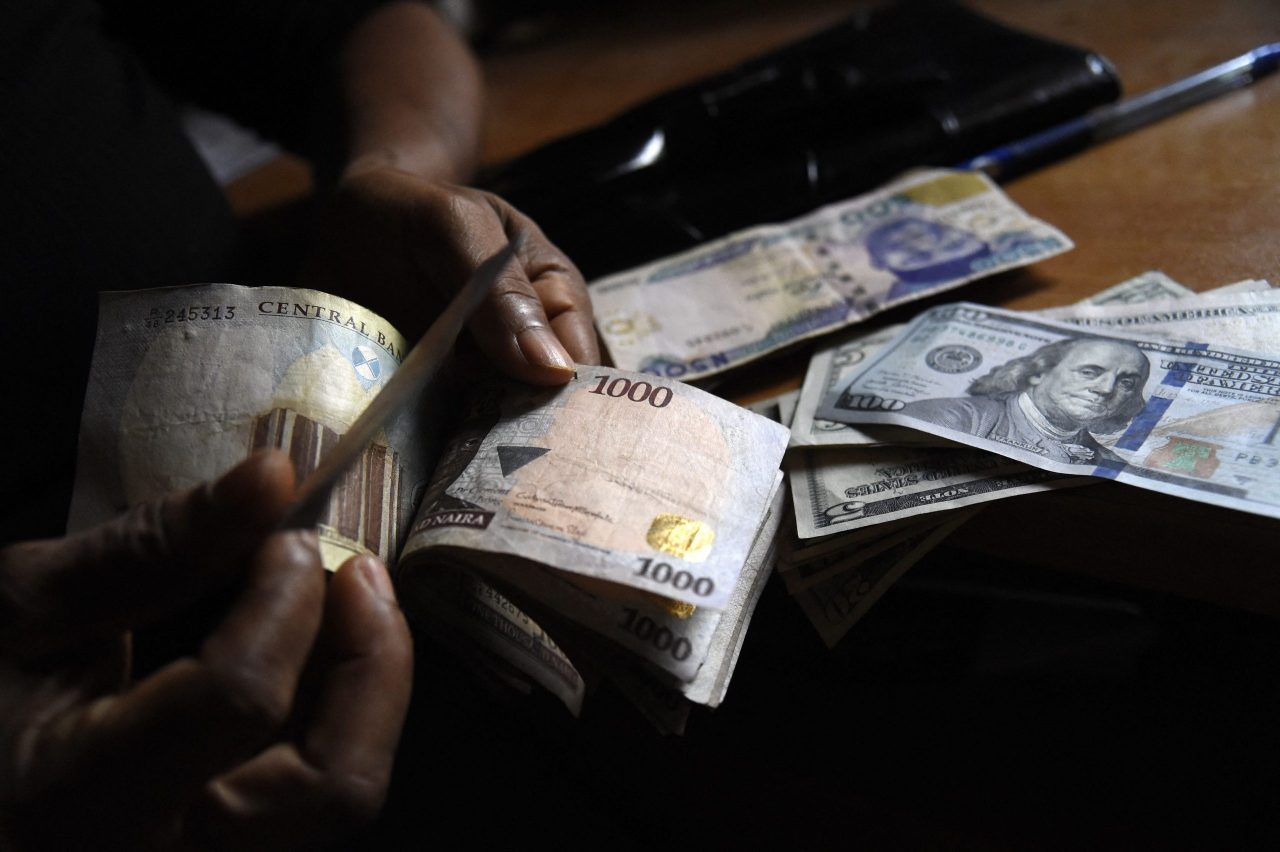
Data from the Nigerian Autonomous Foreign Exchange Market (NAFEM), the official platform for foreign exchange trading, revealed a significant appreciation of the domestic currency by 5.22%, with the Naira concluding the day at N1,582.94 per dollar.
This represents an N82.56 drop or a 5.22% increase in the local currency compared to the N1,665.5 closed on Friday.
The intraday high recorded a record high of N1778/$1, while the intraday low was N1300/$1, representing a wide spread of N478/$1.
According to data obtained from the official NAFEM window, forex turnover at the close of the trading was $154.16 million, representing a 1.47% increase compared to the previous day.
Similarly, the Naira appreciated against dollar in the parallel forex market, where forex is unofficially traded, with the exchange rate quoted at N1,650/$1, reflecting a 6.06% increase from the N1,750 rate it closed at the previous day.
The Great British Pound (GBP) stood at £1/N2100, an increase from £1/N2,260 recorded the previous day, this marks a notable increase of 7.62% compared to the rate recorded the previous day.
READ ALSO: Naira inches closer to N2000/ €1 at parallel market
Additionally, the Naira appreciated against the Euro by 5.95%, closing at N1850/EUR1 compared to N1960/EUR1 reported the previous day.
In the cryptocurrency market where forex is sold using stablecoins, the Naira also settled at N1,637.30/$1.
Recently, the Central Bank of Nigeria (CBN) plans to introduce stringent measures on the purchase of foreign currencies through Bureau De Change (BDC) operators, with a specific focus on transactions related to overseas education and medical expenses.
As part of the apex bank’s revised regulatory guidelines for BDCs in Nigeria, there will be a cap on foreign currency purchases for school fees at $10,000 per customer annually.
This process requires the transaction to be conducted through the BDC’s domiciliary account with a Nigerian bank, ensuring direct payment to the educational institution.
The proposed guidelines read:
“BDCs may sell foreign currency up to the equivalent of USD10,000 to a customer for school fees once a year. Such fee, which shall be transferred from the BDC’s domiciliary account with a Nigerian bank, shall be paid directly to the school.”
It also stipulates that such transactions must be accompanied by a set of documents: a duly filled out e-Form A, proof of admission or course registration, the educational institution’s bill or invoice, and, for postgraduate studies, a copy of the undergraduate degree certificate or an officially verified statement of results.











-
 Featured1 week ago
Tinubu’s Renewed Hope: Reforms, hardship and the unanswered question of a second term
-

 Featured1 week ago
The cost of Renewed Hope: How Nigeria’s economic reforms are reshaping everyday family life
-

 Crime4 days ago
Kwara bandit deal under scrutiny as footage shows security operatives negotiating with terrorists [VIDEO]
-
 Business1 week ago
CBN forex reforms under scrutiny as Nigeria’s reserves drop $300m in 10 days
-

 Business1 week ago
NCC plans spectrum incentives to push telecom operators into more network investment
-

 Entertainment6 days ago
2027 Grammys: Asake, Wizkid, Tems, Ayra Starr lead Nigerian nominees in African music category
-

 Latest1 week ago
Nigeria’s security crisis deepens as October death toll hits 835, highest in 2026
-

 Sports1 week ago
Kenya’s Timothy Kibii wins Port Harcourt International Marathon