
Latest
Ex-Imo Governor Udenwa declares South-East caucus stands against Anyanwu’s return

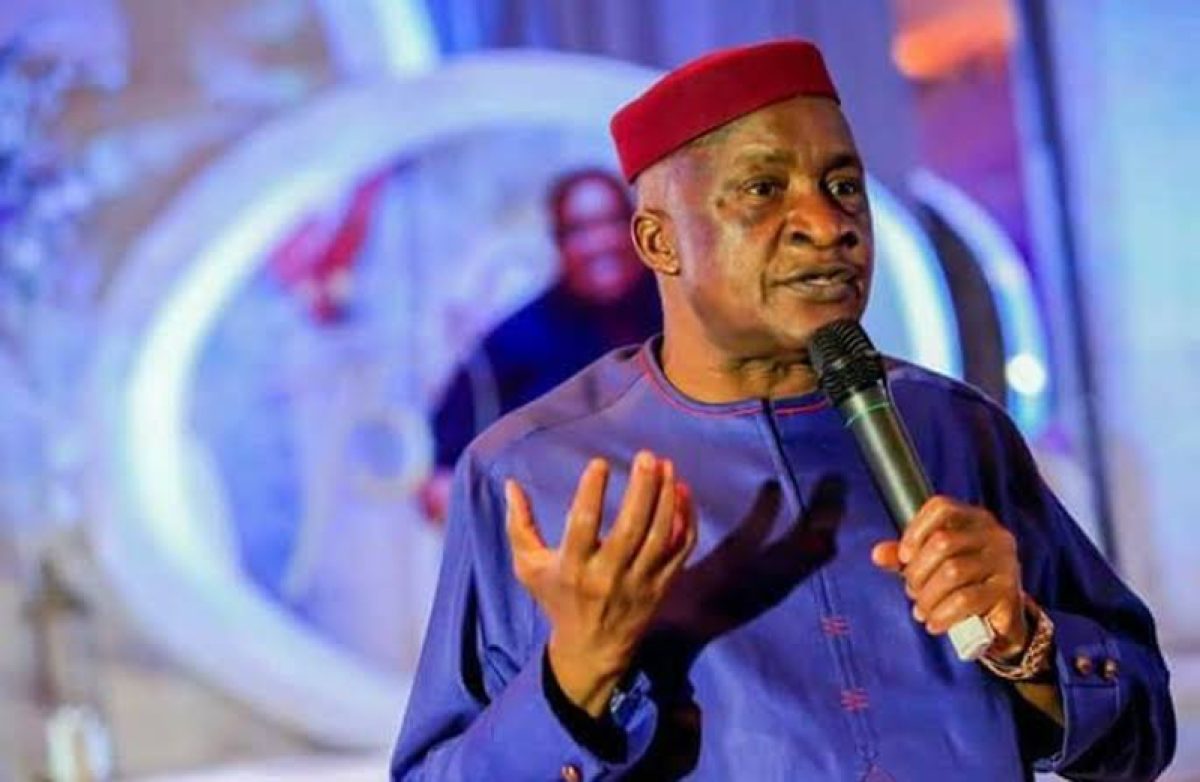
The internal crisis rocking the Peoples Democratic Party (PDP) escalated on Tuesday as former Governor of Imo State, Chief Achike Udenwa, declared that no individual or political force backing embattled National Secretary, Senator Samuel Anyanwu, can override the authority of the South-East Caucus of the party.
Speaking during a live appearance on The Morning Show on Arise Television, Udenwa insisted that the South-East Caucus remains resolute in its recognition of Sunday Ude-Okoye as the rightful National Secretary of the PDP.
According to him, Anyanwu’s tenure effectively ended the moment he opted to contest the 2023 Imo State gubernatorial election.
“For over a year now, we have remained consistent on this matter,” Udenwa stated. “The South-East Zonal Executive Committee has nominated Ude-Okoye multiple times as the substantive National Secretary of our party. That prerogative lies with us. If we are asked to present a candidate, and we do so in accordance with the constitution, then our submission must be respected.”
Saraki Committee’s Report Sparks Controversy
Udenwa criticized the decision of a reconciliation committee led by former Senate President Bukola Saraki, which reportedly endorsed Anyanwu’s return as National Secretary.
READ ALSO: Defection not to kill PDP, but to move Delta forward — Governor Oborevwori
He described the move as contradictory to the zoning principles and internal processes enshrined in the PDP constitution.
“We expected that the committee would act in the best interest of peace and fairness,” Udenwa said. “But to come up with a recommendation that negates the South-East Caucus’ decision is unacceptable. We have made our position clear—we are the ones who reserve the right to nominate a representative, and we have done so.”
A Matter of Constitution and Precedent
The former governor emphasized that Anyanwu relinquished his position when he declared for the Imo governorship race.
He stressed that by doing so, the position became vacant and the South-East Caucus, as the constitutionally empowered body, rightfully filled it.
READ ALSO: PDP chieftain warns party against repeating 2023 presidential mistake
“We have put forward Ude-Okoye’s name not once, not twice, but three times. To keep ignoring our decision is to challenge the very structure of our party. It suggests that our input as a geopolitical zone is being undermined,” he added.
Power Struggles and Alleged External Influence
Udenwa also addressed speculation about the influence of powerful individuals—particularly Minister of the Federal Capital Territory and former Rivers State governor Nyesom Wike—allegedly backing Anyanwu.
“Wike is a member of the PDP’s National Executive Committee and a respected former governor. But I don’t know what extra power he possesses beyond that. No individual, no matter how influential, can override the collective decision of a zonal caucus,” he asserted.
He added: “This party has rules, a constitution, and a structure. We cannot allow a single individual to usurp the powers constitutionally reserved for an entire zone. I don’t know of any man within the party who has such absolute authority.”
A Test of Internal Democracy
Udenwa’s statements reflect growing frustration among South-East PDP leaders who feel their zone’s political authority is being marginalized within the national structure of the party.
The controversy surrounding the office of the National Secretary has become a litmus test for the PDP’s internal democracy and zoning arrangement ahead of the 2027 general elections.
Party insiders say the next few weeks will be critical, as the National Working Committee (NWC) must now decide whether to uphold the Saraki-led committee’s recommendation or respect the nomination of the South-East Caucus.
Meanwhile, political watchers warn that failure to resolve the crisis amicably could deepen factional divisions within the party and alienate a critical voting bloc in the South-East region.
As the standoff continues, the PDP finds itself walking a tightrope between constitutional adherence and political compromise—a balancing act that could shape the party’s relevance in the next electoral cycle.


-

 Featured6 days ago
Ranking the seven greatest World Cup finals of all time
-
 Business7 days ago
OPay breaks silence on viral September shutdown claim
-

 Latest7 days ago
Tinubu’s FBI records: Omokri challenges claims, cites 2003 Embassy reply
-

 Business5 days ago
X3M Ideas donates 50 Walkie-Talkies to strengthen security operations in Onigbongbo
-
 Latest6 days ago
2027: Atiku vows direct payment of local government funds if elected president
-

 Latest2 days ago
Cole-Alegbe unveils memoir, urges leaders to harness technology for lasting impact
-
 Latest6 days ago
2027: Atiku, Obi absent as opposition begins talks on single presidential candidate
-
 Latest7 days ago
Anambra 2027: INEC, NDC clash over 10 disputed Assembly candidates