
Latest
Tinubu’s leadership template in retrospect, two years after

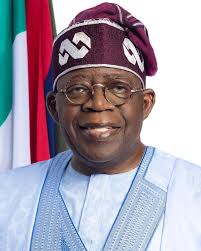
President Bola Tinubu has gone through diverse perspectives of evaluation after two years of being in office. Those outside government tend to score President Tinubu low, citing socio-economic statistics and empirical intractable insecurity, hardship, among others; while those in government eulogize the President for good performance through their lenses of achievements. Both sides appeal to human conscience.
President Tinubu, about two decades ago, set out a leadership template which vividly highlighted basic principles of governance, the rudiments of politics and functional structures requisite for national development. Tinubu, then Governor of Lagos State, applied the template and principles in evaluating the Nigerian government. Two years into the Tinubu administration, now as the President of Nigeria, has those principles and template been applied in the governance of Nigeria.
Asiwaju Bola Ahmed Tinubu, then Governor of Lagos State, delivering a paper titled: “That This House May Not Fall, Foundation For A New Beginning In Nation Building in Nigeria,” at the Annual Zik Lecture on Tuesday, 6th April, 2004, at the Nigeria Institute of International Affairs (NIIA), Victoria Island, 21 years ago, was of the view that nation building necessarily involves the laying of an appropriate and firm foundation.
READ ALSO: Tinubu has enslaved Nigerians, Nigerian children to international lenders – Onovo
He detected the ills of Nigeria to include development-stifling bureaucracy and over centralization, dictatorial grip on the over-regimented political space, among others.
Tinubu also laid emphasis on the imperatives of constant checks on government, holding the government accountable. According to him, “the unexamined life, the sage, Socrates said, is not worth living.
“As it is with the individual, so with a nation. For, the nation atrophies and dies which folds its arms complacently in the face of anomie.”
Tinubu acknowledged that the founding fathers of Nigeria fulfilled their dream of achieving political independence and sovereign statehood for the country; declaring: “our contemporary challenge is to break the shackles of internal colonialism and enthrone true federalism as the basis for national development in Nigeria.”
Tinubu decried, inter alia, that “the actions of a great majority of our leaders, especially while in power, seem to show that they do not actually believe in the common destiny of our people.
“Or how else can we describe the looting with impunity that has characterized governance in this country from the earliest times to the present….or the pervasive corruption that has always existed in the country.”
Disapproving what he considered the canker of greed for power, Tinubu lamented: “in all this and more, our leaders have always acted as if there will be no tomorrow.”
He decried a period when those who held power at the various levels of government in the country used it blatantly and almost exclusively for themselves, their families and cronies, and with such impunity that even the very masses wished for change. This, he perceived to have paved the way for military intervention and overthrow of constitutional government.
READ ALSO: UN warns extreme hunger intensifies in global hotspots as famine rises
Tinubu, then, expressed support for the advocacy for resource control, and was in the vanguard of restructuring for true federalism.
He accordingly, declared: “I have argued elsewhere that those whom resources are found in their domain should have direct access to it, while they pay taxes and other forms of levies to the federal government.
“Our new constitution must provide for a state police alongside the Federal Police Force.”
Tinubu further asserted that in a true federalism, the underlying principles of federalism must be evident.
Her maintained that “a federal system assumes strong and considerably autonomous states who constitute the nation… in such arrangement, states effectively control their resources, while paying taxes, rates and other fiscal impositions, to the federal purse.
“The people of the state must have first charge on the resources of their state.”
Tinubu argued that “while it is in the interest of the federating states to provide enough resources for the central government to perform its constitutional functions, it is a distortion and abuse of the federal principle and arrangement to use the resources so generated by the individual states to the disadvantage of the states.”
Expatiating on the federating units, Tinubu pointed out that the state is not junior to the federal unit.
Tinubu, thereafter, highlighted the building blocks to move Nigeria forward to include the following:
- Revision of the constitution to reflect genuine and true federalism
- Review of revenue allocation formula and fairness in the issue of resource control.
- Strengthening democratic institutions and civil society groups to create enabling environment for the consolidation of democracy.
- Eradication of corruption
- To build an enduring democracy, our leaders must try to ameliorate the underlying social, political and psychological forces in the society which drive individuals and groups to violent protest – policies and programmes that will improve the quality and wellbeing of the citizens must be put in place.
- Attitudinal change on the part of our leaders in mobilizing the people for the building of a new participant political culture for Nigeria; and
- Enthronement of government, which is responsive and accountable to the governed. Politics should be permeated by new attitudes, social trust, tolerance and cooperation.
Tinubu regretting the prevalent behavioral of the political elite, declared: “for, clearly some of the things we now do could have been unimaginable had the men of yore come down heavily on them at the very beginning.
“In the event, these were allowed to stay perhaps, in the hope that as the nation advanced the bad habits will be given up.
“Today, the bad habits have not been given up, but have indeed festered. We all agree that corruption has become endemic in our country.”
In reminiscence of the First Republic, Tinubu observed: “It has been argued that it was the desperation for the economic benefits of power that made it difficult for the contenders to sheathe their swords and develop a culture of give and take.
“What seems more plausible is that each politician and party were trying to conquer and establish permanent sphere of influence and in that process turned politics into a zero sum game of bloody war.”
The excerpt from the presentation of the President on the subject: “That This House May Not Fall, Foundation For A New Beginning In Nation Building in Nigeria,” at the Annual Zik Lecture in 2004, when he was Governor provides clear context for juxtaposition of “Tinubu The Governor” and “Tinubu The President” on his ideological fault line and leadership philosophy on Nigeria’s political landscape, essentially, on a reflection of his reforms and their consequences, in the past two years.


-
 Featured1 week ago
Inside INEC’s race to prepare for Nigeria’s 2027 elections
-
 Featured1 week ago
2027: APC unveils nationwide campaign timetable, Tinubu to rally in 12 states
-

 Business5 days ago
Naira faces exchange rate gap as Dollar hits N1,380 on parallel market
-

 Business1 week ago
Court dismisses ₦170m Trade Fair contract claim, says Zenith Bank was not a party
-

 Latest1 week ago
Breaking: NNPCL raises petrol price to ₦1,405 per litre amid discount controversy
-
 Featured1 week ago
From kitchen to Supreme Court: Nigerian’s fight over alleged support for terrorists
-

 Football1 week ago
Maresca reveals Guardiola’s reaction to Man City’s 4-2 defeat to PSG
-

 Business7 days ago
NCC launches Internet Governance Working Group to tackle AI risks, boost online safety