
Latest
86.8m Nigerians lack access to electricity, highest in world for third straight year

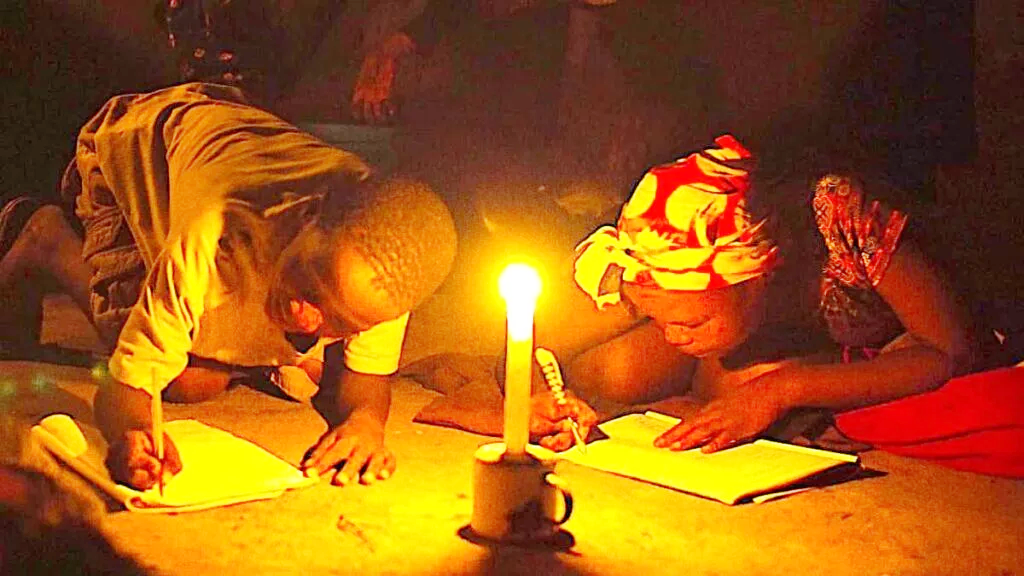
Nigeria has once again been ranked as the country with the world’s largest population without access to electricity, with a staggering 86.8 million people living in darkness, according to the latest World Bank report.
The grim figure was revealed in the “Tracking Sustainable Development Goal 7: The Energy Progress Report 2025”, jointly released by the World Bank and partner agencies on Wednesday.
The report, which assesses global progress toward universal access to affordable, reliable, sustainable, and modern energy, covers data from the year 2023.
This marks the third consecutive year Nigeria has topped the global list for electricity access deficit, ahead of the Democratic Republic of Congo (79.6 million) and Ethiopia (56.4 million).
Collectively, the three countries account for nearly one-third of the world’s total population lacking electricity.
“In 2023, the 20 countries with the largest electricity access deficits accounted for 76 percent of the global total, up from 75 percent in 2022. Once again, 18 of these countries are in Sub-Saharan Africa,” the report stated.
Nigeria’s electricity access rate stood at 61 percent in 2023, while access to clean cooking energy was even lower at just 26 percent. The situation highlights a persistent infrastructure and policy challenge in delivering modern energy to the country’s rapidly growing population.
READ ALSO: Obasanjo, Christ Embassy, eminent Nigerians celebrate Pastor Sylvester Ebhodaghe at 50
The report pointed to a broader regional challenge in Sub-Saharan Africa, where despite progress, population growth continues to outpace energy access expansion.
In 2023, approximately 35 million people in the region gained access to electricity, but the population grew by 30 million, resulting in a net reduction of only 5 million in the electricity access gap—from 570 million in 2022 to 565 million in 2023.
Sub-Saharan Africa now accounts for 85 percent of the global population without electricity, a sharp increase from 50 percent in 2010.
In comparison, Central and Southern Asia have made significant progress. Between 2010 and 2023, those regions reduced their combined electricity access deficit from 414 million to just 27 million people—demonstrating the effectiveness of targeted policies and sustained investment.
The World Bank report called for urgent and accelerated action in Africa if Sustainable Development Goal 7 (SDG7), which aims for universal access to electricity by 2030, is to be achieved.
On the global front, the report noted that since 2010, 665 million people worldwide have gained access to electricity, and 21 countries have achieved near-universal coverage.
However, it warned that under current policy trajectories, 645 million people—mostly in Sub-Saharan Africa—will still be without electricity by 2030.
“The pace of progress in Sub-Saharan Africa calls for significant acceleration,” the report stated, warning that without bold reforms and increased investment, millions will remain locked out of the benefits of modern energy, with devastating consequences for education, health, and economic growth.
The findings underscore a widening energy gap for Nigeria and much of the African continent, even as other regions edge closer to achieving universal energy access.


-

 Football4 days ago
Saka: England still carry World Cup scar
-

 Business5 days ago
CBN reduces MPR by 350bps to 23% in major monetary policy shift
-

 Comments and Issues6 days ago
Sometimes, goodwill finds us through the people we love
-

 Latest22 hours ago
Pastor Chris Oyakhilome announces mother’s passing at 88 [VIDEO]
-

 Business1 week ago
Jetour takes T1 adventure SUV experience to Abuja, targets growing Nigerian market
-

 Latest2 days ago
Arsenal eye €70-80m move for Real Madrid star
-

 Football1 week ago
Nigeria vs Colombia: Falconets battle for U-20 World Cup semi-final ticket
-

 Crime2 days ago
Police arrest suspect, launch manhunt for 2 others over Delta Education Director’s death