
Business
Afreximbank warns of currency strain in Africa amid reform progress

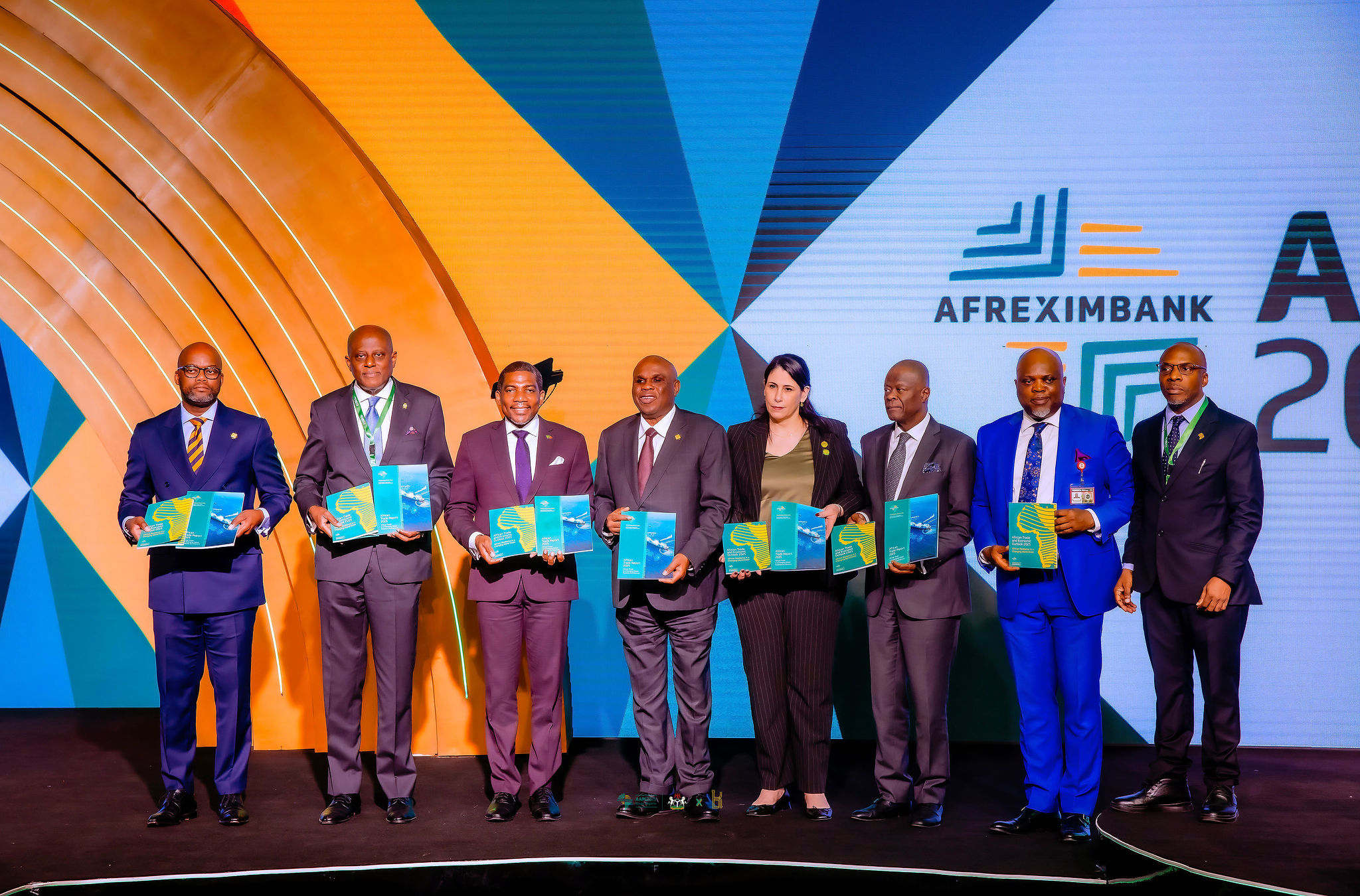
Nearly half of African currencies showed signs of depreciation in May 2025, despite notable fiscal reforms and ongoing development across the continent, according to the June edition of the Monthly Developments in the African Macroeconomic Environment report published by the African Export-Import Bank (Afreximbank).
The report, which offers a snapshot of exchange rate dynamics, trade trends, and credit conditions across African economies, highlighted a mixed performance—with some currencies strengthening or holding steady, while others experienced significant depreciation due to both global economic volatility and domestic fiscal constraints.
Afreximbank noted that countries such as Ghana, South Africa, Namibia, and Eswatini recorded currency appreciation during the review period, while Kenya and Liberia maintained relative exchange rate stability.
However, 10 African countries saw notable currency depreciation in May 2025. Among them, Nigeria’s naira appreciated by 2.1 per cent month-on-month, but still posted an 11.5 per cent year-on-year (YoY) decline, underscoring structural vulnerabilities and ongoing forex market adjustments.
Ghana’s cedi, despite recent fiscal reforms, depreciated sharply by 21.5 per cent MoM and 10.6 per cent YoY, trading at 10.3 cedis per U.S. dollar in May, compared to 13.9 cedis in the same period last year.
READ ALSO: Naira nears N1,500/$ benchmark as Banks resume FX transactions
In South Africa, the rand appreciated slightly from 18.1 to 17.8 per dollar between April and May but showed a marginal 0.7 per cent YoY decline, reflecting moderate external pressure and domestic policy caution.
Trade and Intra-African Commerce Down, but Improving Year-on-Year
Africa’s total trade volume declined to $120.8 billion in February 2025, down from $125.9 billion in January. Nevertheless, this still marked a 0.3 per cent increase compared to February 2024, suggesting resilience amid global trade challenges.
Intra-African trade also dipped from $18.6 billion in January to $18 billion in February, but registered a 5.6% YoY rise, attributed to the expanding footprint of the African Continental Free Trade Area (AfCFTA) and growing regional economic integration.
Despite the FX volatility, Afreximbank emphasized a positive shift in Africa’s credit environment, with a series of credit rating upgrades driven by improved governance, fiscal discipline, and policy reforms.
Nigeria received rating upgrades from Fitch and Moody’s, citing progress in institutional reforms. This led to a 250 basis points drop in yields on Eurobonds due June 2031.
Ghana, which experienced a selective default in 2024, was upgraded to CCC+ by S&P after successfully restructuring its Eurobonds and improving its fiscal outlook.
South Africa’s BB- rating was reaffirmed by S&P, though the agency issued a stern warning: “Grow faster, fix your fiscal issues, or remain stuck.”
READ ALSO: UBA, Wema Bank resume international transactions on Naira cards
The report noted that countries such as Angola, Egypt, Nigeria, Côte d’Ivoire, Senegal, and Morocco successfully returned to international debt markets, leveraging improved investor confidence and easing global interest rates to issue new Eurobonds.
This renewed market access reflects not only investor optimism but also the strategic capital management efforts many African economies have adopted in recent years.
Outlook: Structural Reforms Needed to Navigate External Risks
While Afreximbank acknowledged the continent’s macroeconomic resilience, it cautioned that external risks remain significant. Key threats include stagflation concerns, global fiscal tightening, ongoing geopolitical tensions, and slowing global trade.
“Although over half of African countries show stable or improving fundamentals, regional disparities persist, and commodity price volatility continues to weigh on external balances,” the report warned.
The bank urged African governments to strengthen internal policy buffers, pursue aggressive structural transformation, and build economic resilience to better navigate the uncertain global environment.
With modest growth projections, easing inflation in some regions, and a mixed FX outlook, Afreximbank’s report paints a cautiously optimistic picture—but one that underscores the urgency of deep, consistent reforms to secure long-term stability and prosperity.


-
 Latest6 days ago
Israel marks 3 years since October 7 Hamas attack amid Gaza strikes, election debate
-

 Energy6 days ago
Fuel Battle: Dangote, marketers and government clash over petrol imports
-
 Energy7 days ago
Petrol, diesel prices rise 86% in 2026 as costs hit fresh highs
-
 Energy1 week ago
Has Iran lost control of the Strait of Hormuz? Oil flows rebound as war disruptions persist
-

 Football6 days ago
Nigeria’s World Cup exit under spotlight as FIFA’s DR Congo files emerge
-

 Latest6 days ago
US Court set to rule on release of FBI, DEA records on Tinubu
-
 Business6 days ago
Nigerian investors at a crossroads as fixed-income yields slide
-

 Business1 week ago
LoveWorld Trade and Investment Forum to Convene Business Leaders in Accra