
News
Nigeria sees surge in road crash deaths as FRSC loses grip

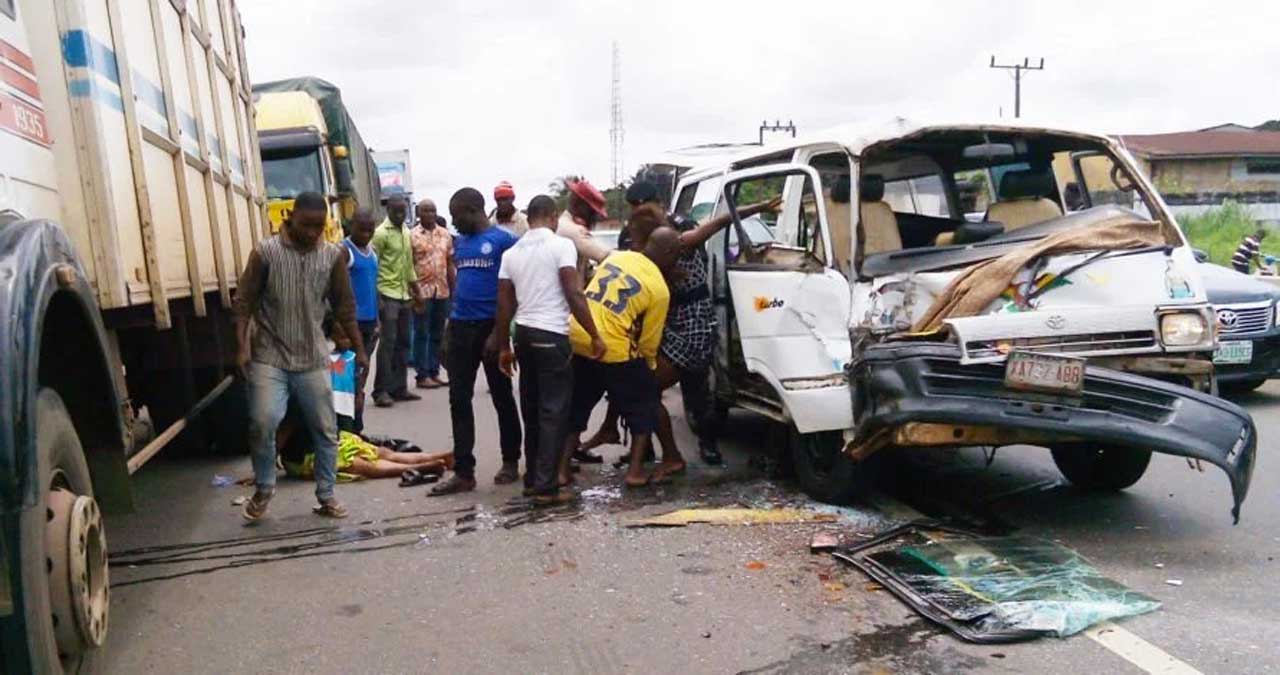
Nigeria is confronting a worsening road safety emergency, with fresh data from the Federal Road Safety Corps (FRSC) and a string of harrowing accidents painting a grim picture of 2025.
Fatal crashes are rising at an alarming rate, leaving thousands dead or severely injured within just the first half of the year.
Experts now warn that what was once viewed as a routine public safety challenge has spiraled into a national emergency, demanding urgent, coordinated intervention from all tiers of government and stakeholders.
Between January and March 2025, the FRSC recorded 2,650 road traffic crashes, resulting in 1,593 deaths and 9,298 injuries. This marks an 8.3% increase in fatalities and a 7.4% rise in injuries compared to the same period in 2024.
Among the deadliest routes was the Jos–Lafia–Makurdi corridor, where 1,539 lives were lost in just three months—underscoring the severe risks posed by certain highways across the country.
Several horrifying accidents in the first quarter have shocked the nation: Jan 11 (Plateau): A passenger bus crash killed 19 and injured 11; Jan 22 (Ilorin): A trailer-truck collision claimed 18 lives; Feb 1 (Ore–Lagos Road): A fiery crash between two buses left 30 dead; Feb 14 (Kano): A trailer and goods vehicle collision killed 23, injuring 48.
The trend has continued into the second quarter, with no signs of improvement:
April 19 (Ife–Ilesa Road, Osun): A trailer and Toyota Hilux crash killed five, including a child; May 5 (Abuja–Lokoja Highway): A bus tyre burst led to one death, six injuries; June 1 (Kano–Zaria Expressway): A bus plunged off a bridge, killing 22 athletes; June 7 (Jigawa): A head-on collision between two Golf cars resulted in nine deaths.
The first week of July alone saw 39 deaths in three crashes: Zaria–Kano Highway: 21 dead in a head-on collision involving a Toyota Hummer bus driving against traffic; Ijebu Ode–Obada, Ogun: 10 lives lost due to reckless overtaking; Mile 2–Badagry, Lagos: Eight killed in a crash caused by overspeeding.
All three incidents were linked to human error, including wrong-way driving, dangerous overtaking, and excessive speed.
While driver behavior is a leading cause, experts point to multiple compounding factors behind the crisis. Poor road infrastructure, absence of signage, overloading of tankers, and fatigue among commercial drivers contribute significantly to rising fatalities.
“Many oil marketers ignore loading standards. Drivers spend excessive hours behind the wheel. Combined with bad roads and poor visibility, the result is deadly,” said Mr. Patrick Adenusi, Technical Director of Safety Beyond Borders, a road safety NGO.
READ ALSO: FRSC zone B’s first female commander pledges inclusivity, Tech-driven safety
He further highlighted the use of alcohol, dangerous drugs, and the poor mechanical condition of many vehicles as persistent risks.
FRSC patrols, once common on major highways, appear to have declined, leading to unchecked speeding and reckless driving. Insecurity on many roads has also forced drivers to take risky detours or drive aggressively to avoid being targeted by bandits.
As Nigerians await the release of Q2 crash statistics by the FRSC in late July or early August, safety advocates are warning that the rainy season—characterized by pothole-ridden, waterlogged roads and poor visibility—could further spike the death toll.
Experts and civil society groups are now demanding urgent national intervention, including: Stricter enforcement of traffic laws; Immediate rehabilitation of critical road corridors; Community-level education campaigns on safe driving and Mandatory refresher training for commercial drivers
With 1,593 deaths in Q1 and scores more in Q2, Nigeria’s road safety crisis is worsening at an alarming rate. Stakeholders agree that piecemeal responses will no longer suffice.
“This is no longer just a traffic management issue. It is a national emergency that requires immediate, coordinated action from all levels of government,” said Adenusi.
As the second half of 2025 unfolds, the urgency to reverse the deadly trend grows more critical with each passing day. For thousands of Nigerians, safer roads could mean the difference between life and death.













-

 Football4 days ago
Ballon d’Or 2026: The key rules shaping the race for football’s biggest prize
-

 Health3 days ago
ISRT 2026: Global experts converge in Lagos to advance cancer care across Africa
-

 Entertainment6 days ago
Miss World 2026: Four Continental winners battle for automatic top 20 spot (VIDEO)
-

 Business4 days ago
Versat Automobile to launch Chery’s EXEED premium brand in Nigeria
-

 Entertainment5 days ago
Miss World 2026: Meet 24 African Contestants Flying Continent’s Flag in Vietnam(VIDEO)
-

 Comments and Issues4 days ago
Digital Rights and the 2027 Poll in Nigeria
-

 Football4 days ago
Yaya Touré makes history as Slovan Bratislava reaches Champions League league phase
-
 Energy4 days ago
Petrol Price War: Where are Nigerians getting the cheapest fuel?