
Latest
Nigeria’s refusal to host U.S. asylum seekers linked to visa restrictions

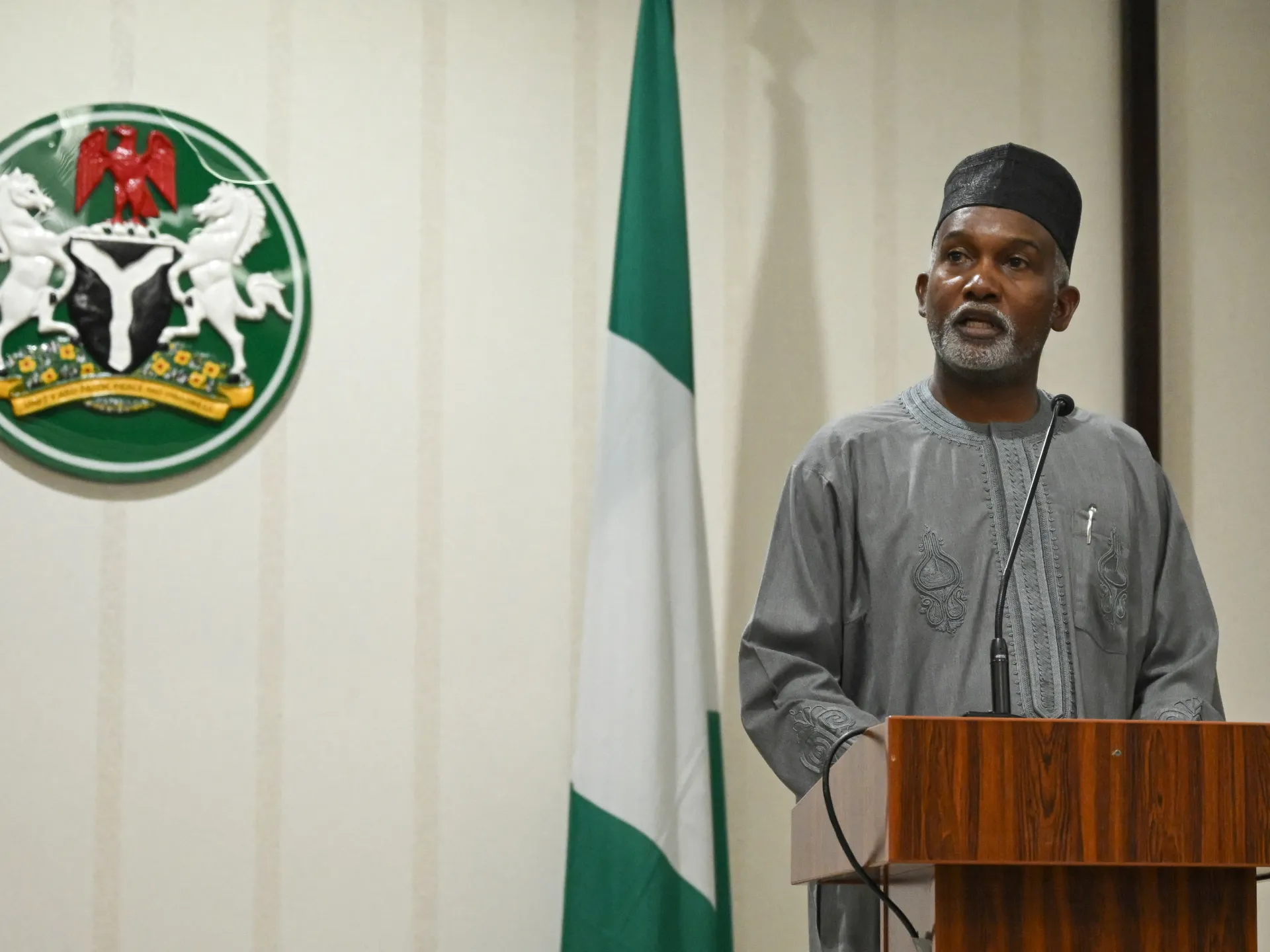
Nigeria’s rejection of a U.S. request to accept asylum seekers has been identified as a major factor behind the recent visa restrictions imposed on the country by the U.S. President Donald Trump’s administration.
Diplomatic sources revealed that Nigeria’s refusal to sign a controversial agreement that would have allowed it to host asylum seekers from the United States significantly influenced the visa clampdown.
The U.S. had reportedly approached multiple countries—particularly in Africa and Central America—seeking to outsource the housing of migrants and asylum seekers while their applications remain under review in the U.S., a process that can take up to seven years.
According to the sources, Nigeria was among the countries that declined the request, thereby attracting retaliatory measures in the form of stringent new visa rules.
This development was publicly confirmed by Nigeria’s Minister of Foreign Affairs, Yusuf Tuggar, during an appearance on Channels Television’s Politics Today programme on Thursday.
Tuggar made it clear that Nigeria could not afford to serve as a “dumping ground” for foreign deportees, particularly those with criminal records.
“It would be difficult for countries like Nigeria to accept Venezuelan prisoners into Nigeria,” Tuggar stated. “We have enough problems of our own; we cannot accept Venezuelan deportees to Nigeria. We already have 230 million people.”
He also dismissed speculation that the recent U.S. visa sanctions were linked to Nigeria’s participation in BRICS events, saying the move was more likely driven by Washington’s unmet demands.
READ ALSO: Presidency denies 5-year U.S. visa ban, reaffirms reciprocity commitment
Following Nigeria’s stance, the U.S. Department of State introduced a new visa policy affecting several countries, with Nigeria being one of the most impacted.
Effective July 8, 2025, most non-immigrant and non-diplomatic visas issued to Nigerians will now be valid for only three months and allow only a single entry into the United States.
“Effective immediately, most non-immigrant and non-diplomatic visas issued to citizens of Nigeria will be single-entry visas with a three-month validity period,” the U.S. State Department announced in a statement.
The new policy is expected to affect thousands of Nigerians—including students, business travelers, tourists, and families—who frequently travel to the United States.
However, visa holders whose documents were issued prior to July 8 will retain the original validity and terms of their visas.
The U.S. clarified that the decision is part of its ongoing review of visa reciprocity arrangements worldwide.
“Visa reciprocity is a continuous process and is subject to review and change at any time, such as increasing or decreasing permitted entries and duration of validity,” the U.S. State Department added.
Meanwhile, the Nigerian government has rejected claims circulating in the media that it has retaliated by halting the issuance of 5-year multiple-entry visas to U.S. citizens.
In a statement signed by Bayo Onanuga, Special Adviser to President Bola Tinubu on Information and Strategy, the Presidency described such reports as false and misleading.
“The Tinubu administration has not cancelled the long-standing multiple-entry visa arrangement with the United States,” Onanuga said. “Our visa policy remains guided by bilateral agreements and the principle of reciprocity.”
He further noted that President Tinubu, upon assuming office, directed that all international agreements—including those involving visa reciprocity—must be fully implemented to strengthen Nigeria’s global diplomatic standing.
As tensions rise over global migration policies and national sovereignty, the visa standoff between Nigeria and the United States underscores the growing complexity of international diplomacy in an increasingly interconnected world.


-

 News6 days ago
UK, Canada pledge closer cooperation on trade, defence and AI
-

 Business1 week ago
Abuja gears up for Jetour T2’s rugged-luxury experience
-
 Business7 days ago
Tinubu’s economic reforms face public confidence test as cost-of-living crisis persists
-

 Business7 days ago
Dangote: Petrol price gap fuels smuggling as Nigeria faces fresh pump price surge
-

 Business5 days ago
Dangote Refinery IPO: Can small investors really make money from the shares?
-

 Comments and Issues6 days ago
Wavy fuel prices and deepening cost-of-living crises in Nigeria
-

 Football5 days ago
FULL LIST: Eight stadiums to host 2027 Women’s World Cup in Brazil
-

 Business3 days ago
Jetour takes T1 adventure SUV experience to Abuja, targets growing Nigerian market