
Business
Nigeria Customs to replace multiple import levies with unified 4% FOB charge

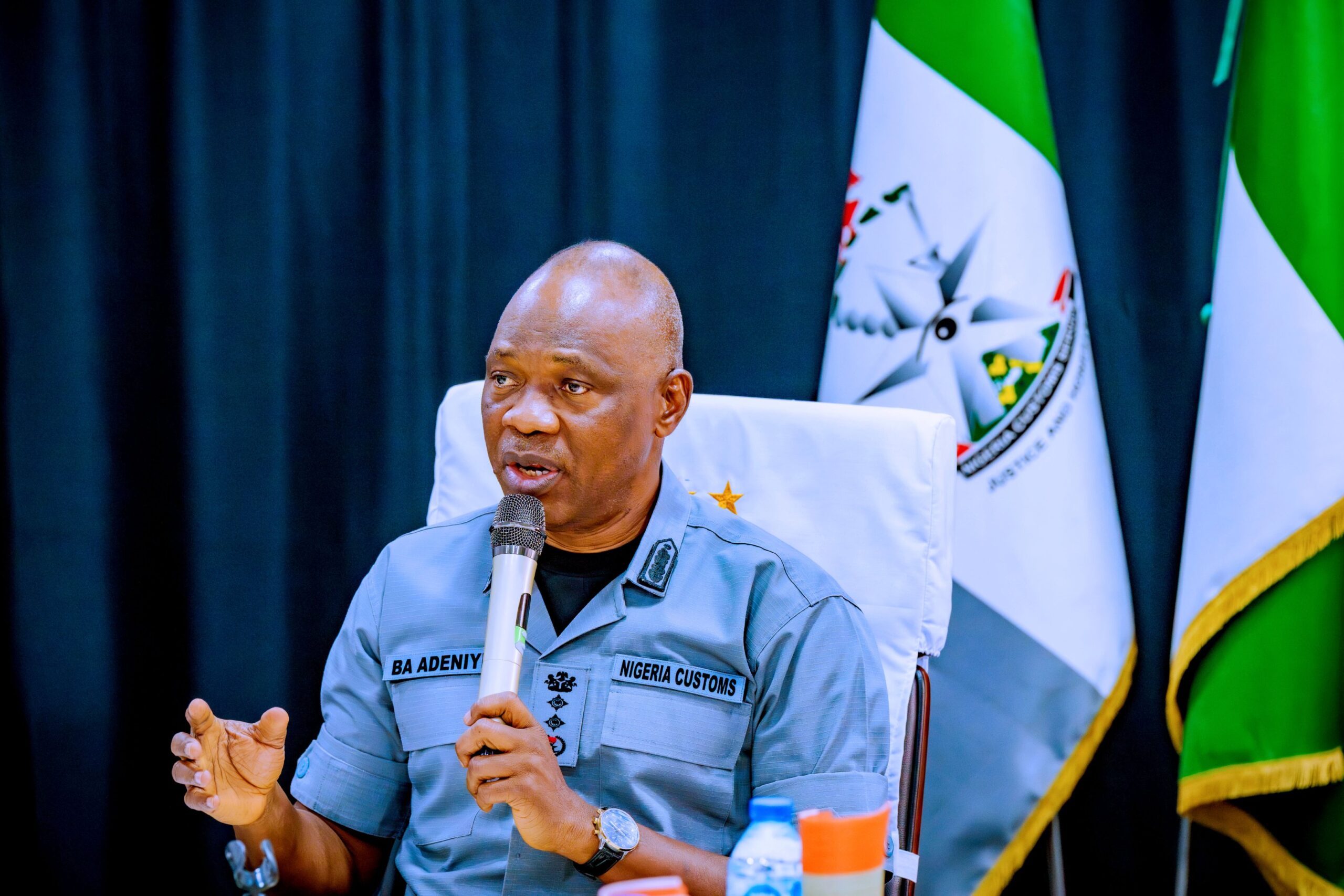
In a sweeping reform aimed at simplifying Nigeria’s import regime and boosting trade efficiency, the Comptroller-General of Customs (CGC), Adewale Adeniyi, has announced that the Nigeria Customs Service (NCS) will introduce a single 4% Free On Board (FOB) charge to replace multiple existing levies on imports.
The policy shift, which forms part of the broader customs modernisation agenda, was disclosed at a high-level stakeholder town hall meeting held on Monday, July 21, 2025, in Lagos.
Themed “Enhancing Trade Compliance and System Optimisation Through Stakeholder Engagement,” the meeting convened top freight forwarders, clearing agents, shipping companies, and public sector partners.
Under the new structure, the 1% Comprehensive Import Supervision Scheme (CISS) and the 7% cost of collection currently levied on importers will be scrapped. In their place, importers will now pay a flat 4% of the FOB value—a move Adeniyi said will enhance transparency, reduce redundancy, and eliminate hidden costs in the cargo clearance process.
“Once the 4% FOB takes effect, the 1% CISS charge will cease automatically,” Adeniyi said. “In addition, the 7% cost of collection currently charged will also be completely removed. Under the new Act, the 4% FOB is paid upfront—and that’s it. Thereafter, 100% of Customs revenue will go directly into the Federation Account. It’s a win-win for everyone.”
Adeniyi emphasized that the new structure is designed to eliminate duplication of charges, enhance ease of doing business, and align Nigeria’s customs practices with international best standards.
The change is also part of the implementation of B’Odogwu, a homegrown digital platform for customs clearance and trade facilitation. Designed to reduce human contact, improve processing speed, and minimize corruption, B’Odogwu is one of the flagship innovations under the Customs Service’s modernization drive.
READ ALSO: Customs, NAFDAC Launch Joint Committee to Enforce 2024 Drug, Border Safety Pact.
“This reform supports the digital transformation of Customs operations and complements Nigeria’s role as current Chair of the World Customs Organisation (WCO),” Adeniyi noted.
While the announcement was largely welcomed by participants for its potential to improve efficiency and lower costs, several stakeholders raised concerns about the practical transition—particularly around banking systems, documentation, and change management.
Emmanuel Osita, a freight forwarder at Tin Can Port, said: “The simplification is welcome, but implementation is key. The banks, shipping lines, and terminal operators must also align to ensure the process flows smoothly.”
Mariam Tukur, a logistics consultant, added: “Removing multiple levies reduces cost opacity, which is a huge plus. But without proper training and real-time support during the rollout of B’Odogwu, we could see confusion and slow adoption.”
Deputy Comptroller-General for ICT and Modernisation, DCG Kikelomo Adeola, reassured participants that the reform will be gradual, inclusive, and supported with robust capacity-building initiatives. She emphasized that B’Odogwu is a national project, not just a Customs solution.
“This platform is designed to position Nigeria as a continental leader in digital customs administration,” she said.
Saleh Ahmadu, Chairman of Trade Modernisation Project Limited (TMPL), affirmed that the firm is investing heavily in technology infrastructure and capacity development to support the reform’s success.
Participants engaged Customs officials in a robust Q&A session, seeking clarification on policy timelines, exemptions, and alignment with port operators and financial institutions.
The rollout of the 4% unified FOB charge is expected to reduce bureaucratic bottlenecks, curb arbitrary and unauthorized charges, and significantly improve Nigeria’s global trade rankings, particularly in the World Bank’s Doing Business index.
As Customs begins its next phase of modernization, industry stakeholders are hopeful that this reform—if effectively implemented—could mark a turning point in Nigeria’s drive for trade facilitation, cost reduction, and digital transformation.


-

 Latest3 days ago
US Immigration fees rise from October 16 as USCIS announces new charges
-

 Football6 days ago
How David Beckham made $51.1m from 2026 World Cup, surpassing winners’ prize
-

 Comments and Issues1 week ago
Fani-Kayode on Atiku: Separating claims from the record
-
 Health6 days ago
COVID-19 Hospital care under scrutiny as US Senate hears patient, family testimonies
-

 Business6 days ago
OpenAI shelves GPT-6.1 astra release over safety concerns
-

 Business2 days ago
Nigeria’s $55bn reserves raise fresh questions over naira value
-
 Latest6 days ago
ADC’s 2027 Strategy: Who are the key players and what are their roles?
-
 Latest6 days ago
El-Rufai continued detention revives debate over opposition, detention, political power