
Crime
Security vs Civil Liberties: The Clampdown on Nigeria’s Protest Movements
In a nation where silence is demanded and dissent punished, the streets have become the only court where truth is argued—and blood, the only ink the state seems to understand.”
When a government fears peaceful protest more than armed rebellion, democracy is in danger. Nigeria’s streets are becoming battlegrounds where citizens demanding accountability are met with force, intimidation, and silence

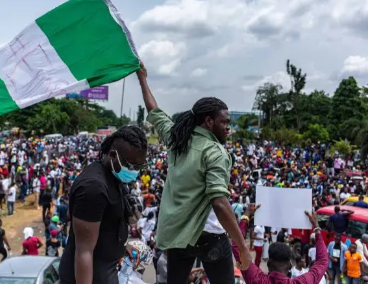
In a nation where silence is demanded and dissent punished, the streets have become the only court where truth is argued and blood, the only ink the state seems to understand.”
As Nigeria navigates one of its most severe economic crises in decades, widespread protests ranging from #EndBadGovernance to #FearlessOctober highlight deep-seated public frustration.
Yet, the security forces’ frequent use of excessive force casts a long shadow over citizens’ constitutional rights to peaceful assembly.
Security Forces vs Civil Liberties: A Deadly Balance
According to Amnesty International, during the August 2024 “10DaysOfRage” protests, police opened fire on demonstrators, resulting in at least 24 deaths, often targeting heads or torsos in what appeared to be shooting to kill.
The protests, which erupted against runaway living costs under President Tinubu’s administration, were met with tear gas, barriers, and arbitrary arrests—prompting urgent calls for accountability.
Legal Guarantees vs Ground Realities
While Sections 39 and 40 of Nigeria’s 1999 Constitution guarantee freedom of expression and assembly, in practice, enforcement falls far short.
The antiquated Public Order Act and expansive anti-terror laws are often repurposed to stifle dissent.
A 2007 Court of Appeal ruling affirmed that peaceful assemblies don’t need government permits, yet law enforcement frequently ignores this judgment, perpetuating a culture of impunity.
Voices from the Ground
-
Nnimmo Bassey, Executive Director of HOMEF, praised the peaceful nature of the protests but warned:
“The use of live bullets on peaceful protesters is criminal…Willful blindness to the demands of the people could precipitate…calamitous” consequences.
-
Andrew Mamedu of ActionAid Nigeria urged the government to engage protesters meaningfully and hold security operatives accountable:
“Rather than dismissing the protests…government should engage with the protesters, listen to their grievances, and provide a detailed plan with clear, time‑bound actions…”
-
Isa Sanusi, Director of Amnesty International Nigeria, decried the crackdown during the #FearlessOctober protests:
“The Nigerian authorities must end their repressive approach to peaceful protests…Millions cannot afford food or healthcare…The bogus charge of treason…must be dropped.”
-
A comment from Reddit poignantly captures the injustice:
“People exercising their right to protest … are themselves being brutalized and harassed by those who should protect them.”
ALSO READ : INEC and the Crisis of Accountability: Can Nigeria’s democracy survive without reform?”
Broader Impacts on Democracy and Development
According to participants in a study on the #EndSARS crackdown:
-
94.7% said state repression eroded public trust in institutions.
-
89.4% said protests hampered economic opportunities.
-
94.7% observed it facilitated lawlessness and distrust toward security agencies.
Such suppression not only weakens democratic norms but undercuts economic stability and national security, amplifying cycles of distrust and unrest.
Expert Legal Insight
Lawyer Douglas Ogbankwa argues that the constitutional right to protest is absolute and cannot be derogated even in favor of security.
He condemned the use of live ammunition against unarmed demonstrators, advocating for non-lethal alternatives like water cannons or rubber bullets.
Conclusion: Rights vs. Repression
In Nigeria today, the friction between maintaining order and upholding democratic freedoms is painfully clear.
Protests reflect genuine, pressing public concerns yet the government’s often heavy-handed responses deepen civic disillusionment.
If environmental and economic crises are to be addressed effectively, the state must shift from suppression to dialogue, reform, and respect for human rights.











-
 Energy1 week ago
Nigeria wastes enough gas to Ggenerate 62,400GWh of electricity amid deepening energy crisis — NOSDRA
-

 Football7 days ago
UEFA threatens FIFA World Cup boycott over proposed private investment plan
-

 Business5 days ago
Information Minister, VON DG to lead ARCON’s 2026 Advertising Industry Colloquium
-

 Business6 days ago
Cooking gas dealers slash prices amid intensifying market competition
-

 Education3 days ago
University of Ibadan releases 2026/2027 post-UTME screening results
-
 Latest1 week ago
ADC petitions Judge after Appeal Court overturns deregistration ruling
-

 Aviation5 days ago
Canada issues 10 key tips to help immigration applicants avoid processing delays
-
 Business3 days ago
Breaking: NNPCL reduces pump price of petrol as competition intensifies