
Comments and Issues
Nigeria: It’s time to dispose of decrepit, bankrupt refineries

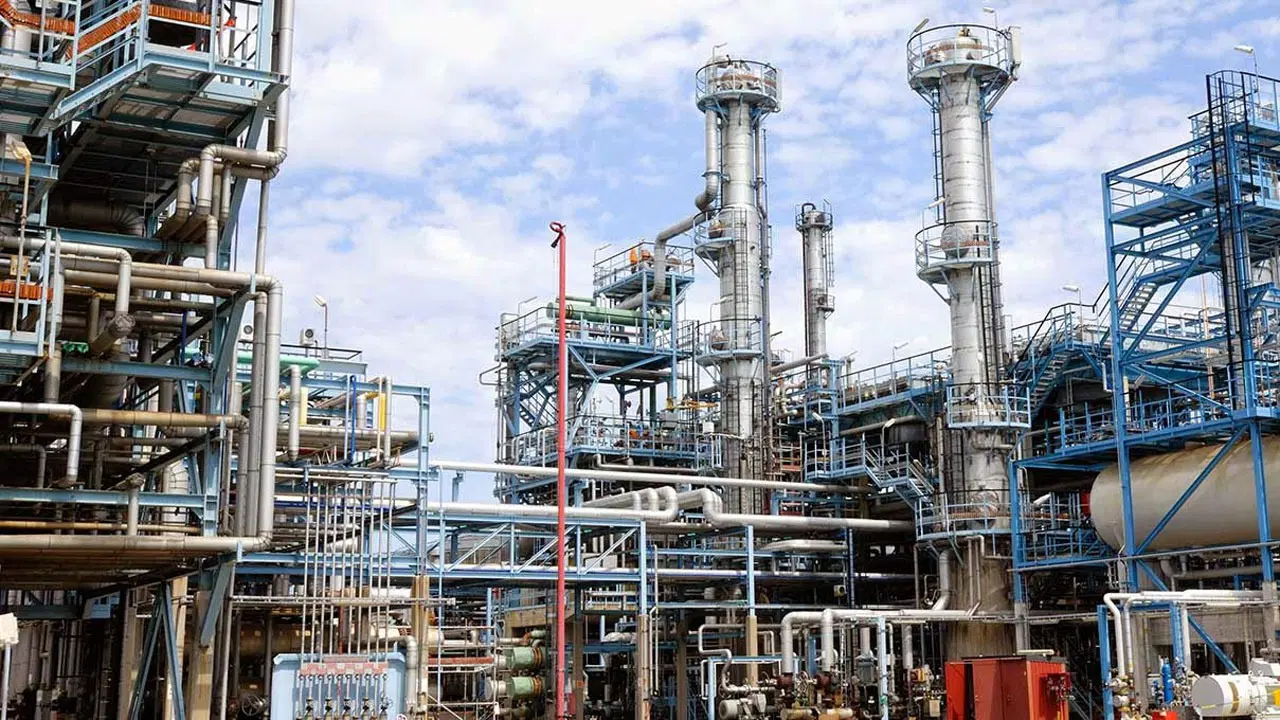
“Port-Harcourt Refinery Not for Sale”: This headline of a story published recently in a number of online and offline media, shocked the vast majority of Nigerians to no end. The story, attributed the statement to the Group Managing Director, Nigerian National Petroleum Company Limited (NNPCL), Mr. Bashir Ojulari, was apparently a response to a build-up of public opinion pressing for the immediate disposal of Nigeria’s state-owned decrepit and bankrupt refineries.
Ojulari who spoke during a town hall in Abuja, stressed that the position was not a shift, “but rather informed by ongoing detailed technical and financial reviews of the Port Harcourt, Kaduna, and Warri refineries.” But, the NNPCL boss had earlier told Bloomberg at a function in Vienna, Austria, that “a strategic review of NNPCL’s refinery operations was underway, and that sale option is not out of the question.”
His Abuja declaration of “not for sale”, a doublespeak, has been the lot of the refineries for upwards of three decades, when these facilities have been undergoing endless failed turnaround maintenance (TAM). A humongous sum of about US$20 billion is widely believed to have been sunk into the TAM efforts by the NNPCL over these years.
No wonder, on his part, while hosting members of the Global CEO Africa during a tour of the Dangote Refineries in Lagos, Chief Executive Officer of the refinery, Aliko Dangote, said bluntly that he doubted “the possibility of the state-owned Port Harcourt, Kaduna, and Warri refineries functioning again.”
The business mogul said the refineries, which are under the management of the NNPCL, had gulped up to US$18 billion, and “yet have refused to work.” Dangote recalled how he had (under the President Olusegun Obasanjo administration) bought the state-owned refineries in 2007, but had to return them to the government (after Obasanjo).
The leadership of the NNPC at that time (2007), (mis-) led President Umaru Musa Yar’Adua administration to believe that the recumbent refineries could still be resuscitated through TAM. But close to two decades down the line the refineries have remained moribund, and a drainpipe on public coffers. From the aborted sale of the refineries to Mr. Dangote in 2007 till date, successive NNPC bosses have been deploying prevarications, half-truths and tergiversations as regards the state of the refineries.
In 2019, for instance, soon after he was appointed the Group CEO of the NNPC, Mr. Mele Kyari, promised to repair the nation’s four refineries before 2023 (general elections). He also “pledged to show immense support to ensure the delivery of the Dangote Refinery by the first quarter of 2020.”
According to Nairametrics, “among the things he vowed to achieve before President Muhammadu Buhari completes his tenure (May 2023) was ensuring that the country achieves its oil production target of three million barrels per day, and also grow its reserves.” Kyari also promised to “transform the country into a net exporter of petroleum products before the end of the tenure of President Muhammadu Buhari.”
Kyari’s predecessor, Dr. Maikanti Baru had in his New Year Message in January 2019 lamented that “the country’s refineries have not undergone Turn around Maintenance (TAM) for an aggregate of 42 years.” He said however that major “rehabilitation works were carried out in all the four refineries.”
Dr. Ibe Kachikwu who was both CEO of NNPC and Minister of State for Petroleum Resources had in 2017 in an interview with the BBC vowed to resign, “if Nigeria continues to import fuel by 2019.” Soon after this, the Minister prevaricated, saying “we are working hard to see the NNPC’s four refineries coming up with 425,000 barrels per day in 2020.”
With all these hollow promises and propaganda, it was no surprise to most Nigerians that by April 2025, when Mele Kyari and his executive management team were booted out by President Bola Ahmed Tinubu, none of those refineries was really operational. Indeed, by late 2024, there was a lot of brouhaha around claims by the Kyari team that the Port-Harcourt Refinery had been fully rehabilitated.
Unfortunately, till date, even with the exit of Mele Kyari, and assumption of office by Ojulari, the fate of the four refineries is yet hanging on the balance, thickly shrouded in politicking. This is the more worrisome that Mr. Ojulari, soon after his appointment, has, like his predecessors, said “yes” and “no” to the outright sale of the dilapidated refineries.
ALSO READ: Naira dips despite strong capital inflows, market optimism as Dollar remains subdued globally
Unsurprisingly, however, the cesspool of corruption and malfeasance that the refineries have been over the years, has recently began to attract the attention and inquisition of not a few relevant NGOs. One of them, the Socio-Economic Rights and Accountability Project (SERAP), pointedly asked Kyari, before his exit, to “account for the missing N825 billion and US$2.5 billion meant for refinery rehabilitation, and other revenues.”
On their part, the Oduduwa Transparency Network (OTN) accused Kyari of using MSM Group as a front to launder US$2.8 billion meant for refinery repairs. The OTN alleged that Kyari’s associates, including former NNPC executives, were involved in the scheme.
While more of these allegations are yet coming up, the putrid stench of pervasive corruption around the refineries keeps oozing out, practically getting the seating executives of the NNPCL gasping for breath. Of recent, the rumor went wide about how the Economic and Financial Crimes Commission (EFFC) and some other security agencies had ‘coerced’ Mr. Ojulari to resign. Although the Chief Executive of the EFCC had since denied the allegation, the halo of suspicions around the state of the refineries subsists.
All said, it has been lack of political will to sell off the ‘drainpipe’ called refineries that is at play, rather than any other sensible economic consideration on the part of successive governments. The indiscretion exercised by the Yar’Ádua administration about the full privatization of the refineries, brought those facilities to their sorry state of today.
Had the succeeding administration to the Obasanjo era honored the already sealed deal with Aliko Dangote, the story of the refineries would definitely have been different. Dangote himself has proved this with what he has done with the Dangote Refineries in the past one decade or so.
Yet, given the incubus that the recumbent refineries has become on the government and its officialdom, it is still most politic and auspicious to sell the refineries on ‘as is where is’ basis. In pursuit of the Renewed Hope Agenda, and unleashing the power of ‘market forces’, the President Bola Ahmed Tinubu-administration should expeditiously dispose of the refineries. Now is the time to throw away the Albatross. Government, truly, has “no business in business.”
- The author, Okeke, a practicing Economist, Business Strategist, Sustainability expert and ex-Chief Economist of Zenith Bank Plc, lives in Lekki, Lagos. He can be reached via: [email protected] (08033075697) SMS only


-

 Football7 days ago
Banda, Chawinga make 2026 Women’s Ballon d’Or top 30 shortlist
-
 Featured7 days ago
Peter Obi, Makinde and the 2027 elections: Can unity really challenge APC?
-

 Trending Stories5 days ago
Davido, Wizkid, Burna Boy or Asake: Who is having the biggest 2026 so far?
-
 Business1 week ago
Nigeria records N12.59trn trade surplus in Q2 2026 — NBS
-
 Football5 days ago
Premier League releases 2026/27 festive fixtures, 7 matches set for Boxing Day
-

 Business3 days ago
Jetour Nigeria, dealers take dashing, other models to Abuja Experience
-

 Business4 days ago
Dangote Refinery IPO shifts spotlight to corporate governance, investor protection
-

 Crime4 days ago
Anambra Police arrest mother over alleged child sexual exploitation