
Latest
Outrage as FG moves to review politicians’ salaries amid widespread poverty

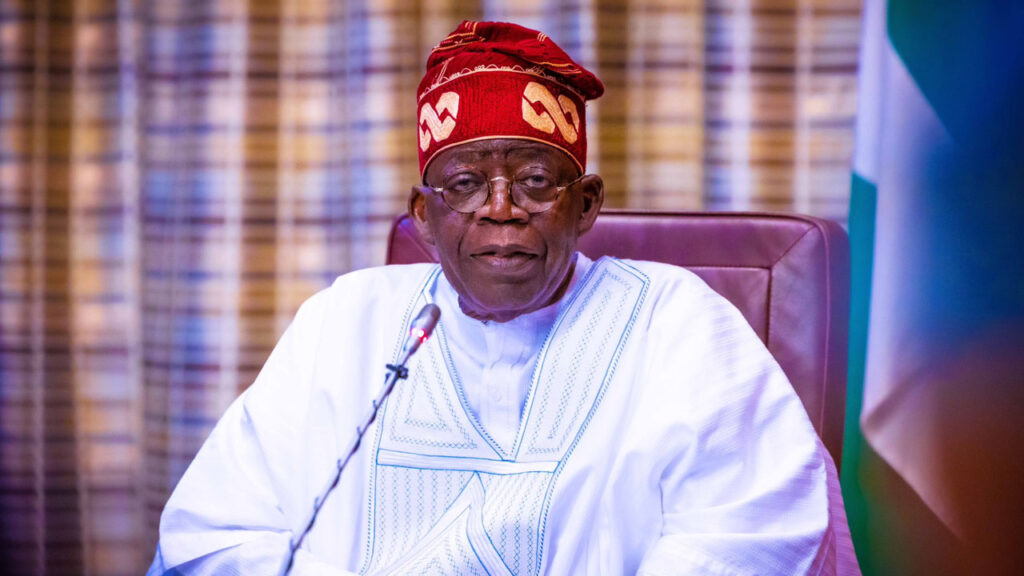
The Federal Government is considering an upward review of salaries for political office holders, sparking nationwide outrage over perceived misplaced priorities at a time millions of Nigerians are battling poverty, inflation, and unpaid wages.
Chairman of the Revenue Mobilisation Allocation and Fiscal Commission (RMAFC), Mohammed Shehu, disclosed the plan at a press briefing in Abuja on Monday.
According to him, the salaries of political leaders in Nigeria have not been reviewed since 2008.
He revealed that President Bola Tinubu currently earns N1.5 million monthly, while ministers receive less than N1 million — figures he described as “a joke” when compared to the scale of governance and responsibilities.
“You are paying the President of the Federal Republic of Nigeria N1.5 million a month, with a population of over 200 million people. Everybody believes that it is a joke,” Shehu said.
He further pointed out the disparity between political office holders and heads of federal agencies, noting that some agency chiefs currently earn up to twenty times more than ministers or the Attorney-General of the Federation.
But the move has triggered sharp criticism across the country, with many arguing that the government is ignoring workers, students, and civil servants who are still demanding a living wage.
The federal minimum wage was recently pegged at N70,000 per month, but many states have yet to implement it, particularly at local government and primary school levels.
READ ALSO: Tinubu’s Rough Road to 2027: Politics in the Shadow of Buhari’s Death
Meanwhile, a 2022 National Bureau of Statistics (NBS) report showed that 133 million Nigerians live in poverty — representing 63 per cent of the population.
Professor Chidiebere Nwachukwu, a senior lecturer at the University of Nigeria, dismissed the proposal as misplaced, accusing the government of prioritising politicians over workers.
“It’s like Nigeria exists to care for the greedy politicians while the masses are being ignored. Those who do the bulk of the work are paid peanuts,” he said.
Nwachukwu warned that the neglect of workers could spark unrest, stressing that civil servants, teachers, and lecturers needed urgent salary reviews, not politicians who already enjoy “chunky allowances and benefits.”
Dr. Samson Simon, an economist with ARKK Economics and Data Limited, also criticised the plan, arguing that lawmakers and ministers are already among the best-paid in Africa.
“For a federal lawmaker, you’re talking about something in the region of N29–30 million monthly. That’s about $240,000 annually, far above what legislators in richer countries take home,” he said.
Simon maintained that Nigeria’s priorities were misplaced, insisting that salary reviews should focus on teachers, healthcare workers, and security officers.
Legal analyst and rights advocate, Olu Omotayo, President of the Civil Rights Realisation and Advancement Network (CRRAN), described the move as deceptive.
“Most public officers are not living on their salaries. They live entirely at government expense, with allowances covering travel, housing, and medicals. The loopholes in government expenditure are the real problem, not salaries,” Omotayo said.
The proposal has reopened Nigeria’s longstanding debate on governance, leadership trust, and the true cost of running Africa’s largest democracy. Critics argue that a salary hike for politicians, at a time of worsening poverty, dwindling educational funding, and poor healthcare, risks deepening public anger and eroding confidence in the Tinubu administration.


-
 Latest7 days ago
Israel marks 3 years since October 7 Hamas attack amid Gaza strikes, election debate
-

 Energy7 days ago
Fuel Battle: Dangote, marketers and government clash over petrol imports
-

 Energy1 week ago
Petrol, diesel prices rise 86% in 2026 as costs hit fresh highs
-

 Latest2 days ago
Full List: Meet the 2026 Nobel Prize winners across six categories
-

 Football1 week ago
Nigeria’s World Cup exit under spotlight as FIFA’s DR Congo files emerge
-

 Latest1 week ago
US Court set to rule on release of FBI, DEA records on Tinubu
-
 Business1 week ago
Nigerian investors at a crossroads as fixed-income yields slide
-

 Latest1 week ago
Oyo APC crisis deepens as Oluyole reconciliation meeting ends in brawl