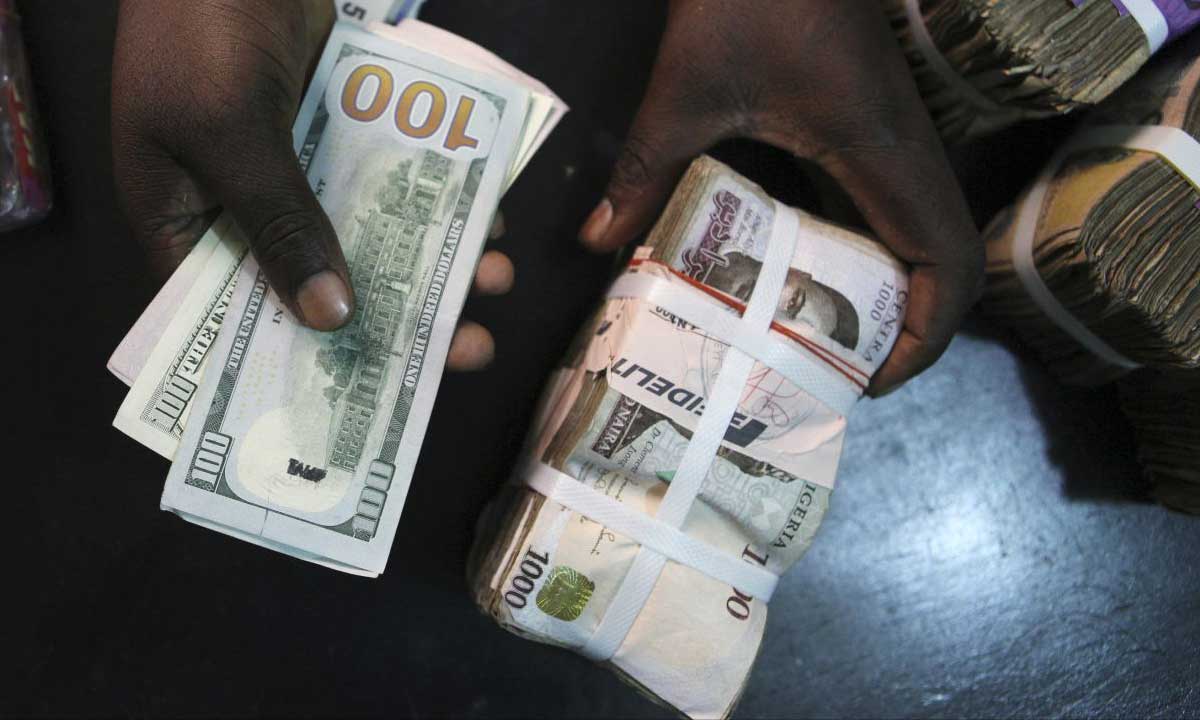
Nigeria’s naira slipped further into the shadows this week, weakening to N1,490 per dollar in the parallel market, a level that has pushed the gap between the official and black-market exchange rates to its widest in 11 months.
The development comes amid persistent demand for foreign exchange, limited supply, and growing market tension that analysts say could reshape currency policy in the coming weeks.
Data from the Central Bank of Nigeria’s (CBN) official market update for the third trading week of January 2026 shows that while the official market recorded a modest appreciation, the currency remained under pressure, reflecting the broader stress in Nigeria’s FX system.
In the official market, the naira ended the week at N1,417.95 per dollar, showing a slight appreciation from N1,424.5 recorded the previous week.
Despite the marginal gain, FX market activity remained strained as demand continued to outpace available supply.
Market watchers noted that the modest strengthening came as Nigeria’s foreign exchange reserves improved slightly. The CBN reported that reserves closed the week at $45.8 billion, up from $45.6 billion the previous week—an incremental but important boost.
However, in Abuja’s parallel market, the naira weakened further, trading between N1,489 and N1,490, compared with N1,477 on January 9. This pushed the official-parallel gap to N73, the widest since February 2025.
The widening gap is significant because it signals increasing stress in the FX market.
While the official rate remains relatively stable, the parallel market’s depreciation reflects the growing number of businesses and individuals who cannot access dollars through official channels and are forced to rely on the more expensive black-market window.
READ ALSO: Naira edges lower amid moderate volatility as analysts forecast stability in 2026
Demand remains strong across both market segments, driven by import needs, corporate dollar obligations, and investor appetite. Even with the CBN’s reserve build-up, the supply is still insufficient to meet demand.
The reserves’ slight improvement—attributed to inflows from oil exports and portfolio investments—has provided some cushion. But analysts warn that this is not enough to stabilize the market without stronger policy action.
The widening spread creates arbitrage opportunities, encouraging some traders to buy dollars from the official market and sell them in the parallel market. This dynamic increases pressure on official FX supply and deepens the divide between the two markets.
At the end of 2025, the exchange rate gap widened sharply. The parallel market ended the year at about N1,470 per dollar, while the official market closed at N1,429 per dollar—the widest disparity since February 2025.
That February, the official rate closed at N1,499 per dollar while the parallel market hit N1,605 per dollar, and at points later in the month, the official rate traded weaker than the parallel market—an unusual inversion that highlighted the severity of FX stress.
Dr. Aisha Suleiman, an economist said, “The widening spread is a clear signal that the FX market is out of sync. The official rate is not reflecting true market conditions because access to FX is restricted. When people cannot obtain dollars through formal channels, they turn to the parallel market, which drives up the rate.”
Mr. Chidi Nwosu, FX Trader, added that, “Arbitrage is a major issue. The gap creates a profitable incentive for traders to buy from the official window and sell on the black market. This reduces official supply and pushes more people to the parallel market.”
Ms. Funmi Adeyemi, a financial analyst, said, “Even though the reserves are above $45 billion, the real question is whether the CBN can sustain supply to meet demand. The reserves provide a buffer, but they do not automatically translate to improved liquidity in the official FX market.”
Nigeria’s inflation rate eased sharply in December 2025 to 15.15%, following a data methodology update by the National Bureau of Statistics (NBS). While lower inflation could support currency stability, experts warn that inflation data alone may not be enough to calm FX markets.
“The key issue is supply and access,” said Dr. Suleiman. “As long as demand remains high and access is restricted, the parallel market will continue to reflect the true value of the naira.”
For now, the market remains in a delicate state—one where policy decisions and external inflows will determine whether the naira stabilizes or slips further into the parallel market’s shadow.



 Health6 days ago
 Energy6 days ago
 Latest6 days ago
 Trending Stories6 days ago
 Latest6 days ago
 Latest5 days ago
 Latest6 days ago
 Football4 days ago