
Business
Nigeria’s Bank recapitalisation raises fresh questions

Published
2 months agoon
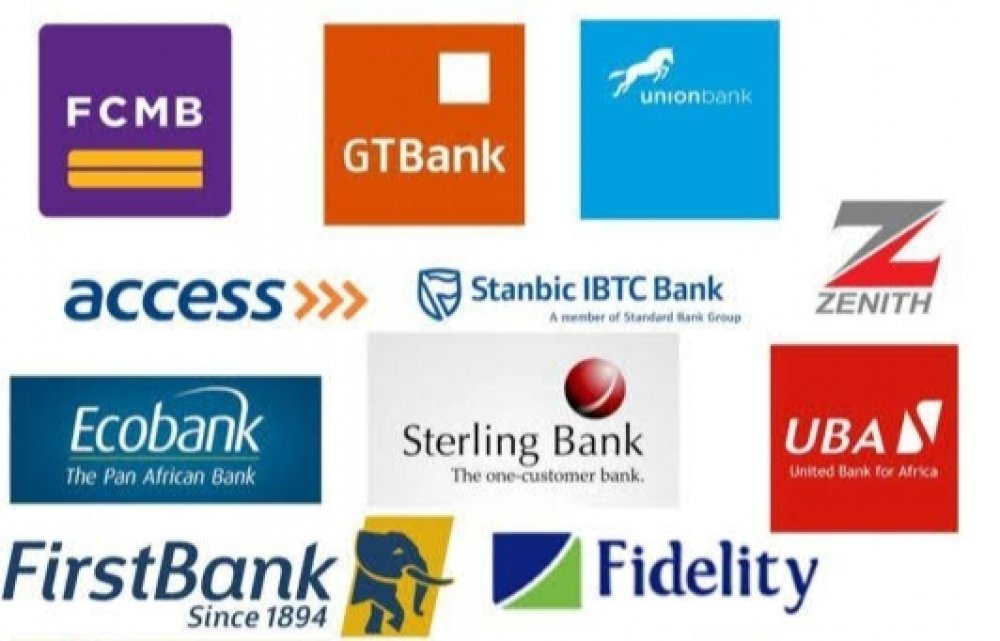
Despite operating in a fragile 2024 macroeconomic environment defined by high inflation, currency volatility and weak economic growth, Nigeria’s banking industry was widely portrayed as strong and resilient.
Headline results appeared striking, with Tier-1 lenders including Access Bank, Zenith Bank, GTBank, United Bank for Africa (UBA) and First Bank of Nigeria collectively reporting profits nearing — and in some cases surpassing — N1 trillion.
Just a year later, however, those same banks are racing to the capital markets, launching rights issues and public offers in rapid succession to comply with the Central Bank of Nigeria’s (CBN) far-reaching recapitalisation programme.
The sharp reversal has prompted renewed scrutiny of the sector’s underlying strength and raised doubts about how much of the celebrated profitability truly reflects sustainable financial health.
At least 27 lenders have tapped the equity market almost simultaneously, even after repeated assurances of balance-sheet robustness. Analysts say the development has exposed a deeper misunderstanding between profitability and regulatory capital.
The recapitalisation directive announced by the CBN in 2024 was deliberately ambitious. Banks with international licences were instructed to raise minimum capital to N500 billion by March 2026, while national and regional banks face lower but still significant thresholds of N200 billion and N50 billion respectively.
Regulators framed the policy as a reform aimed at strengthening resilience, improving stability and enabling banks to better support long-term economic development.
While well-capitalised banks should, in theory, welcome such reforms, the scramble for fresh equity has highlighted structural weaknesses in how Nigerian banks generate profits. Central to the issue is the assumption that strong earnings automatically translate into regulatory capital.
In practice, the CBN’s framework prioritises paid-in share capital — fresh equity injected by shareholders — rather than retained earnings or accounting profits that may not be cash-backed.
Although these gains inflated income statements, they did little to strengthen core capital, particularly after the CBN restricted the use of FX revaluation gains for dividends or routine banking operations.
As a result, banks appeared wealthier on paper without becoming materially stronger.
READ ALSO: Recapitalisation race tightens as Polaris, Keystone, 8 other Banks race to meet CBN deadline
Beyond foreign exchange effects, banks have increasingly relied on non-interest income — including fees, charges and transaction levies — to drive profitability.
While lucrative, this approach does not necessarily deepen financial intermediation or expand productive lending. Analysts note that profit growth built largely on customer charges offers limited support for sustainable balance-sheet expansion and leaves banks exposed when macroeconomic conditions change.
Those conditions are now shifting. The recapitalisation exercise coincides with a turning point in Nigeria’s monetary cycle. Market analysts warn that the exceptional environment that supported bank earnings in 2024 and 2025 is beginning to fade.
In a January report, Renaissance Capital projected that major lenders such as Zenith Bank, GTCO, Access Holdings and UBA may struggle to replicate recent earnings growth by 2026.
With inflation easing, expectations are rising that the CBN could cut interest rates by 400 to 500 basis points. Such a move would reduce returns on loans and government securities, while high cash reserve requirements — which earn no interest — remain unchanged. At the same time, banks may find it difficult to lower deposit rates quickly, further compressing margins.
As a result, net interest margins, a key measure of banking profitability, are expected to narrow. Competition for deposits is intensifying as lenders seek to shore up liquidity ahead of recapitalisation deadlines, driving up funding costs.
Meanwhile, yields on treasury bills and bonds, long a safe and profitable refuge for banks, are expected to soften in a lower-rate environment.
Adding to the pressure is the fading of FX revaluation windfalls. With the naira relatively more stable in early 2026, the non-cash gains that once boosted earnings have largely disappeared. What remains is the more demanding task of managing credit risk, controlling costs and growing loan books in a sluggish economy.
As the March 31, 2026 deadline approaches, attention is shifting beyond the immediate task of raising N500 billion, N200 billion or N50 billion.
The deeper issue is what Nigeria’s banking industry will look like after recapitalisation — whether it will usher in deeper financial intermediation and stronger support for economic growth, or simply reset balance-sheet figures while leaving core incentives unchanged.
The outcome is expected to shape the future of Nigerian banking long after the capital market roadshows conclude and the profit headlines fade.

You may like
Trending

 Football4 days ago
Iraq ends 40-year World Cup exile as Baghdad erupts in joy
 Football1 week ago
Tuchel names Maguire as fifth-choice centre-back

 Crime5 days ago
Kano-based lawyer reportedly dies after being trapped in Abuja hotel lift

 News7 days ago
Kwankwaso Resigns from NNPP, Cites ‘Strategic Realignment’

 Business6 days ago
Petrol price hikes trigger surge in transport fares nationwide

 Crime6 days ago
12 feared killed in Jos night attack, authorities enforce 48-hour lockdown

 Business6 days ago
N70,000 minimum wage makes N1,300 petrol unaffordable, says Oyelaran-Oyeyinka

 Business5 days ago
CBN unveils mandatory cybersecurity self-assessment tool for Banks