
Latest
Mushin explosion traced to chemical reaction, not bomb attack — Security findings

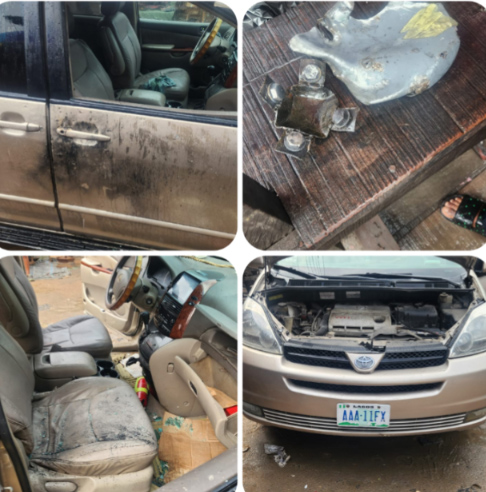
Residents of Mushin, Lagos State, who were thrown into panic following a thunderous explosion that rocked a commercial area on Sunday, can now breathe a sigh of relief as security investigations have revealed that the incident was not a bomb attack but the result of a violent chemical reaction caused by improperly stored substances.
The explosion occurred at a shop located at No. 22 Immaseun Street, off Wey Street, in the densely populated Mushin area, sending traders, residents and passersby fleeing for safety amid fears of a possible terror attack.
The incident, which generated widespread concern due to the intensity of the blast, initially left many residents fearing the worst. For several minutes, confusion and anxiety gripped the neighbourhood as people abandoned their businesses and sought refuge from what they believed could be a security threat.
However, findings contained in a report published by online platform Gistlife on Wednesday have provided a different account of what transpired.
According to the report titled “Explosion Scare: How Chemical Reaction Disrupted Sunday Peace in Mushin,” security experts who investigated the incident established that the explosion was triggered by a chemical reaction involving substances that had been improperly stored inside a parked vehicle near the affected shop.
The shop, known for dealing in chemicals and shoe accessories, became the focal point of the emergency response as security operatives swiftly moved to cordon off the area and assess the situation.
READ ALSO; US intensifies military campaign, bombs Iran for second consecutive night
Investigators reportedly discovered that the reaction occurred within a vehicle parked close to the premises and generated enough force to damage a stationary Toyota Sienna bus bearing registration number AAA 11 FX. Despite the intensity of the blast, the building housing the shop sustained only minor structural damage.
A security official at the scene sought to calm public fears, emphasizing that the incident bore no resemblance to a bomb explosion.
“If it was a bomb blast, do you think the area would be this peaceful right now? This was a chemical reaction in the car, not an attack,” the source reportedly stated.
Remarkably, no casualties were recorded, and there were no reports of injuries despite the powerful explosion that shook the neighbourhood.
Authorities have since taken the shop owner, Mr. Obinna Okeke, into police custody for routine questioning as investigations continue. Security agencies and forensic experts are working to determine the exact chemical substances involved and establish the circumstances that led to the hazardous reaction.
The incident has once again drawn attention to the dangers associated with the storage and handling of volatile and flammable materials in residential and commercial areas.
Safety experts have repeatedly warned that improper storage of chemicals poses significant risks, particularly in densely populated urban centres such as Mushin. The latest incident has renewed calls for stricter enforcement of safety regulations and greater compliance with established guidelines governing the handling of industrial and commercial chemicals.
As forensic examinations continue, police authorities have urged residents to remain calm and avoid spreading unfounded rumours about the incident. They also reiterated the importance of adhering to safety standards designed to prevent similar occurrences in the future.
The findings are expected to inform further regulatory actions aimed at improving chemical safety practices and protecting lives and property across Lagos State.


-
 Latest6 days ago
Israel marks 3 years since October 7 Hamas attack amid Gaza strikes, election debate
-

 Energy5 days ago
Fuel Battle: Dangote, marketers and government clash over petrol imports
-

 Energy7 days ago
Petrol, diesel prices rise 86% in 2026 as costs hit fresh highs
-

 Energy1 week ago
Has Iran lost control of the Strait of Hormuz? Oil flows rebound as war disruptions persist
-

 Football6 days ago
Nigeria’s World Cup exit under spotlight as FIFA’s DR Congo files emerge
-

 Latest6 days ago
US Court set to rule on release of FBI, DEA records on Tinubu
-

 Business6 days ago
Nigerian investors at a crossroads as fixed-income yields slide
-

 Business1 week ago
LoveWorld Trade and Investment Forum to Convene Business Leaders in Accra