
Business
Are CBN policies crippling banks, private businesses in Nigeria?

Published
2 months agoon
By
Marcel Okeke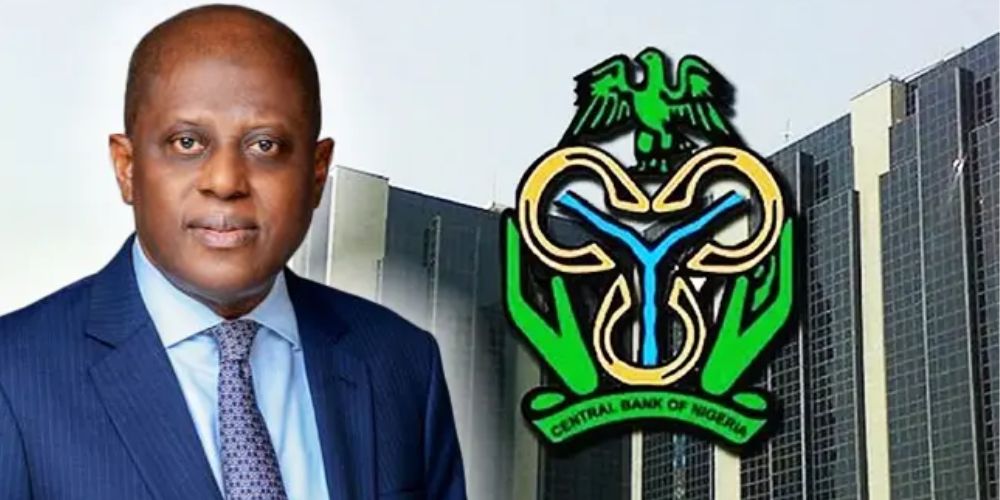
]
The popular idiom: “The chicken has come home to roost,” seems to be playing out in the Nigerian financial services industry where the policies of the Central Bank of Nigeria (CBN) have made the Federal Government of Nigeria (FGN) the singular dominant borrower in the past couple of years. The CBN’s ‘Money and Credit Statistics’ for 2025, just published, show that credit to the FGN outstripped private sector borrowings by about N10 trillion. This represents about 696 per cent swing in 2025, reflecting heightened fiscal pressures, and increasing reliance on local funding sources by the Government.
On the other hand, net credit to the private sector declined by N1.54 trillion in 2025, pointedly highlighting the challenges faced by businesses in the midst of the CBN’s tight monetary policy with its attendant high interest rates. The dominance of the FGN and ‘weakening’ private sector vividly show the growing imbalance in the allocation of resources in the financial system, with the public sector absorbing the lion’s share of available liquidity/credit.
This obvious contrast between the FGN’s high and rising appetite for (local) credit, and the private sector’s shrinking access to credit facilities depicts the classic case of “crowding out”—as rising Government demand for funds limits banks’ capacity to extend credit to the productive (private) sector. To the point of getting ‘scorched’ by inaccessibility and unaffordability of bank loans, most businesses increasingly ‘battle with’ servicing and settling existing debts rather than taking on new loans at very high costs.
According to the CBN’s ‘Money and Credit Statistics’, credit to Government refers to funds extended to FGN by the domestic financial system, mainly through the purchase of government securities such as Treasury Bills, Bonds, and other debt instruments, as well as direct lending by banks and other financial institutions. Normally, such credit to the FGN are used to finance budget deficits, refinance maturing obligations, support capital and recurrent expenditure, and manage short-term cash flow shortfalls when government revenues fall short of spending needs.
Credit to the private sector, on the other hand, stand for loans and advances granted by banks and other financial institutions to businesses, households, and non-government bodies. The loans are primarily used to finance working capital, business expansion, investment in plant and machinery, trade, agriculture, services, and sundry consumer spending. Therefore, growth in credit to the private sector is widely taken as a key indicator of economic activity, as it supports production, job creation, and overall economic growth.
In the case of Nigeria, however, where government borrowing from the financial system rises sharply, in the face of a high-interest regime, the pool of fund available to the private sector is reduced; the private sector is “crowded out.” This dynamic implies consistently high borrowing costs for businesses, and low investment, even as the Government keeps securing financing in pursuit of its fiscal obligations.
This reality of the Nigerian financial system, and the larger economy, put the lie to the oft-mouthed “private sector is our engine of growth” by officials of the Government of the day. On the contrary, the monetary and fiscal policies of the Government insidiously stifle businesses; many asphyxiated owing to cost of funds too high for them to access.
Under the guise of ‘fighting’ high inflation, the CBN has maintained a prohibitively high interest rate regime in the country for upwards of three years. From a benchmark interest rate—Monetary Policy Rate (MPR)—of about 18 per cent in May 2023, the apex bank has since hiked the rate by 900 basis points to 27 per cent. This level of MPR results to effective lending rates by deposit money banks (DMBs) of between 30 to 35 per cent (or more) to businesses and households.
This high level of lending interest rates is not only scary to many private sector businesses but has largely contributed to the insolvency, and winding up of not a few of them. This financial handicap of businesses (directly or indirectly) reflect in the rising pool of bad and/non-performing loans (NPLs) in the books of the banks.
A few days ago, one of the ‘old generation banks’ in the country reported a humongous sum of over N748 billion in its 2025 unaudited accounts as “impairment charge.” Interestingly, First HoldCo Plc attributed this level of “impairment charge” to the CBN’s directive for banks “to exit forbearance on legacy bad loans”—meaning that the massive write-off was due to the policies of the apex bank.
It is apposite to point out that a huge chunk of the (First Bank’s) bad loans got accumulated in recent times, when the inclement investment climate (especially high cost of funds) scorched not a few businesses to extinction. Thus, a breakdown of the (First Bank’s) impairment charge shows that of the total N748 billion, a whooping N459.2 billion accrued in the fourth quarter 2025 alone.
Non-performing loans (NPLs) in banks’ financial statements are one of the globally-accepted proxies of the health of businesses in any clime. The more NPLs banks accumulate, the more challenging the business climate is taken, ceteris paribus. Conversely, banks’ record very little or no NPLs, if the business environment is wholesome. Unfortunately, more banks are likely to report sizable NPLs (in 2025) in the course of the year.
The high level of MPR and DMB’s Cash Reserve Ratio (CRR) maintained by the CBN in the past two or more years have not only constrained the credit-creation capacity of banks but also kept loans (credit facilities) beyond the reach of most businesses and households. Apparently, the apex bank in agreement of the Federal Government sustained the high interest rate regime not only to bolster the FGN’s dominance in the financial markets but also to keep attracting foreign portfolio investments (FPIs) by offering financial assets with highly attractive yields.
This trend has remained a dangerous one, which the Organized Private Sector (OPS) has criticized interminably—especially the Manufacturers Association of Nigeria (MAN), the Lagos Chamber of Commerce and Industry (LCCI), the Nigerian Employers Consultative Association (NECA), among others. Many local businesses are floundering, even as the CBN keeps enjoying its policy-induced FPI inflow. But FPI remain “hot money” with a lot of destabilizing effects on the Nigerian economy.
As “hot money”, FPI has been flowing into Nigeria in recent times but also ‘fleeing’ the country in quantum. For instance, foreign portfolio investors withdrew N1.01 trillion from Nigeria’s equities market between January and November 2025, representing a 143.3 per cent increase from the N415.13 billion recorded in the corresponding period in 2024. This is according to data from the Nigerian Exchange (NGX) FPI report.
This very sharp rise in the outflow of FPI obviously causes a lot of distortions in the wider economy: particularly, heightened market volatility, increasing foreign exchange pressure, and more uncertainty for all economic agents. This manner of financial flows largely account for why the CBN and the FGN are working to achieve the stabilization of the economy to no end. But, rather, the real results of their efforts are inadvertently crippling the banks and (private sector) businesses in the country.
- The author, Okeke, a practicing Economist, Business Strategist, Sustainability expert and ex-Chief Economist of Zenith Bank Plc, lives in Lekki, Lagos. He can be reached via: [email protected] (08033075697) SMS only

You may like
Trending

 Football3 days ago
Iraq ends 40-year World Cup exile as Baghdad erupts in joy

 Crime1 week ago
Delta Police Arrest Over 270 Suspects in Warri, Ughelli Raids as Activists Accuse Officers of Rights Abuses

 Crime1 week ago
Tragedy of Benue’s Forced Relocation, Armed Attacks Clear Communities
 Football1 week ago
Tuchel names Maguire as fifth-choice centre-back

 Business1 week ago
Hyundai Nigeria rolls out flagship Palisade, highlights Accent, Creta, Tucson, Santa Fe

 Latest1 week ago
Tinubu denies one-party agenda, defends democratic competition at APC convention

 News1 week ago
INEC Extends The Deadline for Party Register Submission Ahead of 2027 Elections

 Crime4 days ago
Kano-based lawyer reportedly dies after being trapped in Abuja hotel lift