
Health
Cockroach milk better; Africans already enjoying it

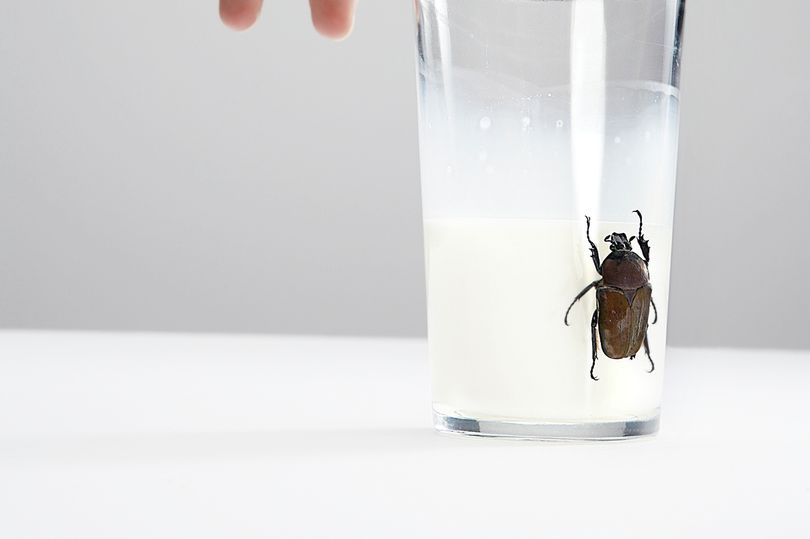
From almond to soy, hemp to hazelnut, milk isn’t just about cows anymore.
Cow’s milk remains by far the biggest in the business. More than 750 million tonnes is produced and consumed every year.
But as the global population grows and sustainability increasingly questioned, some are looking elsewhere for traditional food sources.
After all, cows – all 1.5 billion of them – are the most damaging thing on the planet right now. More than cars, planes or nuclear testing.
All the other milks require farming. Goat’s milk is obvious, but other sources, such as coconuts and rice, have an effect on the environment.
Producing enough is hugely expensive and takes its toil on the land required for cultivation.
Which is why people are milking cockroaches. They’re cheap, rice in nutrition, and take up hardly any room.
Some people are really drinking cockroach milk as a dairy alternative now.
The milk is derived from ‘cockroach crystals’, a part of the insect found in its gut. According to scientists, these crystals are ‘like a complete food’, rich in essential amino acids and protein.
A researcher from the Institute for Stem Cell Biology and Regenerative Medicine in India claims the nutritional value of the cockroach product is much higher than other milks.
What’s more, apparently it tastes no different from cow’s milk.
Milk sourced from Australian Pacific cockroaches is said to contain dietary sequences with all the essential amino acids, proteins, fats and sugars, and three times the energy of regular dairy milk.
Some cockroaches lay eggs, but there is one species, called Diploptera Punctata, which gives birth to young and feeds them with milk.
Diploptera Punctata is the only species of roach that gives birth to living offspring, as opposed to laying eggs, and produces milk to feed their young.
South African company Gourmet Grubb is already farming cockroaches and producing milk fromthe bugs. The product is called ‘Entomilk’ and is created from sustainably farmed cockroaches.
“One of the most pivotal benefits of Entomilk is that it has a high protein content and is rich in mineral such as iron, zinc, and calcium,” the brand says.
But it’s hard work. Being insects, it takes as many as 1,000 cockroaches to make just 100grams of milk, according to science website Inverse.
And it’s not just a case of attaching a machine to udders and massaging the teats.
“The only way [to milk a cockroach] would be to make cultures of yeast with the genes in it for making this milk,” The University of Iowa’s Dr Barbara Stay explains.
Hard or not, it could be a viable alternative.
Unsurprisingly, Gwyneth Paltrow’s lifestyle website Goop already lists cockroach milk as an option.
“As might be expected, the process of ‘milking’ a cockroach is precise and laborious,” Goop says.
Mirror














-

 Latest6 days ago
Cole-Alegbe unveils memoir, urges leaders to harness technology for lasting impact
-

 Business3 days ago
Nigeria records N12.59trn trade surplus in Q2 2026 — NBS
-

 Business4 days ago
Nigerian Breweries’ H1 profitability strengthens as revenue hits N804bn
-

 Business6 days ago
Jetour G700 PHEV Storms Abuja as Jetour Nigeria Takes Luxury Mobility Showcase to FCT
-

 Featured2 days ago
Peter Obi, Makinde and the 2027 elections: Can unity really challenge APC?
-

 Football2 days ago
Banda, Chawinga make 2026 Women’s Ballon d’Or top 30 shortlist
-

 Business1 week ago
Rising crude prices threaten fresh petrol price hike in Nigeria
-

 Business7 days ago
Multinationals exit Nigeria as economic pressures reshape business landscape