
Crime
From Farmland to Battleground: The Benue Tragedy

From Farmland to Battleground: The Benue Tragedy
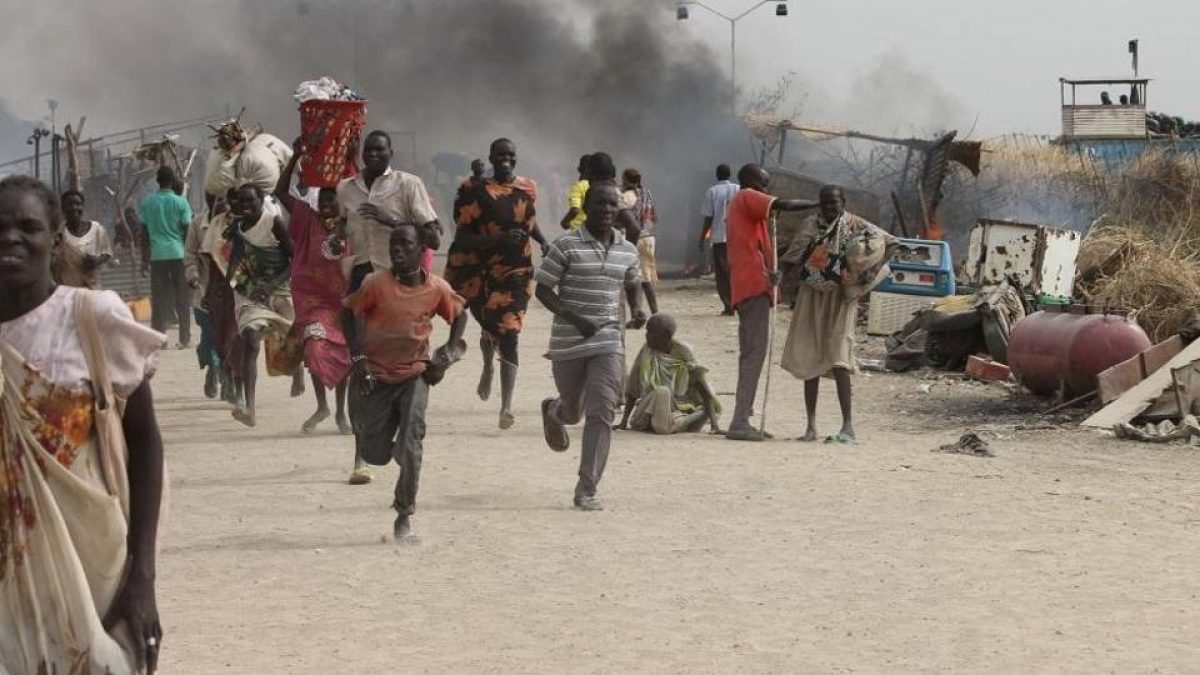
Benue State Nigeria — What once were green fields stretching into the horizon are now charred ruins of abandoned homes, bloodstained soil, and the quiet cries of survivors who once called these lands home. For decades, Benue,Nigeria, known as the “Food Basket of the Nation,” stood as a symbol of Nigeria’s agricultural promise. Today, it is a battleground.
Over the past weeks, a series of coordinated and deadly attacks by heavily armed criminal gangs have ravaged several communities in Benue State. The violence has left over 150 people dead, thousands displaced, and farmlands destroyed, further deepening a humanitarian crisis that has persisted for nearly a decade.
“We woke up to gunshots,” says 55-year-old Agbo Terkaa, now taking refuge at an IDP camp in Guma LGA. “They came in the night, burning houses, shooting anyone who ran. My wife and son didn’t make it.”
Distribution of non-food item vouchers at Ichwa Camp, Benue State, to provide essential household items to displaced individuals and families. Photo IOM 2024/Elijah Elaigwu

Terkaa’s story is just one among hundreds. Entire communities in Logo, Guma, Agatu, and parts of Kwande have been emptied either by the gun or by the fear of it. In some cases, the attackers returned a second time, targeting survivors who had returned to bury their dead.
The Collapse of a Community
Traditionally reliant on subsistence farming, the affected areas are now ghost towns. With their crops uprooted and cattle stolen or slaughtered, survivors have little to return to. For many, their only option is the Internally Displaced Persons (IDP) camps overcrowded, under-resourced, and under-reported.
Health officials report increasing cases of malnutrition, malaria, and trauma among displaced children. Many of the camps lack adequate sanitation, clean water, or medical supplies.

From Farmland to Battleground
The Political Dilemma
In a press briefing held in Makurdi, the state capital, Governor Hyacinth Alia described the situation as a “systematic displacement of indigenous people”, and called on the Federal Government for urgent military intervention.
“This is no longer a farmers-herders clash. It is a full-scale invasion,” Alia declared. “We need boots on the ground. And we need them now.”
The governor also reiterated his support for the creation of state police, arguing that localized security mechanisms are urgently needed to protect communities before it is too late.
However, critics argue that the federal government has not shown the political will to decisively address the crisis, which many see as part of a broader national security failure. Calls for justice have largely gone unanswered, and perpetrators rarely face prosecution.
READ ALSO: Security operatives rescue 13 abducted passengers in Benue
Digital Echoes, Global Silence
While the attacks have sparked outrage across social media platforms, they have received scant international coverage. Activists and civil society groups say the lack of media visibility and government accountability emboldens attackers.
“If this level of violence were happening in another region or country, the world would have taken notice,” says Naomi Abah, a human rights advocate in Abuja. “We’re losing our people and our land, and yet silence prevails.”
A Cry for Return, A Plea for Peace
Despite the carnage, hope lingers in pockets. Local churches and NGOs continue to provide emergency relief. Youths are organizing community patrols, while some farmers, against all odds, are attempting to replant what they can.
Still, the question remains: How long before the land is safe again?
As the sun sets over the dusty skyline of Makurdi, a young girl at an IDP camp cradles a makeshift doll and looks into the distance. “I want to go home,” she whispers.
But what remains of that home — and who will protect it — is a question Nigeria must now answer.














 Football1 week ago
Iraq ends 40-year World Cup exile as Baghdad erupts in joy
 Business7 days ago
Nigeria braces for cost surge amid 2026 inflation projections
 Latest5 days ago
ADC accuses INEC of misinterpreting court order, demands chairman’s removal amidst growing leadership crisis

 Business7 days ago
Naira slips to N1,387/$ in March amid persistent FX market turmoil

 Business1 week ago
CBN confirms 33 Banks meet minimum capital requirements as recapitalization deadline ends

 Football1 week ago
Real Madrid eyes Nigerian-born defender Honest Ahanor amid defensive reshuffle

 Business1 week ago
Appeal court sets aside N507m judgment against GTBank, orders fresh trial

 Business1 week ago
Lagos tops VAT allocations in January 2026 as allocations surge by 74%