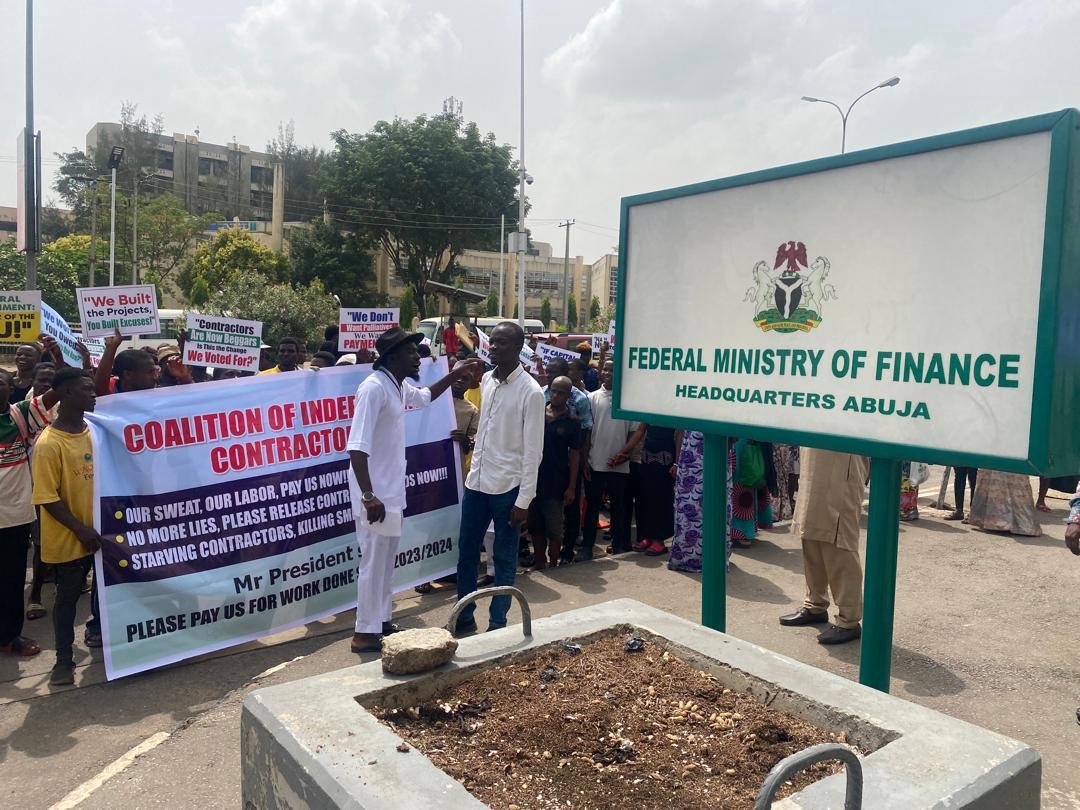
Concerns over the Federal Government’s delayed payment to contractors have intensified, despite assurances that the process of clearing arrears has begun.
The matter, which has lingered for over a year, continues to raise anxiety among stakeholders in critical sectors of the economy.
The alarm was first raised in June 2025 by Senator Abdul Ahmed Ningi, who warned on the Senate floor that many federal contractors had not been paid since 2024.
His call for an immediate investigation was later echoed by the Chairman of the House of Representatives Committee on Monitoring and Evaluation, Obi Aguocha, who urged the government to take swift action.
In response, the Office of the Accountant General of the Federation (OAGF) pledged that payments would commence.
On Monday, its spokesperson, Bawa Mokwa, confirmed that the government had begun clearing outstanding debts to contractors working on projects under ministries, departments, and agencies (MDAs). However, contractors have yet to confirm receipt of the funds.
Industry experts say the delays are inflicting broader damage on the economy. The immediate past President of the Real Estate Developers Association of Nigeria (REDAN), Aliyu Wammako, stressed that the ripple effects go beyond the construction industry.
READ ALSO: Fibre cuts, equipment theft endanger Nigeria’s digital economy
“Non-payment of funds to contractors by the Federal Government is a general problem for the whole of Nigeria. It is the turnaround of funds between contractors, labourers, and professionals that is the bedrock of the country’s economy.
Since FG has tightened its finances, everybody is feeling it. FG should listen to the call already made by Senator Abdul Ningi and disburse payments immediately,” Wammako said.
Economists also warn that failure to settle arrears undermines investor confidence and stalls job creation. Dr. Chinedu Okafor, a public finance analyst, noted that the capital budget has persistently underperformed.
“Nigeria approved N24.9 trillion for capital projects in 2024 and N23.96 trillion for 2025, yet only a fraction has been spent. With projects at less than 50 percent completion nationwide, the credibility of the budget process is at stake,” Okafor explained.
The Senate has already extended capital budget implementation twice in seven months, a move critics say reflects poor fiscal discipline.
The Tinubu administration, meanwhile, has defended its capital spending, insisting that projects are spread across all six geopolitical zones and not skewed toward Lagos State as alleged.
While confirmation of payments is still pending from contractors, stakeholders warn that any further delay could aggravate unemployment, stall infrastructure growth, and weaken confidence in government’s economic management



 Football4 days ago

 Crime5 days ago
 News7 days ago
 Business6 days ago
 Crime6 days ago
 Business6 days ago
 Business5 days ago