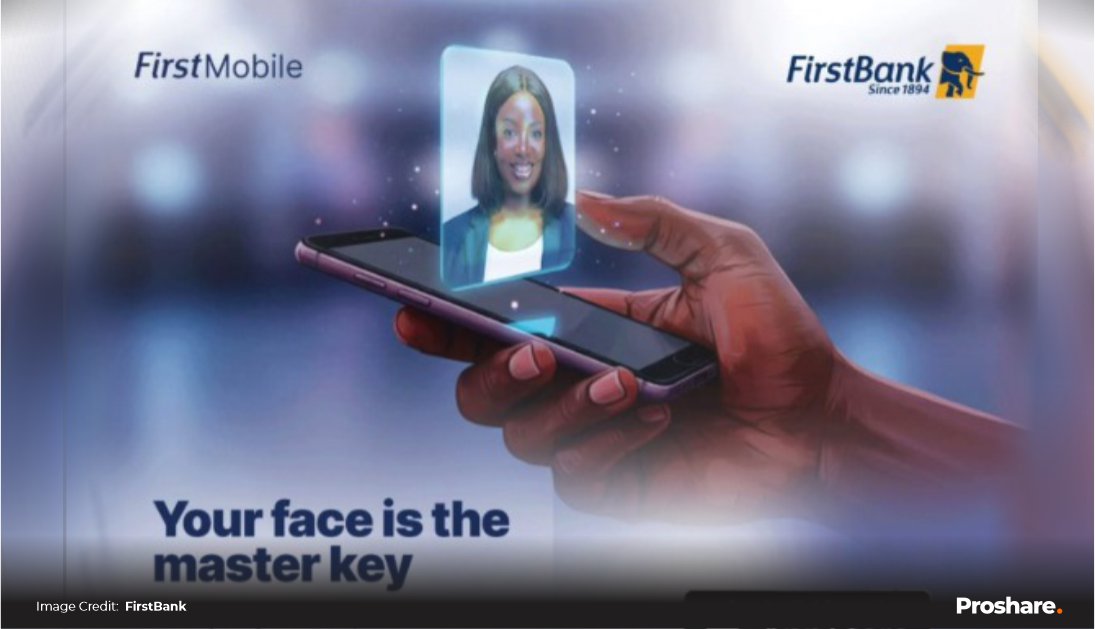
In a major stride towards inclusive and secure digital banking, FirstBank of Nigeria Limited has rolled out facial biometric technology on its mobile banking application, FirstMobile, allowing customers to seamlessly register and activate their devices without requiring a debit card.
The cutting-edge feature empowers both new and existing users to verify their identity using advanced facial recognition during onboarding.
The system is equipped with anti-spoofing technology, which provides robust protection against impersonation and fraudulent access attempts, ensuring that only legitimate users gain entry.
This update marks a significant evolution in FirstBank’s digital strategy, eliminating the longstanding requirement for card-based verification during FirstMobile registration. It also caters to a diverse range of customers.
“With these new services now live on FirstMobile, we are confident we will undoubtedly enhance our customers’ digital experience,” said Chukwuma Ezirim, Group Executive, E-Business and Retail Products Division at FirstBank.
“We understand the importance of keeping up with the evolving digital landscape, and we are dedicated to providing our customers with cutting-edge solutions that make banking simpler, faster, and more accessible.”
READ ALSO: FirstBank leverages expansive infrastructure in new partnership with EStars
The bank emphasized that the biometric upgrade reflects a strategic shift towards more inclusive, secure, and user-centric mobile banking, especially as more Nigerians adopt digital financial tools.
FirstBank’s move is expected to significantly reduce onboarding friction and broaden access to services such as fund transfers, bill payments, airtime purchases, and more.
Customers can update FirstMobile via the Google Play Store or Apple App Store, while returning users are advised to re-download the app to enjoy the full suite of new features.
FirstBank’s facial biometric innovation positions it as a frontrunner in Nigeria’s digital banking evolution, offering convenience without compromising security—ultimately strengthening customer trust and expanding financial inclusion.



 Entertainment6 days ago
 Latest1 week ago
 Aviation1 week ago

 Crime6 days ago
 Crime6 days ago
 Featured1 week ago
 Politics5 days ago