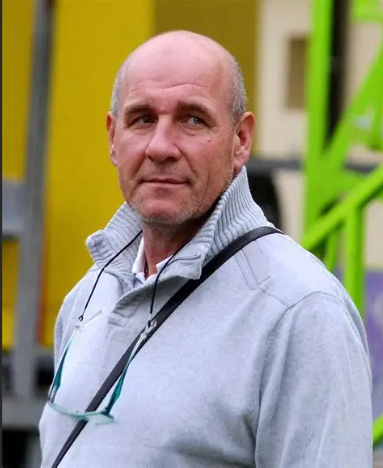
Ukrainian journalist Dmytro Khyliuk is finally home after being held captive in Russia for three and a half years.
Released in a rare prisoner swap that included seven other Ukrainian civilians, Khyliuk has been frantically catching up on life while also making it his mission to contact the families of fellow captives, providing them with the first news that their loved ones are alive.
The swap, which brought Khyliuk and 145 other Ukrainians home, was a moment of national celebration. Crowds of people, waving blue and yellow flags, cheered as buses carrying the freed men many emaciated from their years behind bars drove by.
While military prisoner swaps are common, the inclusion of civilians is not, and officials have been tight-lipped about the details, saying only that they returned “people Russia was interested in.”
ALSO READ: Trump to sue New York Times for $15 Billion
Khyliuk, who was never charged with a crime, shared a harrowing account of his time in Russian prisons. He described being beaten with rubber batons, enduring constant cruelty, and even being bitten by a guard dog.
The first year was the most difficult, with prisoners often starving. “We were given very little food for a long time,” he recalled, noting he lost over 20 kg in the first few months.
He also witnessed the brutal torture of soldiers, who were subjected to beatings and electric shocks during interrogations. Khyliuk’s own story of his capture is equally chilling. He and his father, Vasyl, were detained in their village of Kozarovychi as they tried to check on their home, which had been damaged by Russian troops.
Both men were blindfolded and marched into captivity. While his father was eventually released, Khyliuk remained a prisoner, with his family receiving only two brief notes from him in the years that followed.
The story of Khyliuk’s release highlights the plight of thousands of Ukrainian civilians who are still missing. According to Ukrainian officials, more than 16,000 civilians are currently unaccounted for.
Moscow doesn’t publish lists of civilian detainees, as it is illegal under the Geneva Convention to hold them without cause, making their return incredibly difficult.
Ukraine’s human rights ombudsman, Dmytro Lubinets, described the situation as an unfair game of chess, where Ukraine plays by the rules while Russia uses brute force.
Ukraine cannot swap Russian soldiers for civilians, as this would incentivize Russia to take even more civilians hostage in occupied territories.
For now, Khyliuk is focused on recuperating and adjusting to a world that has changed since he was taken. He is slowly processing the reality that, while the trees and buildings may look the same, Ukraine is now a “different country.”
His family, especially his mother Halyna, are overjoyed, with Halyna joking about a list of chores for him, including fixing the damage the Russians left behind.










 Energy1 week ago
 Crime6 days ago
 Football1 week ago
 Business1 week ago
 Football2 days ago
 Crime6 days ago
 Business7 days ago