
News
Trump, Putin, and a tense truce


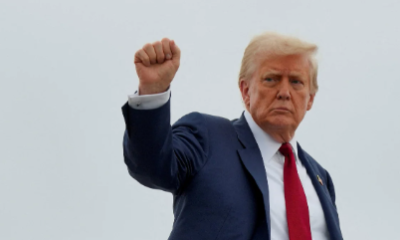
Tension filled the air across Europe as leaders scrambled to engage with U.S. President Donald Trump. His meeting with Russian President Vladimir Putin in Alaska to discuss the war in Ukraine was fast approaching, and European nations felt sidelined. Their last-ditch effort to keep Ukraine’s interests at the forefront of the conversation came in a virtual meeting with Trump and Vice-President J.D. Vance.
The European leaders, representing the UK, France, Germany, Italy, Finland, and Poland, along with EU Chief Ursula von der Leyen and NATO Chief Mark Rutte, emerged from the call with a sense of cautious optimism. According to French President Emmanuel Macron, Trump stated his goal for the summit was a ceasefire.
Crucially, Trump also agreed that Ukrainian President Volodymyr Zelensky had to be involved in any decisions about territory and that security guarantees for Ukraine must be part of the final deal.
Macron said the call allowed them to “clarify Trump’s intentions” and gave the Europeans a chance to “express our expectations.” Still, an underlying nervousness remained. German Chancellor Friedrich Merz stressed that any follow-up meetings must include Ukraine, making it clear that “Ukraine must be at the table.”
These statements revealed a deep-seated fear that Putin might convince Trump to exchange Ukrainian land for a ceasefire. Trump had previously mentioned “land-swapping,” a concept that caused serious concern in Ukraine and among its allies.
Russia’s official position, as reiterated by Foreign Ministry spokesperson Alexey Fadeev, is that Ukraine must withdraw from four partially occupied regions and abandon its NATO aspirations demands Kyiv and its partners consider unacceptable.
The diplomatic efforts continued right up to the summit. Just 24 hours before Trump’s meeting with Putin, UK Prime Minister Sir Keir Starmer was scheduled to meet with Zelensky in London. Sir Keir praised Trump’s diplomatic push, saying the president’s work had created a “viable way of bringing it to a ceasefire” after years of stalled progress. He also noted that “real progress” had been made in the discussion of security guarantees for Ukraine.
Meanwhile, a “Coalition of the Willing” a group of nations led by the UK and France declared its readiness to deploy a “reassurance force once hostilities have ceased,” though the details of this force remain unclear.
Despite all the diplomatic maneuvering, the war continues. President Zelensky, referencing a Russian advance near Dobropillya, told Trump and the European leaders that Putin was bluffing about the ineffectiveness of sanctions. He urged them to apply “more pressure” on Russia. Trump himself seemed to admit the difficulty of the situation, acknowledging that even a face-to-face meeting with Putin might not be enough to stop the killing of civilians.











-
 Business7 days ago
DisCos urge Minister to end blame game, apologise to Nigerians over blackouts
-

 Health1 week ago
Study links Pfizer COVID-19 vaccine to higher death rates than Moderna shot
-

 Business6 days ago
Fuel price: Our eyes on you, FCCPC tells oil marketers
-

 Football7 days ago
Flamingos arrive in Abuja after historic U-17 Women’s World Cup victory
-
 Business7 days ago
After weeks of blackout, electricity returns to Lagos, Ogun, Oyo, Kwara, FCT
-
 Latest7 days ago
Abati questions former CSU lecturer’s authority in fresh Tinubu certificate dispute [VIDEO]
-

 Business6 days ago
Petrol import cost drops to N1,164 per litre as crude oil prices decline
-

 Business3 days ago
Nigerian Banks earn N521.8bn from E-banking, card fees in nine months